Angie: [00:00:00] Welcome to our mini podcast with rethinking EHS. I'm Angie Dickson, president of the Inogen Alliance, and with me today is Andrew Green. He's a senior associate at Peter J. Ramsey and Associates in Australia. And our last episode, you know, we chatted extensively about landfills, covering how we're tackling the legacy of contaminated sites.
How climate change and extreme weather events might be affecting landfills. But we also talked about best practices shaping a safer and more resilient future for remediation. So we asked Andrew to come back because we know that he has a, uh, a case study that we think is a great example of how innovation is really setting best practices in landfill rehabilitation.
So Andrew, welcome back.
Andrew: It's great to be back. Thank you.
Angie: So you are involved in design and construction of, I believe it's called Evapotranspiration Landfill capping. Is that correct? That's correct, yeah. Maybe you can, uh, you've got it right, [00:01:00] and I should have practiced that a couple times. I mean, it's a great, nice long word.
And this is a capping system, right? That you. Used in Australia and it sounds quite technical, so I'm wondering if you can take our listeners through the basics, what does this mean and why is it innovative and what about it?
Andrew: No problem, Angie. Yeah, so I'll use the acronym et so EVA Transpiration, well, we'll shorten it to ET and just make it a little bit easier for the listeners to, to get their head around now.
Um, an et capping system differs from a conventional landfill capping system in that you're using earth components, so a thick layer of earth to go over the, the landfill waste, uh, rather than our more conventional geosynthetic components. So it's got the benefit that there's less complexity associated with construction.
There's less. Uh, manmade materials required. There's less engineering and oversight required to some degree. The other benefit as well is it's you can plant vegetation on the top of this capping system once it's been constructed, and basically [00:02:00] you'll get yourself an ecosystem rather than a monoculture that you'd typically get with a conventional capping system.
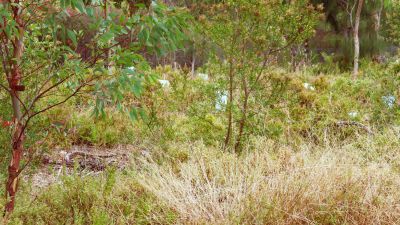
So. Conventionally we're putting grass on top of our, our landfill capping system. So you could probably appreciate that. That's not very, uh, biodiverse. It's not encouraging biodiversity. Whereas with the PT capping systems we're doing at the moment, you know, you're putting a mixture of. Plants, so grasses, shrubs, trees on top of the, the waste mass, and you're getting yourself an ecosystem at the end of the day, and the thickness of this soil is around 1.5 meters thick.
So it's encouraging the root zone of the plants. So that's, that's the transpiration aspect. The evaporation aspect is that the, the, any rain water. Falls on this capping system sort of sits there and it goes into that soil. It's almost like a sponge, and over time it can evaporate out. And so it's a little bit different to the conventional capping system where you're relying on barrier layers to stop that, that seepage or the infiltration into the waste.
Here we're relying on this sponge effect of this thick layer of [00:03:00] soil. In the ET cap to, to provide that low level of infiltration into the underlying waste mass. So yeah, it's a very, very interesting area and it's, it's starting to sort of find its feet now in conventional rehabilitation of, of land tools.
Angie: Okay, so of course I, I have questions. So, first of all, you're right, the idea of putting a gigantic synthetic barrier over a landfill does seem a little counterintuitive, right? Since we, we have all of these things in the landfill that, you know, we're hoping will eventually degrade, but why wouldn't we have done this earlier?
Right? So it seems like using natural materials. And obviously from a biodiversity standpoint, what you're describing to me creates a whole different ecosystem than what I've seen. Right? I know I drive by our old landfill that's capped with a big grassy hill and some monitoring wells, and it's certainly not park like by any means.
So what's the innovation or why now would this be possible?
Andrew: A lot of these capping systems require long-term studies and planning to prove that they're appropriate, so they're often site specific as well. [00:04:00] And so you can appreciate that a, a lot, a landfill owner wants surety that, uh, their, their rehabilitation is going to work and it's going to be compliant with the authorities.
So they have often just defaulted to the, the engineered capping systems because they've got that surety right. They know how much they cost. They know at the end of the day they'll be regulatory and compliant. They know that their gas systems will function. They know that they're not going to get a, a whole lot of infiltration of, of rainwater or storm water through the capping system and generate lead chain and landfill gas and that kind of thing.
So the reason that it's taken a while is because. Getting surety on a site specific basis that it works, takes time. And, um, and it's also risky as well. If it, if it doesn't work, then um, you'll find yourself in a position whereby you're, you're retrofitting a conventional capping system. You see effectively back at square one.
So that's why we've seen it take a while. And I think now that we're seeing, starting to see some, uh, some traction in, in, in [00:05:00] Australia on, in, on this front, where we will probably see more and more license holders or, or landfill operators adopt this approach.
Angie: This is already operational then. So we're, we're past theory we're this is in operation or,
Andrew: yeah, so we're dealing with sites at the moment, which are now starting to construct these capping systems.
So they've done, you know, two or three phases of work where they've, they've installed these, they're in the final stages of getting regulatory sign off on those. So we are seeing the. Them having been implemented, funnily enough, we're now actually also starting to see hybrids. So, um, we've got some, some regulations in Australia around greenhouse gas emissions.
So, um, unfortunately ET caps aren't regarded as being as good as conventional caps in relation to greenhouse gas emissions. So we're seeing some clients go to a hybrid approach where they're putting a conventional capping system down first and then an et capping system over the top. So they're sort of getting the best of both worlds.
They're gonna get this highly. Really engineered barrier layer and then the con, the et capping system over the [00:06:00] top of it to allow that vegetation establishment and the, the ecosystem that comes with it. So I was starting to see that that hybrid approach implemented as well. So yeah, it's a, it's an interesting space to be at the moment.
It
Angie: is just something that you think Australia would be exporting to the rest of the world, you know, when these kind of technologies come out, are you, have you seen this type of system be adopted in other parts of the world or are you out out in the front?
Andrew: No, so et capping systems are a well known thing.
Um, you can find guidance on them. For example, in in America there's the U-S-E-P-A has guideline documents on them, which, you know, have. You know, a list of sites where they've been implemented, so they're not a new thing. Um, as I sort of said, they. Because of the potential risk associated with them and their requirement to sort of design 'em on a site specific basis.
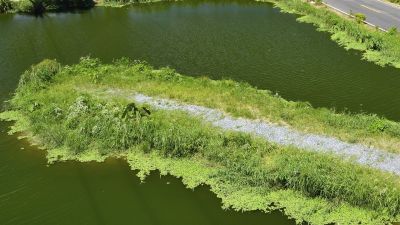
They, um, haven't been implemented as much as your conventional capping system. That's, that's the kind of issue with them. But um, certainly the end result of them is just so much better than the, the typical landfill [00:07:00] capping system you get, as you alluded to there, Angie, you know, you drive past a conventional landfill and all as you're seeing is grass and some, some monitoring infrastructure, and it's.
It's a pretty bleak environment, right? Uh, whereas the, the et capping systems we're seeing at the moment now are at proper ecosystems. You've got in, in Australia, we've got kangaroos living on these capping systems. They're raising their, their young on them. Um, we're seeing a return of predatory, um, na native birds.
Um, the reestablishment of ecosystems in actual facts. So it's a, um, it's a wonderful sort of reuse of this otherwise, um, sort of bland and hostile environment, right?
Angie: It definitely gives me optimism. 'cause a couple things I heard there is, you know, one biodiversity degradation obviously is a huge issue globally, and so that idea that we might be able to take little bits of land that really were compromised and potentially, uh, you know, create habitats that would allow for, you know, either reestablishment or, um, some sort of positive impact on that biodiversity piece.
Right. The other [00:08:00] thing I hear from you is. The more, uh, success as these are implemented and you've got a track record, it sounds like even globally, that makes it more attractive to consider them in other places. So, of course, every landfill site specific, but, uh, you know, having Australia look at adopting some of these could certainly convince other areas that, uh, it could be a good choice for them.
Andrew: Yeah, that's right Angie. So a lot of the, um, the landfill owners that are implementing these are actually part of multinational companies. So, you know, they're taking that knowledge and they're out, but are then disseminated back through their organization and, and then, you know, see the successes where, where it's been implemented here, and sort of then understand whether or not it might work and, and in other jurisdictions as well.
So, yeah, it's certainly a, um. A benefit of having them, you know, have the forethought and the, I guess the, um, you know, the technical sort of prowess to try and implement these can then benefit their, their wider organization as well. So yeah, it's, it's, um, very positive. [00:09:00]
Angie: Well, Andrew, thank you. I, I know, um, you're regarded very highly, uh, around your technical expertise and contributions around landfills and remediation, so I really appreciate you, uh, joining us.
And with that, I think what we'll do is wrap up this mini episode. But, uh, for more information on this case study, please click on the link in our show notes and, uh, feel free to go to our website. site@ingenalliance.com for more information on landfills and of course many, many other EHS topics. So Andrew, thanks so much.