Phil: [00:00:00] In recent years, golf courses have received significant pushback from environmental advocates due to concerns about water usage, chemical runoff, and the destruction of natural habitats. Traditional golf courses can disrupt ecosystems, deplete water resources, and thus harm biodiversity. This begs the question, is there a way to rethink golf courses to lessen their impact on the environment and protect local species nestled along the southwest coast of Costa Rica?
A country renowned for its commitment to biodiversity is Zapital Golf and Beach Club, a high end beach community developed by the Discovery Land Company. The developers at Zapital Golf and Beach Club took environmental concerns seriously, working with local consultants, CDG environmental advisors. They scaled back their development and prioritized coexisting with the land's natural beauty.
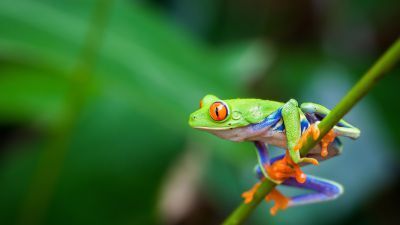
They implemented trail cameras to monitor local wildlife, conducted sea turtle nesting surveys, and even initiated wildlife rescue and relocation [00:01:00] programs. They've completed comprehensive forestry surveys, cataloging every tree on the development plots, and setting up watering holes to sustain wildlife during the dry season.
They're also building a desalination plant to water the golf course so it won't impact the capacity of the local aquifers. They've conducted a baseline survey to monitor fish populations along the project beaches and organized beach cleaning campaigns. Additionally, they've introduced an innovative plastic recycling technology.
Technology called Resonate. This technology is used to create paved surfaces within the project and the surrounding public access roads. Zal is a hallmark example of rethinking traditional practices to better serve and protect biodiversity. Today on the podcast, we'll discuss biodiversity in depth with three experts from Costa Rica, New Zealand.
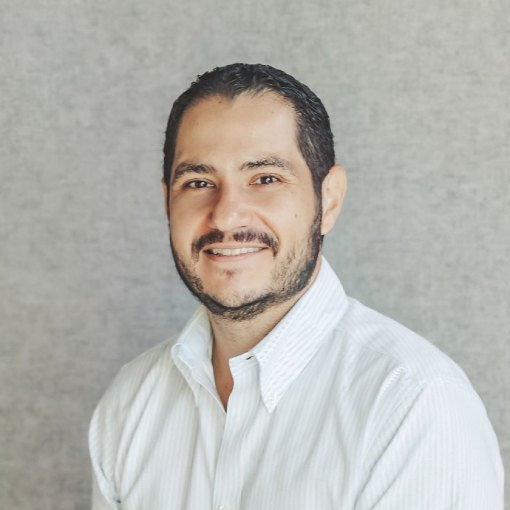
and France. First, we'll hear from Jose Dango, Managing Partner of CDG Environmental Advisors in Costa Rica, the company that supported the Zapatal Golf and Beach Club project. Jose has 20 [00:02:00] years of experience in environmental impact assessment, corporate social responsibility, and public private partnerships for sustainable development.
In his time at CDG, he has the opportunity to work with diverse, multidisciplinary teams on some of the country's most significant projects in both the public and private sectors.
Hi, Jose. Thanks so much for making some time to speak with us today. It's really good to see you. Hey, Phil. Likewise. Great to be here. So, let me just start off with how you define the term biodiversity. Biodiversity to me,
Jose: it's, it's being aware that the planet itself is like a giant living organism and that everything that we have and everything that we interact with on a daily basis comes from that.
So, it, it's not just about the rainforests or the beaches or, you know, or the volcanoes here in Costa Rica that sort of are emblematic. We put on, on, on the, on the posters for tourism boards. It's everything around us. And [00:03:00] that we as environmental practitioners have to be aware that, that our job is to, to make sure that we can keep having access to all those resources that make our, our lives better.
our daily lives better. So to me, biodiversity is just being aware of that, that everything we have and everything we do comes from this living planet and that we as humans directly benefit from preserving that,
Phil: that natural wealth. I love it. I love that description and I love where you ended it in terms of preserving natural wealth because it's a really important, really important point.
You know, I've often described the same sort of thing that says everything around you is engineered by someone, engineered and built by someone. And sometimes that someone is nature, right? Correct. The trees, the ecosystem and all that. And I think it's easy for us to lose sight of that. What's the major driver of this work in Costa Rica?
Jose: The major driver is is new development, right? Costa Rica has a reputation for being a very environmentally [00:04:00] conscious country. So we do have a lot of regulations in place for new development, new construction that requires environmental license. So most new activities, most new projects require some level of environmental licensing.
And that's by far our main line of business.
Phil: What is it about Costa Rica that makes it special in protecting its environment and being an environmentally friendly country? Sometime
Jose: in the past 75 years or so, Costa Rica made the decision to develop its national energy infrastructure based on the On the resources that were most abundantly available.
And that was primarily water. So, uh, our whole national sector, national energy sector developed around hydro power. And so when you hear in the news that Costa Rica has a mostly renewable energy grid, it's, it's very involved today, but that's a decision that was made. [00:05:00] 80 years ago, right? And it wasn't made from a place of, uh, environmental or conservation awareness.
It was made based on common sense. Okay. This is what we have to develop our power infrastructure. So that's what we're going to use as a result of that. It sort of grew, you know, this was implemented in the 40s and 50s, and then the environmental movement of the 70s, locally, sort of raised the awareness of conservation, protecting the forest, protecting the land, and protecting water.
I think the country sort of grew. Jumped on, on top of that woman and said, well, we've done a pretty good job of protecting our water resources as a strategic resource for the country. And around these water resources, we have the forest and in the forest, we have the biodiversity and sort of, sort of grew along those lines.
So, that when the second wave of environmental movement came about in the 90s, Costa Rica implemented new environmental legislation in terms of a forestry law, of a biodiversity [00:06:00] conservation law, of a general environmental regulation for new developments out in that. We had already advanced a few steps and we were starting at ground zero, so to speak.
Whereas other countries in the region. didn't benefit from that. Likewise, with forest conservation, Costa Rica is viewed as a international success story, and that is one of the few tropical countries that has successfully reverted its deforestation. We reached around 18 or a little less than 20 percent forest cover, uh, in the 70s and early 80s.
And then in the past, in the last 40 years, we've recovered to over 50%. And a lot of people say, Oh, wow, you know, that's, that's a great example of Costa Rica and its environmental awareness and the people protecting their resources and whatnot. And it's partly that, but it's also a direct, uh, result of the changing in the economy.
Costa Rica for the longest [00:07:00] time was a primary economy, you know, agriculture, uh, cattle, You know, and that was our main sort of income in the country. And then in the 80s, we shifted very rapidly towards more of a service based economy. So a lot of these, you know, Intensive land use practices that were in place for decades that required, you know, clear cutting of forest and all that, went away, more people started working in, you know, more urban environments.
And so that generated, uh, it made it easier to recover our forests rather than, than, you know, subjecting people to quote unquote violent changes in their, in their day to day practices.
Phil: Well, that sounds like a mix of really great decisions that moved in the right direction and has made Costa Rica into a very interesting place that people want to work and people want to visit.
You made a point about biodiversity and, and [00:08:00] I'm curious about, um, you talked about how hydro drove. Power infrastructure in, um, in Costa Rica. But there are concerns about hydro for biodiversity, and there's also concerns about other issues, other contributors to biodiversity loss. So as we wrap up this first section, can you talk a little bit about.
The, the lessons you've seen in Costa Rica around, you know, managing hydro, recovering forests, you know, rebuilding biodiversity, and then how you're seeing the, the challenges, the future challenges of, of biodiversity in the country. Sure. Certainly,
Jose: again, hydro was the most readily available resource for energy at the time that, that gave us the opportunity to develop a level of energy independence in the country.
At least for, for electricity, we're not at all producing, we're not a gas producing country either. So for those, we're always going to be dependent on international markets, but electricity [00:09:00] wise, you know, hydro gave us that energy independence. For a period of decades, the National Energy Institute Built and developed a series of dams around the country that provided the sort of the backbone for that infrastructure.
However, over the years, you know, the construction of new dams and new projects has become increasingly challenging and more expensive because of considerations that we have learned over the years. All these things that have to be taken into consideration are the biodiversity laws, sort of the social.
Impact, uh, moving people, uh, moving towns, relocating people, all of this, uh, has made the growth of hydro slow down and, and become more challenged. As a result, we have come to continue our energy development with other renewable resources that are available. Available in the country. Wind energy is one, and then geothermal energy is the second, sort of second largest, uh, energy source, with [00:10:00] the advantage that it's clean energy and also, you know, stable, constant, uh, as opposed to wind or solar.
Now we have great conditions for solar. Being a tropical country that is very closely, very closely located to the equator. However, we are shamefully behind in terms of, of solar development. And that's mostly due to our local power generating regulations. Uh, you know, we have a national monopoly and very, very limited, uh, space for private growth in terms of energy generation.
And because of the new business models and around energy and especially around solar, it makes it challenging to grow, uh, solar on the utility scale. We have, you know, a lot of solar on roof panels of houses and malls and things like that, but in terms of utility scale solar where we're, we're far behind of where we should be.
Given the natural conditions here. So we're still learning. We're [00:11:00] still adapting and we're still adapting, especially our, we have to adapt our, how our markets, our energy markets are regulated to allow for faster development and growth of those new energy sources, since we can't keep building hydro dams the way we did for, for decades.
So that's, that's something to consider. And that will also be a challenge as. We develop and explore other energy, potential energy sources, like, like hydrogen, for instance, which Costa Rica, again, given the actual conditions, the abundance of water resources, and the fact that we're a non oil producing country, then we should explore other potential, uh, energy sources to continue that growth and, and that development.
But we need to adapt our energy markets in order to do that efficiently.
Phil: Sure. And one of the things that challenges biodiversity outside of, um, direct human interaction, as in like cutting down forests, is through climate change, [00:12:00] right? So, actions of different players around the world. Put a country like yours at risk because of sea level rise or larger storms or changes in weather patterns.
Have you seen any of those drive up significant risk for biodiversity in your region? Well,
Jose: habitat
Phil: loss is
Jose: probably the biggest threat here in terms of, you know, the changing weather patterns, how can those affect Vulnerable spaces, vulnerable habitats. For instance, Costa Rica is one of the, one of the few places on earth where you can have a dry tropical forest.
People generally associate the tropical forest with rainforests, and we have a lot of that. But there's also a type of tropical forest that is a dry tropical forest, and as the name indicates itself, it's a, it's a tropical forest, but that has a very extended dry period. And if that dry period extends too far, then, ironically enough, the dry forest [00:13:00] And then we have habitat loss.
Obviously, there's habitat loss as a result of human interaction like overdevelopment, pollution. We have a big problem with waste management in the country. And other interactions like overfishing. You know, we have a lot of Most of our national territory is actually in the oceans, and we have a lot of territorial waters to protect, but Costa Rica doesn't have an army, doesn't have a military, so protecting those water resources becomes tricky.
And so we're vulnerable to, you know, fleets from other countries, other nations coming into our territorial waters and overfishing in our waters. And with some help from U. S. Coast Guard and neighboring countries, we can drive them out, but it's not something that, that we can fully protect as much as we should.
So those are some of our, our biggest drivers of, of habitat loss. Climate change [00:14:00] is pretty big. This is an issue and Central America is one of the most vulnerable regions in the world to climate change. We, we see it every year, of course, Costa Rica, you know, heavy rains and tropical storms and those, those sort of things shouldn't be surprising given the location where we are and the fact that we're a tropical country.
But, you know, if those heavy rains or if those weather patterns shift radically, we can have extreme events. So last couple of years, we had a lot of drought and going back to our energy discussion, prolonged drought doesn't bode well for a country that relies so heavily on hydropower. And we had threats to our, to our energy system earlier in the year, this year, and now we're having an extreme.
An extreme sort of rainy season. It has caused a lot of flooding and a lot of damage to public infrastructure. When we get the extreme events, that's where sort of we, we go beyond our, our natural [00:15:00] or our usual capacity to adapt and to manage those,
Phil: those events. And that's got to have a ripple effect, right?
We've had conversations about the impact of heavy rains and flooding and the impact of climate change and extreme events. But what I'm curious about now is, it's understandable what happens to the power grid. It's understandable that this can cause some extreme events, but having heard about the dry tropical forest, can you talk a little bit about the significance of habitat loss or the loss of biodiversity to whether it's the economics of the country or the stability for, for water or food or, or other, other issues?
There are things that you've learned from some of the projects that you worked on of what this really means for the. For the sustainability of the, of the country or the ability to, as you said before, to do our job, to make sure that we can have access to these resources in the future.
Jose: Yeah, absolutely. I mean, Costa Rica, going back to the earlier points, even though we shifted to a more services oriented economy, [00:16:00] There's still a lot of dependence on the agricultural and agro industrial sector.
And we're one of the world's primary exporters of fresh fruit, pineapple, melons, that sort of thing, but not obviously. And those are heavily dependent on the weather, good weather for producing all these goods, and there's a lot of people, a lot of jobs in, in the rural areas, specifically that, that depend on these sectors and we keep having extreme events that.
Damage those crops or that somehow affect the, the ability to keep producing at the level that we're currently producing, then obviously people in, that are already vulnerable because of where they live and you know, don't have the, the highest paying jobs and highest ends are living. If we start losing those jobs, then there's really nowhere else in the economy that we can accommodate that population at the moment.
So that's something to keep in mind.
Phil: Sure. So it sounds like there is, you know, clearly a direct impact on the local [00:17:00] environment and local economy and the local people, but there's also a ripple effect that extends out into the world. Costa Rica seems like a unique place that. The local lens that Costa Rica's brought to certain things, hydropower and protecting the environment, rebuilding the forests in an intentional way, for example.
That local lens has extended and shared insights internationally, and it's something that we try to talk about often in the podcast. Can you tell any sort of stories or specific experiences that That you, you know of, or you think might be helpful to share how this local lens could be influencing something outside of the country and outside of the region.
Jose: Yeah. I mean, again, Costa Rica, we were lucky that the people in charge then made those decisions because it gave us sort of this early lead in terms of adapting to, to the environmental movement of the past few decades. But it's also as a result of where we are in the world. You know, Costa [00:18:00] Rica is one of the world's mega diverse countries.
You know, less than half of 1 percent of the total land area or total land mass of the earth. It contains around 5 percent of the world's total species. It's super abundant. Not just the natural wealth, but it's a, it's an international asset for the country itself. In international climate negotiations or, you know, environmental forums and all that, it gives Costa Rica a much larger voice than maybe the size of a country itself would.
What normally allow, it allows Costa Rica to be seated at the table with sort of the, the G7 or the what I call world powers because of that condition of that credibility gain over the years. But it's also a, a, a real asset in terms of. You know, the development of the country, of the development of communities, because the tourism industry exists in Costa Rica because of our biodiversity, [00:19:00] because of our, you know, the natural wealth, natural beauty that you see here.
It's what makes it a tourism destination. And tourism itself accounts for, you You know, over 8 percent of GDP and almost 10 percent of all employment. And as a Neuromancer Practitioner, when, when you have those, those projects come in and you have those clients come in, they're coming in because of that, but sometimes you also have to remind them, okay, you're here because of that.
So let's do things the right way so that you don't, you don't become part of the problem. You become part of the, of the solution. Part of, part of what,
Phil: what, what makes us special, right? Yeah, it sounds like there are some folks who are set up to be great clients, set up to be great partners because they come for the right reasons and others who were kind of educated by the culture and the experience and the success that Costa Rica's had.
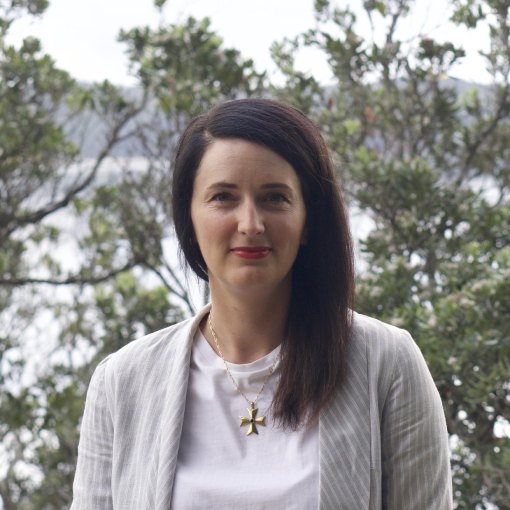
Thank you so much for the work you do and for sharing a little bit about the impact of your work on the biodiversity of the region. [00:20:00] Enter Susan Jackson, a Senior Marine Ecologist and Certified Environmental Practitioner in New Zealand at Tonkin and Taylor. Susan works with a variety of species that you find in the intertidal zone around the New Zealand coastline.
She has worked with Environmental Consulting in New Zealand since she relocated from the UK in 2007. Her passion projects are those that work to restore and enhance the coastal marine environment.
Susan, thanks so much for making the time today. It's really great having you on the show.
Susan: Yeah, thanks, Phil. Thanks for having me.
Phil: Let's get started with a really simple question that I love to ask. When people ask you, what do you do as a Senior Marine Ecologist and Certified Environmental Practitioner, what do you tell them?
Susan: Well, quite often people assume that I work with dolphins, so first of all, I have to tell them that that's unfortunately not true. I'm, I'm a marine ecologist, so I work with all sorts of different types of species, such as coastal, [00:21:00] coastal birds, coastal avian fauna, and the kind of animals that you find inhabiting the intertidal zone around the New Zealand coastline.
And so the type of work I do is working with. Our clients to understand their project needs and what they're hoping to achieve when they're looking at doing work in the coastal environment and trying to help them through that process.
Phil: And when you're working in that environment, how do you describe what a healthy ecology looks like versus an unhealthy one?
Susan: Well, quite often we would have done some investigations, some surveys. And we would look at the literature and research that's been done by others to understand what a healthy environment might look like in that context. So what animals, what plants might you expect to find there in an undisturbed type of situation versus what you might expect to find if the coastline or the site has been disturbed by human influences such as discharges or development for example.
Phil: So, you know, we understand that for people in New Zealand, it's important to engage with the local community [00:22:00] when you're doing this sort of, this sort of work. So can you share a little bit about why a local lens is important in a biodiversity program there?
Susan: Yeah, definitely. Particularly in New Zealand, the local lens is really important.
And that's because here in Aotearoa, New Zealand, we have a really high proportion of endemic species. So that means that we have species that live here that. are not found anywhere else in the world. And I think that New Zealand's really well known for some of the birds, like the kiwi, and lots of people have heard of the kiwi, and the kākāpō, and because I'm a marine ecologist, I'm obviously more focused on the marine environment, and it's an amazing hotspot for biodiversity as well.
And actually around 85 percent of New Zealand's wildlife is found in our ocean, which is 15 times larger than the land. So for example, seabirds, Which people in general know very little about, but the species that they're breeding here in New Zealand, around a third of them are endemic. So they're, they're not found anywhere else in the world.
And I think that's what makes New Zealand quite unique. And [00:23:00] that's why that local lens and understanding of the species that live here is really important. Because. We are the ones that are charged with that responsibility to protect these species. And no one else is going to do that on our behalf. And, and the other thing I'll just say about New Zealand as well is we're a small island nation, we're kind of way down in the Pacific ocean.
And because we're so isolated, we are. Um, in terms of the, the challenges that presents, but also the opportunities and we're experiencing a lot of the global issues that everyone else around the world is facing. But, um, I suppose that local lens and how we deal with those issues at a national level is very bespoke to New Zealand because we have to think about them in terms of our very high levels of endemism and also our unique culture that we have here.
Phil: So, I definitely want to get, come back to that bespoke approach, the local culture and government interaction. But first, something came to mind while you were talking. It sounds like a great opportunity because the [00:24:00] wildlife there is so unique, but it also sounds like it might make it more of a challenge.
Can you tell how it's more of a challenge in your experience because so little is known about that marine ecosystem? compared to other places that have maybe more common species or less of a diversity of species?
Susan: Yeah, absolutely. I think that, um, the challenges that we're presented with is generally that less research has been done and less is understood about The species that we have here, and there are, you know, there will be thousands of species that haven't been discovered or haven't been described yet.
Um, and that's due to the fact that we are such a small, um, island nation, and we don't know enough yet about what's there, but I think that you have to take the knowledge that you do have and, and use that as the starting platform. And we can't wait until we have discovered every single species before we talk about protecting them.
Phil: Yeah, and that seems to tie a lot to the, the connection between the indigenous communities [00:25:00] and the folks who've migrated to New Zealand over a period of time. Can you share an example that comes to mind about Tocan and Taylor's work that demonstrates that local lens and collaboration and considers indigenous cultural or historical knowledge in the practice of biodiversity?
Susan: Yeah, absolutely. I suppose I just introduced some areas. So the work that I predominantly do is, is focused around Auckland or Wellington, which is where two of New Zealand's largest cities are located. And I do a lot of work with coastal engineers and structural engineers through the development and infrastructure type work that Tonkin and Taylor does in the coastal marine area.
And I'm, I'm focusing on that area in particular, I suppose, because most marine flora and fauna reside in coastal areas and human induced changes to coastlines are a key reason for the habitat loss and associated ecosystem services that are lost alongside those habitats. So while under natural conditions, The ecosystems that you usually find at the coastal edge provide food sources and [00:26:00] shelter and nursery grounds for a variety of species.
When you have coastal infrastructures such as ports and breakwaters and revetments, it disrupts and replaces these types of rich natural habitat with what we would call kind of low surface complexity. And it doesn't provide the right conditions for the development of those diverse marine ecosystems that you would hope to see.
And also these types of environments, they tend to be dominated by nuisance and invasive species. So to go to that project example, so I recently worked on a project in Cobham Drive in Wellington, and the project was around a newly constructed footpath and a cycleway, which was next to the marine area.
And there was a long stretch of associated erosion protection, which was in the form of a rock revetment. And so the primary purpose of the project was transport modes and erosion protection. But what we also aimed to do was to incorporate ecological enhancements to try and bring back some marine biodiversity to what otherwise would be quite a uniform, hard engineered environment.
[00:27:00] And to get to that point, we looked at international examples and national examples of what we could potentially do. Do at this location. And we came up with these precast enhancement tiles. So they incorporate ecological specifications, but also in tandem with cultural aspects. So we also look to drill some retrospective pseudo rock pools into the rock environment as well.
And the concept behind both of these. These options, these enhancement options was to mimic the natural rocky shoreline features, such as rock pools that you find in the intertidal zone. This project really highlighted to me the importance of the local lens and finding a solution that was right for this location.
Wellington Harbour is, for example, a rocky harbour, it has a very small tidal range and that's very different to Auckland, which has three large intertidal sandy moody harbours with a much larger tidal range and different species that grow there, such as mangroves, which you don't find as far south as Wellington in New Zealand.
Not all solutions are going to work in all locations and [00:28:00] highlighting that we need a lot of tools in our toolbox to address those challenges that face us with biodiversity loss. A few years ago when we, when we started this project and we were working through it, there were only a handful of products.
That were available at that time that we consider using, we basically had to decide between bringing in an overseas product versus whether we could design our own product and whether we could get local constructors to create our own kind of bespoke tile. And for this project example, the client.
decided to design our own locally inspired tile and it drew on that kete basket design. Kete baskets being traditional woven gathering baskets that tie back to the collection of kaimoana or seafood at the water's edge. Why'd
Phil: they settle
Susan: on that
Phil: design?
Susan: We provide the ecological specifications, which says, you know, the tile is going to be this size and we need to incorporate as much complexity like surface roughness and depth, you know, different depths of structure in the tile to make it more, basically more [00:29:00] complex and more attractive for the growth of marine life.
And then what the designers were able to do is to incorporate any type of design they wanted, as long as they met those ecological specifications. So it could have looked. Like absolutely anything. And what I was going to say is that there's, we have examples now from other locations around the country, for example, where they're designing seawall enhancement units that have the design of local seaweed species etched into the face.
And it's a similar concept of creating that additional surface complexity for the attachment of marine life. And it can really look like whatever you want it to. So you can choose ecological aspects, like designing it based on seaweed species, or you can choose a different design. different approach like we did at Cobham Drive where we used that, that Ketty Basket Weave.
Phil: So this insight of using the local geography and the local flora and fauna to inspire the solution, has this led to any sort of new local, regional, or national regulations or understanding of how to better [00:30:00] use the law to drive? Change or protect the environment.
Susan: In New Zealand, we have had some recent shift in policy direction in recent years.
Not necessarily relating to specific types of restoration or enhancement, but we have the recent National Policy Statement for Indigenous Biodiversity. And that was gazetted last year in New Zealand in 2023. And the policy statement is part of Aotearoa New Zealand's response to biodiversity decline.
And it provides directions to local government to bring basically protect and to maintain and to restore indigenous biodiversity. And we have this overall aim of no more reduction in biodiversity nationally. So I think the, the policy direction is certainly moving in a direction of providing more guidance, um, to practitioners and guiding us down that pathway.
And, and alongside the policy, there's the development of guidelines and frameworks that support practitioners like myself to apply that national policy and legislation. [00:31:00] So in New Zealand, when we're working on a project and when we're considering the effects to ecology or biodiversity that's associated with a development or a discharge to water or a discharge to land, et cetera.
We use what's called the effects management hierarchy, and this is the internationally accepted approach to managing effects. And it essentially requires you to consider the extent to which you can avoid and then minimize and then remedy the effects of your activity. So more recently, there's further guidance on top of that, which helps to guide you how you can then offset or compensate for your effects.
And really importantly, if you truly consider that you can't sufficiently manage the effects to biodiversity, you need to seriously think about whether it's appropriate for that project to proceed. And that's a real change in direction from even 10 to 20 years ago, more considerations now given to the environment.
And the idea that a project might actually not go ahead based on that unacceptable cost of biodiversity is becoming [00:32:00] more commonplace than it was historically.
Phil: That's more commonplace globally or more commonplace in New Zealand?
Susan: Certainly globally and certainly in New Zealand. I think there's, there's a shift.
It depends on where you are, but New Zealand tends to follow a lot of our direction in this space, tends to come from international guidelines and frameworks. How would you describe why this
Phil: work is
Susan: important? I think because Likewise, to the rest of the world, biodiversity is in a general state of crises, and what we're all hoping to achieve through our work is bringing back biodiversity to our environment, and for me, to the marine environment.
And we need to be more resilient to external influences such as climate change. Thank you. An example of this is that in New Zealand, we've had a couple of really hot summers in terms of ocean temperature. And that's because here in New Zealand, we're subject to changing weather patterns that present alongside the El Niño and La Niña oscillations.
So that has a really big impact on our marine species. It can change the food resource availability. It can change It can be more welcoming to marine biosecurity risk [00:33:00] species, and it has had some impact on biodiversity programs such as groups that, for example, undertaking shellfish restoration projects.
So, I think what, what we're working towards now is a step away from the business as usual approach to development, and actually we're moving towards how can we make our marine environment more resilient and how can we reverse the decline in
Phil: biodiversity that we've observed? Can you describe a little bit about the balance of the sort of things that are happening in Okay.
So, I wanted to ask that let's, let's talk about, let's talk about some of the work that you guys have been doing, particularly in the marine space and particularly in the coastal climate. So, I want to start
Susan: with, uh, spring, which is really interesting because that's a, a the first spring of year, the first spring of year where, uh, you know, there's been a lot of work going on in the marine space because of, uh, you know, uh, climate variations and stuff like that.
And, you know, like there's been a lot of work going on in the coastal climate, on movement a little bit so that we. Can incorporate restoration or enhancement across the board. So all of our projects, [00:34:00] we would be looking for whatever opportunities we can feasibly implement at that site that's commensurate with the scale of works where, when our projects finished, basically we've left the environment, we've left the biodiversity in a better state than it was when we began.
That is the direction that the country is moving in.
Phil: As a parting shot, I have a quick question. If you could wave a magic wand and share any local practice and bring that practice or perspective to a national or global audience, what would it be?
Susan: Yeah, so in, in New Zealand and Aotearoa, we have a tikanga or a customary practice, which is called kaitiakitanga.
And it's the concept of guardianship. So we, as individuals and as collectives, we can all be custodians or we can all be kaitiaki for the species that live here in New Zealand or elsewhere. Um, and for the, the biodiversity that I suppose the place where you live supports. And. I think everybody has a role to play.
The work that needs to be done shouldn't only [00:35:00] come from central or local government. And there's a lot of work being done. I find that it's quite amazing when you delve deep the work that's done for biodiversity in this space by individuals and by volunteer groups and charitable trusts. And everybody's doing a lot of mahi or work, which has been led by some really passionate conservationists.
We can all take part and take a role in that journey. And that's something that for myself and the people I work with and the company that I work for, I think we all have to be a part of that journey.
Phil: Well, thanks so much for sharing your experience on that journey, Susan. We all have our, our part to play, and I hope that we can inspire other people through conversations like this to do theirs.
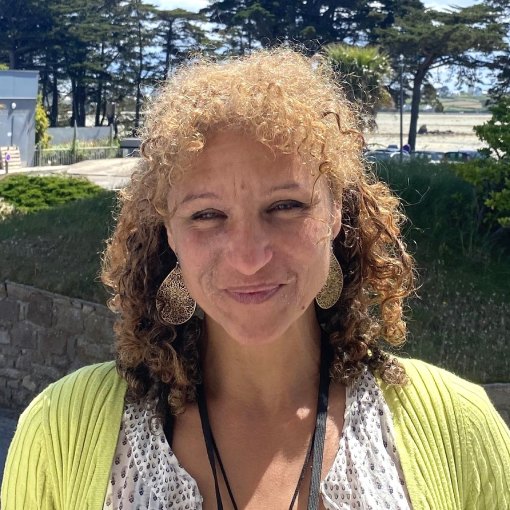
Now let's connect with Stephanie Leboniec, a project engineer at HPC International. Stephanie has a master's degree in Management of Natural and Exploited Ecosystems and a master's in Urban and Environmental Engineering. She has 14 years of experience as a project manager for various environmental research and conservation [00:36:00] organizations, focusing on marine and coastal ecosystems and species, and she's been working in biodiversity at HPC since 2021.
Well, super. Thank you so much for joining us and sharing some time with us today. I really appreciate the opportunity to speak with you.
Stephanie: Thank you. So
Phil: in your role as a project engineer, can you describe what you do from day to day?
Stephanie: I work on various projects, uh, about, uh, biodiversity and, um, uh, Because the current trends in biodiversity highlight both challenges and opportunities in conservation and sustainable development.
For our clients from the multinationals, for example, the increasing concern for biodiversity services translates into several implications and potential actions, which are risk management and resilience, like multinationals need to assess and mitigate risk in their supply chains. [00:37:00] that arise from biodiversity loss.
This includes ensuring the sustainability of raw material resources and protecting against disruptions caused by environmental degradations. Otherwise, companies may face operational disruptions due to ecosystem service decline. such as reduction water availability, pollination failure, and increased pest outbreaks.
Phil: So you covered a lot of ground there. Let's break that down a little bit and, and just start first with like, how do you define biodiversity?
Stephanie: Biodiversity is a group of three pillars. You have the diversity of genes, Diversity of species and diversity of ecosystems. These 3D diversities are on in interrelation that it's my definition of biodiversity, the five causes of biodiversity erosions, the IPBS site.
[00:38:00] We have five causes. of biodiversity collapse, and the climate change is only the third cause, because the first one is habitat loss, the destruction of natural habitats. The second is over exploitation of resources, like over fisheries, fishering, over deforestation. And third is climate change, of course.
And the fourth is pollution. We have pollution everywhere in water, soils, air. And the last one is the invasive alien spaces. So we need to think about all of this and all is linked.
Phil: Why does biodiversity matter in a country like France?
Stephanie: Biodiversity is important everywhere, not only in France. I mean, all ecosystems are linking.
You don't have borders. Between ecosystems there, there are function functional altogether. [00:39:00] So in France, biodiversity is important because we have a lot of endemic species. You know, it's not like tropical rainforest, but we have like a vulture. We have, they are really endemic. We can't find them anywhere else.
So we have to protect their habitats if we want to keep functionality in all ecosystems too. We need to take care of it. Biodiversity is really important because it bring us for humanity, the ecosystem services, which are a material service and regulation services that are really important because they permit to the humanity to, to stay alive, I mean, and to make them grow.
If we don't care about ecosystem services, We will have a problem. The consequences of the erosion of biodiversity will be really intense for everyone in all countries. You know, everything is linked. That means all the consequences are linked [00:40:00] together, like famine, civil wars, desertifications, armed conflicts, and diseases.
It's all is linked and if we don't look for the resilience of ecosystems, that will be crazy soon. So we, we need to, for the future generations, we need to take care of it.
Phil: Could you share a little about a project that you worked on that had Some impact on local biodiversity or protecting local biodiversity that had a real support, real consensus from the local community as well as the regulatory environment, the regulatory authority.
Stephanie: Yeah. About a project, the project in Roscoff, the new, uh, nautical center, because we had to respect the French water law, which is specific to protect and conserve the water in France, the natural resources.
Phil: Well, what did you do on the project?
Stephanie: It was about to make an [00:41:00] environmental impact assessment included in the water law report.
So we had to make sure the regulation was respect.
Phil: And what did you guys find? So when you went to evaluate, to make an impact assessment, What did you find was going on at the location?
Stephanie: The problem with this project is the area was not really good for the biodiversity because it's a herbal, herbal, and it was already polluted by metals and you have some spaces, protected spaces, like birds, we have 2000, I don't know the name in English, but Natura 2000, Natura 2000, which is a specific regular European regulation.
And, um, we had birds, but that's all. It's, it was not so, um, so, uh, various.
Phil: Steph, I'm hearing you right. You went to check out the environmental impact. The harbor was already polluted. A lot of the species were already depleted. There were some birds [00:42:00] that were around, but it was in pretty bad shape, right?
Stephanie: Yeah, at first, yeah.
Phil: So then when you find a situation like that, what is it your, what is your role to do? Is it your role to, uh, come up with a plan to solve the problem?
Stephanie: My role was to be sure the new nautical center didn't bring worse, more impacts in the arbor. That's all. But I didn't have, I didn't have the occasion to do more just to avoid the more impact.
That's all. For this, we have special regulations, which is the avoid, reduce, and compensate measure for avoidance, reduction, and compensation that were defined to mitigate any negative impact.
Phil: So this sounds tricky though for your client. I mean, if your client is trying to build this center, but it's already in a polluted environment, who does the regulatory agency hold accountable?
And how do they satisfy? to the regulatory agency that they're [00:43:00] actually able to not either do no more harm or to actually improve the environment in the harbor.
Stephanie: It's extremely, extremely hard to do something in this case for the arbor because you have a lot of fishermen, fisheries. It's a local fishery, uh, so they pollute with their hydrocarbons and stuff like this.
So it's not, it's not easy to do something because it's a historical harbor and we don't have the possibility to resolve the problem, you know?
Phil: This sounds even more and more like a textbook case, because what I'm hearing is there are multiple stakeholders in the conversation. There are the people who live there, there are the fishermen in the harbor, there are the existing businesses in industries in the harbor.
There's a new industry that's trying to participate and it's a really tricky, challenging environment.
Stephanie: Really? Yeah. To add a really good thing about this project, it was the benefits for the local [00:44:00] businesses because, um, it's good for the tourism. You know, it was good for the tourism because the nautical center, the old nautical center, was really in a bad condition.
So it was really important to make a new one, to have a new nautical center bring more advantage for the tourism. So it was a good economic and social impact. But for the biodiversity, it didn't change anything because at first the place were not really in a good health already. So
Phil: if I'm hearing you right, The local government, the local community wanted to have the nautical center there.
Stephanie: That's right. They
Phil: wanted it because they, they wanted to have a better access for tourism. They wanted it to showcase the beauty, natural beauty of the harbor. How long ago was this project?
Stephanie: One year.
Phil: In the year that followed, were there any unexpected benefits from the evaluation of the nautical center for the harbor itself?
Stephanie: You have more numbers, members now at the nautical center, but [00:45:00] now is more protected because you have activity on. The pollution is confined now. So it's good for the biodiversity.
Phil: Was that part of the plan then, that was that in part of building the nautical center? Was all of that part of the plan?
Stephanie: Uh, we didn't have choice, it, it was more dangerous to take off all, all this, the, on this boulder, because the cost should be really expensive to take off everything.
But it was better to, to let it, to know what we have inside the boulder, and first, and after this, to confine it. Because we didn't find anything really dangerous. For the environment of people, you know, or biodiversity too, even we don't have a really rich biodiversity. But, uh, yeah. And now you have really beautiful, uh, new nautical center and they will make in place [00:46:00] also some projects to bring biodiversity around it.
So it's really important too. And we, we gave consult to do it.
Phil: This sounds like it was a win for everyone.
Stephanie: Yeah. Yes, was better than before, for sure. Yeah, the next plane is bring biodiversity again, who has been lost since long time ago now in this area, because we don't have only fauna, we have flora too.
So yeah.
Phil: This sounds like to me that it was a win for the regulatory scheme. And if you said you want to avoid, reduce. and restore or compensate the environment. You've avoided adding anything new into the environment. You've reduced what was there by encapsulating those things that were possibly causing trouble.
And then now you're working to restore the environment so that there's more than just healthy birds that are around. There's healthier fish, flora, fauna. around the environment so that the harbor is more [00:47:00] appealing, it attracts more tourists, it has a healthier fishery, and who knows what other positive effects for the people that are around.
As part of this project, was there any sort of engagement with the community that you were able to showcase the difference between the beginning and the end?
Stephanie: The project involved mediation with various stakeholders, ensuring that the local community was engaged and informed throughout the process. It was really important for us because behind this, it was a political project too.
This, uh, for us, a sense of ownership and responsibility towards the conservation efforts.
Phil: Is that a really big part of making a project like this successful?
Stephanie: Yeah, for sure. Definitely. We need to involve people around, local population around. That is really important because if you don't take the, the, the opinion of a local population, it will be not sustainable.
Phil: Super. That makes a lot of sense to me. So as you reflect on the project and the [00:48:00] things that we talked about in terms of the importance of biodiversity on a local or regional scale, are there any thoughts that you have that you would take away, that you would share to A corporate leader of a multinational or somebody who's trying to think about the importance of biodiversity to them who wants to have a successful project like you did.
What sort of tips would you give to that person?
Stephanie: Uh, I would like to, to say to this person to take into account the risk management and resilience. Because it's really important to, to understand the supply chain's vulnerability, and it's the case for the companies and for the project to know what we need to, to assess in order to minimize risk in the, for example, for a company in the, their supply chains.
And it's also important to follow the regulation, regulatory compliance and standards. That it's really important too. [00:49:00] And to have a corporate social responsibility, that it's really important for the reputation. And of course, I think for the company's financial performance and investment, which is really important too.
That means They have to take into account biodiversity, because biodiversity, it's not, we talk a lot about climate change, but climate change, it's only one causes of the biodiversity loss. As the IPBS said, it's only, climate change is only the first third. Causes. We have five causes, so we have to take care of biodiversity too, not only climate change.
Everyone can act in our job, in with our family, with our friends. Individually, we can act. Politically, we can act. It's really important to do something now. We are all consumers. When we buy food, we need to know where that comes from and [00:50:00] what it, how it make it, how it make. What is the compositions of this and this, where that come from?
Is it from the other world and, I mean, the other country, far from here? We need to talk, to think about all actions, uh, all actions have, um, impacts on biodiversity. And we are a part of biodiversity. So if we want to take care of us, we need to take care of other species.
Phil: Perfect. Well, thank you so much for your time.
It was really great speaking with you.
Stephanie: Thank you very much.
Phil: Thanks again to Jose, Susan, and Stephanie for sharing their thoughts on biodiversity in Costa Rica, New Zealand, and France. Here are my top takeaways from our conversation. Protecting the natural landscape and the habitats of endemic species. is good for the environment, but when done creatively, it can also be good for business.
As is the case at the Zapatal Golf and Beach Club and the Nautical Center in Roscoff, [00:51:00] rethinking development, respecting all stakeholders, and honoring natural beauty can be a win win for all. Incorporating the local perspective and local culture is key, and it can create a stronger outcome when it comes to biodiversity work.
As Susan outlined, we can be creative in both our designs and choices in order to honor indigenous wisdom and local values. While it's clear that biodiversity efforts are unique and bespoke to each country, protecting species and protecting our environment has a global impact. As Stephanie stressed, everything is linked, and failure to protect the species in our world will have wide ranging global impacts for future generations.
Thank you for joining us on this episode of Rethinking EHS. We'd like to thank our exceptional guests for sharing their expertise. Please don't forget to hit that subscribe button wherever you listen to podcasts, so you never miss an episode. For more tools and tips on how to work globally with the local lens, check out the global resources page on the Inogen Alliance website to access [00:52:00] webinars, Downloads, ebooks, and more.
Find the link in the show notes or visit www. innogenalliance. com forward slash resources. Follow Innogen Alliance on LinkedIn for the latest updates. And until next time, let's innovate, inspire, and rethink EHS together.