00:00:00:05 - 00:00:36:19
BB
Hello everyone, and welcome. Welcome to season three of Rethinking US Global Goals, Local Delivery, Antennas and Alliance podcast. My name is Beatrice Bizarro I am. What is stewardship? Technology lead at HPC. It's lead global water working group leader at Emerging Alliance and host of today's episode on emerging contaminants microplastic, PFAs and six PD. Over the last year, we have seen growing interest and growing concern, especially on the behavior and especially the impact that many manmade substances and chemicals are having on the environment.
00:00:36:21 - 00:00:58:05
BB
And when I say the word environment, I am not only referring to our natural environment, but also to all built environment, which in both cases influences us directly as human beings. A very warm welcome to our session speakers. Ivy, new from Tara Parks Canada and Jack Sheldon from intergroup USA. It is a pleasure to have you both with me today.
00:00:58:07 - 00:01:27:03
BB
So Ivy and Jack, to kick us off, I wanted to start with, high level question. There is currently a lot of, global attention, a lot of momentum on manmade substances such as microplastics, but also on manmade chemicals such as P1 six, PPD, which we will be talking more about later. Why are these substances and chemicals being labeled as emerging contaminants, and what issues are they actually generating so as to start?
00:01:27:05 - 00:02:10:24
IVY
I think emerging contaminants are global, gaining global attention because advances in science are revealing a previously unknown threat to the environment and human. So in my case, I'll be talking about six EPT and six EPT Uno and six PPD quinone. It's a clear example of that. So it started with a chemical used for detecting in tires that was found to transform in the environment into a previously unknown and highly toxic compound now known as, you know, affecting aquatic life, especially in urban areas.
00:02:11:00 - 00:02:47:23
IVY
So this has highlighted, how that chemical, particularly transformation product that we never knew before. And it has increased that, great pressure on regulators and scientists to rethink material design and help effect assessment in our modern world. And I will, Jack, to speak about the other chemical compound, I think here in the US, when we hear emerging contaminants, we think of there are a lot of unknowns, which basically means we have a lot to learn.
00:02:48:00 - 00:03:12:13
JACK
Whenever we deal with an emerging contaminant, we start out with a baseline of information. But there's a lot to build on. And we PFAs is clearly been that, you know, we started out with some big high profile litigation cases that resulted in multi-million dollar settlements here in the US, and that all evolved into a tremendous amount of hype.
00:03:12:15 - 00:03:38:10
JACK
So something like this was in the news every day, and it still is in the news every day, whether that's on television or in the newspapers. We've seen documentaries on P fast, we've seen a movie generated on PBS. And so the hype has been really built, and that's what's led the public to have interest. Once you get the public interested, then everything else starts to follow.
00:03:38:10 - 00:04:05:14
JACK
The science catches up, the policy catches up. I think that's where we are with P fast. We're rapidly getting there with microplastics. And you know, we'll spend some time on six PPD today, six PPD quinone. And that's maybe the the lagging distant cousin. But also catching up rather quickly. So those are my thoughts. I, I wanted to ask you a more specific question on six PPD and six PPD own.
00:04:05:16 - 00:04:45:10
BB
I will not even attempt to pronounce the name in full, but as a subject expert that you are, can you tell us maybe a little bit more about this chemical in in what substances can be found, and why is it so relevant to us today? Right. Good question. So six PPD, it's a well known compound. It's basically an anti degradation chemical that have been widely used as an additive for tires since the 1970s to prevent tire damages such as cracking, drying, when when you drive the car on the road, it exposed to ozone.
00:04:45:12 - 00:05:18:13
IVY
So it reacts with ozone and is damaging to tires. And six PPD is to prevent that now and also further to obviously to improve road safety. But now we know when tire wear particles are released into the environment. Six PPD reacts with ozone and is transformed into a toxic byproduct. Now we know as PPD quinone, for longest time we could not identify this compound.
00:05:18:15 - 00:05:52:12
IVY
Now we had a breakthrough in 2020. Researchers in, at the lab in Washington state first time identified six ppd quinone, then go finally, after thousands of chemicals being tested for years. So this compound is found to be responsible for what we know as a phenomenon called urban runoff brutality syndrome. Farms where coho salmon are dying in mass amount in urban streams, before spawning.
00:05:52:12 - 00:06:35:17
IVY
It's pretty horrific when you see the pictures videos. So a little bit further about coho salmon. Coho salmon is part of the larger salmon group species. We note that salmon lakes are keystone and indicator species, meaning that they are decline. You know, dying off will signal broader quality issues in our freshwater and marine environments. They are culturally and economically significant, supporting fishery, holding along a functional importance for, many Aboriginal tribal communities in the US and in Canada.
00:06:35:19 - 00:07:14:02
IVY
Now, both compounds 66 PPD and 6BD quinone are very relevant today. Basically because they link every day our our, everyday life. Just as simple as driving the car to a significant environmental consequences causing widespread mortality of coho salmon and other sensitive species. Some species. So that really highlights the urgent need for improved infrastructure, stormwater management and safer chemical alternative.
00:07:14:04 - 00:07:41:23
JACK
Moving forward, I'll, I'll add just a couple things to what I've had to say, which was an excellent discussion on six PPD, six PPD quinone. I think one of the observations here in the US is that, six PPD, six PB quinone is a stormwater surface water issue, right. The salmon study is well known. Now, there's some lesser known studies associated with trout, various species of trout.
00:07:42:00 - 00:08:08:09
Unknown
And instead of that a federal or a state level, which we typically see as the regulating and the bodies of government that address these issues that come about. We're seeing more activity at a municipal level. So six PPD 650 cannon are being focused on by local municipalities, and they're the ones leading the charge on how to address these important emerging contaminants.
00:08:08:09 - 00:08:34:21
BB
So just a little bit, to add to what I've had to say. Clearly, Jack, as you mentioned, PFAs are currently dominating the the global conversation. They are literally dominating the global stage when when we think of emerging contaminants. But microplastics are also gaining a lot of attention and they're getting a lot of attention very quickly. How are these currently being addressed in in the U.S, where you are currently based?
00:08:34:23 - 00:09:05:05
JACK
I think one of the reasons for that, Beatrice, is that somewhere along the line, the terminology was coined Forever chemicals. Forever chemicals creates an alarm that, I personally don't like that terminology. I prefer to use persistent chemicals, but that that terminology forever chemicals creates all this hype around us, and it makes it an attractive topic to the general public.
00:09:05:05 - 00:09:35:12
Unknown
So the general public knows that terminology. And now everything is based on forever chemicals. It's all the policy, all the treatment. It's it's just used as a ubiquitous term across the board. And because of that, it has overshadowed other emerging contaminants. And, you know, if you think about it, microplastics have some of those same characteristics. And that's why I think now microplastics are starting to catch up a little bit.
00:09:35:14 - 00:10:06:12
JACK
But face has had a good head start and it's never dropped out of the news. It continues to be there each and every day. Microplastics are probably not yet at the level of fast notoriety, but I think what we can say about microplastics is that the actual topic is fairly easy for people to understand. People understand plastic materials, and that they're made up of particles or beads or pellets.
00:10:06:12 - 00:10:32:01
JACK
I think they can get a grasp on that concept, and because of that, they can understand how these microplastics can get into different things, how they can be sources, what kinds of products can be sources. So I think that's why, you know, PFAs has overshadowed things because we flooded the market with information. But now microplastics is starting to catch up because it's understandable.
00:10:32:03 - 00:10:55:20
JACK
People want to do the right thing and not be, polluters of the environment. So they're cognizant of simple things like water bottles or different materials that they purchase that contain plastic that may release these particles. So I think, microplastics, I, I know that we don't have the level of regulation in the US like we do with pieces for microplastics.
00:10:56:00 - 00:11:23:19
JACK
But what we are seeing is an emphasis on understanding how microplastics are finding their way into drinking water. That seems to be the rallying point for microplastics and individual states have focused on this. But now we're starting to see consortium of states come together and say to the federal government, you know, we need to develop a sampling program to understand microplastics in our drinking water.
00:11:23:21 - 00:12:10:22
BB
The XP 60 PD can own all these substances and chemicals have to be the label of of being emerging contaminants. And globally, I would say, you know, everyone has to see them or is in good. Now, starting to perceive them as as concerning. I be going back to you. What can you tell us on on the known effects and the impacts of six PD Keenan is is having on our health research is still emerging, but early evidence mainly based on, studies using animal testing species shows that the both compounds has lead to, skin allergies, respiratory issues, reproductive effects.
00:12:10:24 - 00:12:42:05
IVY
And then also they are both detected in human biological fluid. Just like we mentioned, they are widespread everywhere, not only in the environment but in biological tissues. So they can be present in breast milk and very cold court blood. And then some epidemiological observations associate six PPD quinone with disease like, colorectal cancer and Parkinson's disease.
00:12:42:07 - 00:13:24:12
IVY
So overall, this compound is great concerns because they are widespread in the environment, extremely toxic to aquatic life. And they pose emerging risk to human health. However, the actual risks to human are unknown, even though they are not believed to be acute like ho salmon, but that uncertainty itself, it's very concerning to us. Yeah. So we are clearly seeing an array, multitude of different contaminants emerging, pretty much on a global scale, I would say, although with different levels of understanding and an urgency, especially from a regulatory point of view.
00:13:24:14 - 00:13:57:15
BB
Jack, moving back to PE. For us, the world of PE fast is constantly evolving. We talk about new product bans, different remediation technologies, different treatments and and of course, new and emerging regulations. If I think of the US alone, you literally have a patchwork of state level laws rather than a single federal one. Where do you see organizations most successful is that at the moment and with different types of organizations right now, there's two schools of thought.
00:13:57:21 - 00:14:22:02
JACK
One of them is, oh, all this is very uncertain. Maybe I just put my head in the sand and I just ignore it for a while. On the flip side of that are organizations that are less risk tolerant and they, in fact, are embarking on their own programs to understand what their environmental, their worker exposure and their brand risk is.
00:14:22:04 - 00:14:43:11
JACK
Those are the ones that are really, I think, out ahead of the curve and really are starting to gain an understanding of what their real, what I call their legitimate risks might be. But there still are a number of organizations because there is so much information and it's so hard to get your arms around all that information at one time.
00:14:43:17 - 00:15:10:10
JACK
Their choice is to do nothing. So as a result of that, they're they're falling behind and they're not at a point yet where they can truly understand their risk. And piece ass information. Just talking about that exclusively. It comes like a firehose every week. It is a lot of information. And I would say on average, I see one new remediation technology a week related to piece ass.
00:15:10:11 - 00:15:36:14
JACK
That's how much activity there is. But there are, again, so many unknowns and everything is so new and it just takes time for it all to evolve. So yeah, really now organizations are in those two camps either do nothing or start in on a program now and truly identify your risk. But yeah, there's still a there's still a gap between what we need to know and what we do know.
00:15:36:16 - 00:16:04:06
JACK
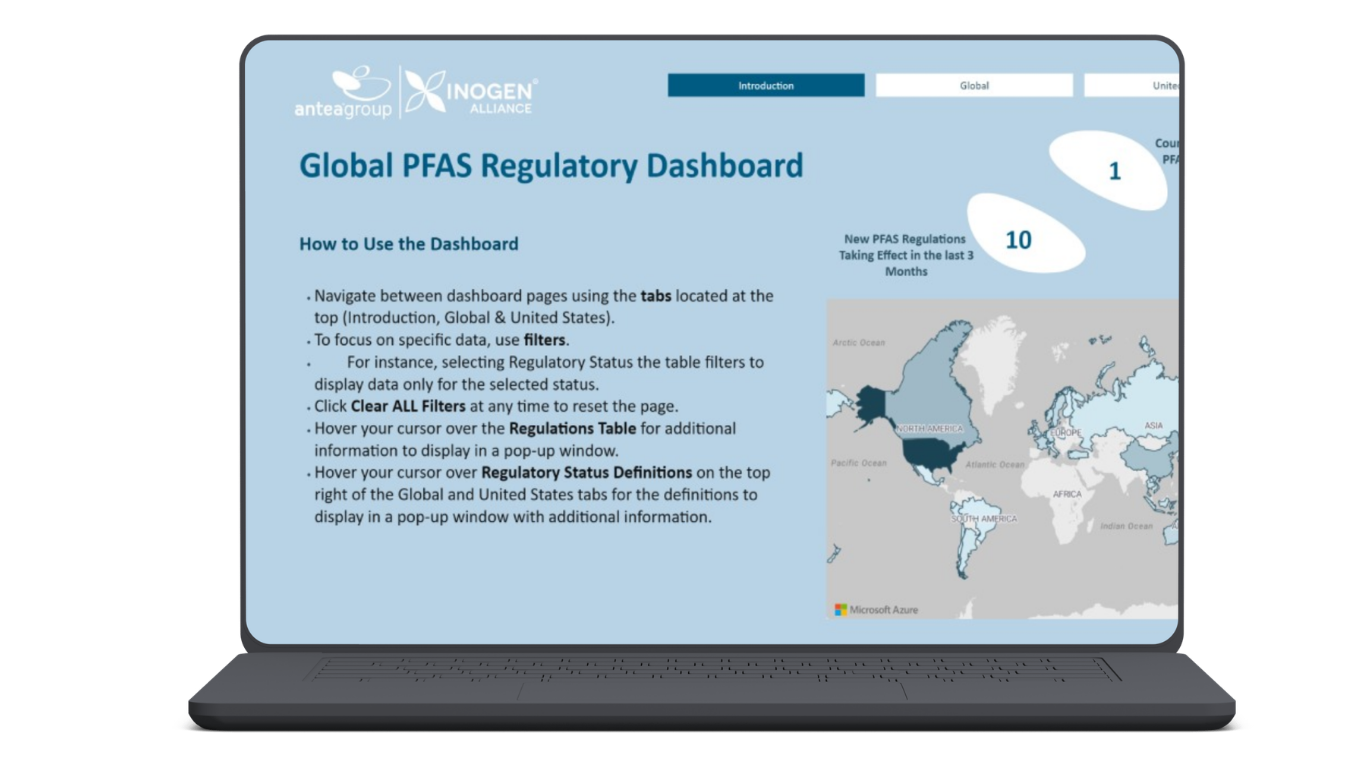
I know on our end here in the U.S, we built some very, robust screening tools to help clients understand risk in their supply chain and in their process and maintenance chemicals, as well as in their fire suppression systems. They also built a very robust, in collaboration with our sister companies and our innovation partners, probably the most robust regulatory dashboard in the world.
00:16:04:08 - 00:16:36:05
JACK
Now think we have, over 70 countries where we've captured the regulation, pending regulation, proposed regulation exclusively for fast. It doesn't mean we can't adapt to other things down the road, but that means that there are tools out there that are beneficial to clients, those people that have to understand their risks. And it's almost impossible for a client right now to understand all the information out there for a topic like SAS.
00:16:36:07 - 00:17:06:01
JACK
So they rely on people like ourselves that dedicate time to capture that information and then put it into usable tools that can help them make risk decisions. So I think, yeah, there's a gap yet between what we know, what we don't know, but we're gaining on it each and every day. I would like to send out a very big shout out to all the Energy Alliance colleagues out there that worked on the global PFAs dashboard and did an incredible job in making it come to life.
00:17:06:02 - 00:17:31:19
BB
As Jack anticipated, the dashboard currently tracks over 1200 PFAs regulations across more than 70 countries and 48 U.S. states. So it's an extremely useful tool tool for any user, really, that wishes to have a global. But even a more granular understanding of what's going on in terms of PFAs regulations or PFAs related requirements in a specific country or state.
00:17:31:21 - 00:18:02:04
JACK
Yeah, I'd say we couldn't do it without the alliance, because it's even though you have a dedicated team of people capturing the information, surely things will be missed. And that's why a local presence, understanding regulation, what's coming along is so important to feeding into that process. So we have talked, I would say, quite a lot about the impacts and and the challenges that these emerging contaminants are creating that are provoking, that they are causing at various levels.
00:18:02:06 - 00:18:17:16
BB
But there is, of course, as always, a silver lining to the situation when it comes to solutions to global solutions and risk management practices that are being implemented and piloted around the world, and also by our energy line associates.
00:18:17:18 - 00:18:48:07
BB
I think when it comes to mitigating the negative effects of six, CPD can own a stormwater control. Is is a key measure, as you were anticipating. Can you explain what that looks like in practice, maybe giving us, an example from from your work. Right.
IVY
That's a great question. Based on the studies that I've seen, risk management approaches at a high level can be basically divided into three main categories.
00:18:48:09 - 00:19:17:04
IVY
First is to control the score. So, you know, as simple as street sweeping with a truck with big brushes. And it can definitely reduce tire particles entering storm water system. Second is to basically control the water flow by slowing down water movement. It can limit the pollutant transport and migration into the surface water bodies in the urban area.
00:19:17:06 - 00:19:50:08
IVY
So now the third option is basically most investigate that so far would be to develop runoff treatment systems. And I will elaborate a little bit on this. There are multiple systems that have been studied. Ones would be a common one. We call it bio retention system with high organic contents. Around 10 to 20% organic content can vastly, improve the removal of tire particles from flowing water.
00:19:50:10 - 00:20:29:17
IVY
Materials like biochar combine six PPD and six PPD quinone to enhance the system performance. One very promising effective option its, power retention system with engineer fire retention. So a mixed media using layer materials like standard organic matter, mineral additive and the combination of these materials at a specific, percentages can act as a filter to treat roadway runoff before the water drain into urban creeks and streams.
00:20:29:19 - 00:21:02:21
IVY
And in addition, there are other, treatments options out there being investigated. One is to use, floating wetlands with selected aquatic species, just like, Jack mentioned that, you know, phyto remediation. You know, it could be it should be used as much as we can. We all foster green. Management infrastructures. So this would be also a great options as well.
00:21:02:23 - 00:21:34:09
BB
Yeah. It sounds like, a mix of engineering controls, monitoring and evolving policy frameworks. I now want to look ahead, let's say 5 or 10 years down the road. Jack, what does the future of PFAs management look like? Are you optimistic we'll take piece, for example. You know, right now there is a prevailing school of thinking that maybe we don't have the tools quite yet to destroy fast.
00:21:34:11 - 00:22:03:12
JACK
But what we can do is manage fast in the environment. So we have this natural retention concept that we're working with now here in the U.S, where we're going to keep fast where it is in the subsurface so that it's not migrating to water bodies, it's not getting to groundwater. So we're going to use that as a remedial approach until the time when destructive technologies can catch up.
00:22:03:14 - 00:22:27:23
JACK
And I'm excited by the technologies I see every day. They're all seemingly focused on destruction. With be fast. They want to break those bonds and be able to say that we have a broad level of activity against us, and there are a lot of technologies that have been demonstrated at a bench scale, but they just haven't had the opportunity to be put into a field scenario yet.
00:22:28:03 - 00:22:59:07
JACK
So we can test them out on a larger scale. But that's coming. But I also think, that we often think in terms of one solution. I think the answer to fast to microplastics will probably be when we have a remediation or a mitigation scenario, we're going to be combining technologies. I think that's that's, a good way to, keep the toolbox open and to apply all the things that are available to us for these mitigation purposes.
00:22:59:09 - 00:23:18:16
JACK
I don't think there's one tool that gets it done. I think a combination of them are going to help us get to where we need to be. And I, I don't know that we're ever going to hit specific numerical standards with these technologies, but I do think we're going to be in a better position to manage their risk.
00:23:18:18 - 00:23:48:16
BB
I be what would you like to see on the future in terms of management practices, of best practices in regard to six speed canon, especially from a compliance and regulatory perspective? I think right now that we we're heading to, quite, I would say optimistic, future of field, lots of ongoing research, out there to look for alternatives.
00:23:48:18 - 00:24:19:08
IVY
So in North America, here are some examples of, emerging alternative to six PD, you know, company car or Lexus Corporation. They are investigating the chemical that's in the same class as six PD. And the chemical, it's, short for six PE. Sorry, shuffle. CC PD it's gotten less, hazard profile than six PD.
00:24:19:10 - 00:24:56:11
IVY
And then a couple other companies investigating, graphene based materials that can hopefully provide same as a six PD like performance without forming the toxic quinone byproducts. Last but not the least, and that the company developing alternatives that use, the compound called six sorry, four ADP ascii synthetic intermediate. So these are all just examples, in the rest of the world, active development of six PD alternatives.
00:24:56:11 - 00:25:42:22
IVY
It's occurring such as in Europe, Asia, Japan, Asia, including Japan, same as fast for six PD, a global consortium of tire manufacturers representing companies from Europe, Asia, Asia, North America all contribute to this coordinated global efforts to develop, alternatives. Now for from a regulatory perspective, it's also looking pretty, promising Washington state. It's actually the first, jurisdiction worldwide to propose, path towards full, complete ban of six PD in on highway tires.
00:25:42:24 - 00:26:16:17
IVY
They aim for 2035 for a complete ban. And then in the meantime, they propose testing of six speed free tires. Begin in the year of 2027. And also they propose interim things apply on six PD containing tires to support the investigation of the replacements. So Washington states definitely at the forefront of this pathway in North America. Hopefully.
00:26:16:17 - 00:26:47:03
IVY
And I'm sure the rest of the world would definitely, you know, follow their lead towards, alternative, safer alternatives for us.
00.26.30.00
JACK
But I'll say right now that I think, at a federal level here in the U.S, our, our peace, approach is moving along at a relatively slow pace. But the individual states have picked up the ball and are really advancing their individual fast programs.
00:26:47:05 - 00:27:37:06
JACK
And because of that, there's a lot more information that's being generated. There are different types of, wildlife studies. There are, toxicology studies that are being done. There are more technologies that are being demonstrated. I think that's really good in terms of advancing peace as five, ten years down the road. As an environmental microbiologist, I would like to see some sort of discovery related to microbes and microplastics and fast or, more use of phyto remediation plants and trees and other vegetation to manage the risks associated with microplastics and as we've gotten there with those particular, bodies of science for other, contaminants.
00:27:37:08 - 00:28:07:15
JACK
But I don't see a reason why we can't ultimately get there for peace and for microplastics. Right now, the the prospects look bleak. You know, we don't we don't have very good studies on phyto remediation or microbial degradation of microplastics or FAS. But ten years from now, we may take that big step forward. And we've seen it with other contaminants like PCBs or MTBE, chlorinated solvents right on down the line.
00:28:07:15 - 00:28:37:01
BB
So never say never. As a microbiologist again, selfishly, I think the microbes can get the job done. I know we could easily keep this conversation going all evening, but it's time for me to start wrapping up this episode as a final thought from your side. Ivan. Jack, tell us, you know, one action that you would recommend to organizations, but even to a wider audience out there, what action should they start taking right now?
00:28:37:03 - 00:29:00:14
JACK
I would say that, for organizations, really the step they need to take is to understand what their risk is from these emerging contaminants. Right. If it may not be six PPD, six pbd quinone, it might not be microplastics, but it could be fast or it could be one of the other ones. Right. So understand what your risk is associated with that.
00:29:00:14 - 00:29:24:04
JACK
Don't be don't hold back and wait until everything else catches up. Now is the time to understand that risk. And if you're a person from the general public who's listening to this podcast, I would say understand what my contribution is, right? Are there plastics that I can cut back on that are contributors to the impact on the environment?
00:29:24:06 - 00:29:45:09
JACK
Am I catching up on all the latest news related to these emerging contaminants? All those things can be helpful. What am I sending to my landfill? What am I sending to my wastewater treatment plant? Understanding those things as someone from the public, can help reduce the load on all of those treatment facilities or on a landfill.
00:29:45:09 - 00:30:12:05
JACK
And I think that's really important. So everyone can have an impact going forward on these emerging contaminants, whether you're an actual organization or you're just, a person living their life day in and day out, they're exposed to all these different emerging contaminants. Thirdly, I totally agree with what Jack the like. So, for six PPD, basically very similar to what Jack has, you know, mentioned.
00:30:12:05 - 00:30:48:15
IVY
Well said. Really organizations again, be very cognizant about, you know, what they are proposing in terms of science and technology advancement. And they need to, you know, watch, for six PPD clinicians in this case, they need to watch closely, you know, development of safer and less toxic alternative that could eventually replace PPD quinone.
00:30:48:15 - 00:31:23:13
BB
A very special thank you to Ivan Jack for being with me for for sharing your thoughts, your insights, your your expertise.
For the second episode of season three of Rethinking Egis, as we celebrate our 25 years of the Innovation Alliance, this series is really a reflection of what makes our network unique global collaboration, local expertise, and a really a shared commitment to accelerate building a more resilient future for all of us. Make sure to tune in next week for our bonus episode with Avery, where we will be deep diving on the effects of 60 PD cannon on the coho salmon population in the Pacific Northwest and the USA.
00:31:23:15
BB
If you enjoyed today's episode and I really hope you did big, be sure to follow us on Spotify, on YouTube, on LinkedIn, Apple and share this episode and the series with friends, colleagues, and contacts from your network. Until next time, thank you for listening and for being part of the Eagles community, working to turn knowledge into action.