[00:00:00] Beatrice: Over the last years, we have seen the effects of climate change escalate dramatically all over the world. But in particular, we have seen these effects take an extremely heavy to warm water. Although water has historically been quite an overlooked element, it really is victim number one when it comes to global anthropogenic climate change effects.
What does stewardship can indeed be seen as a very valuable instrument, as a very valuable approach, which is supporting companies, multinationals, organizations, all over the world to look beyond their fence. But really increase the water security in a way that is not just long term, but also beneficial for all the actors in a watershed.
[00:00:46] Voice over: This is rethinking EHS where global goals meet local expertise to accelerate a resilient planet for all. We highlight practical solutions and bold strategies that drive change brought to you [00:01:00] by ingen Align.
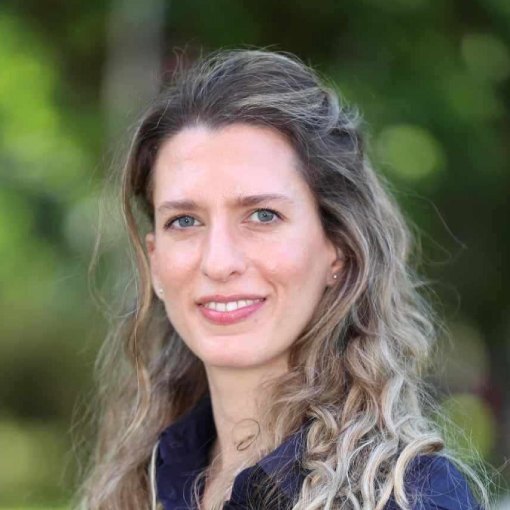
[00:01:02] Beatrice: I am Beatrice Bazaar Water Stewardship Technology lead at HPC Italy and host of this episode on water stewardship.
Within my organization, I also wear another hat, which I am extremely proud of, and that is serving Ingen Alliance as one of their leadership members, a leader of their international water working group. The Water working group of Intergen Alliance represents a very international, multidisciplinary community and group of water experts.
We currently have a coverage of over 40 countries. We meet once a month virtually and twice a year in person. And during this time together, we really. Use it to try and share our technical expertise, but also our best practice solutions that we are implementing worldwide. On today's episode, I have the immense pleasure to be joined by three of my water working group colleagues, exceptional water professionals that are actually sitting on [00:02:00] opposite sides of the world from me today.
But this has not stopped us. We have Anika senior consultant at Peter J. Ramsey and Associates Australia. Chris Shanks, environmental discipline manager and environmental scientist at to Taylor New Zealand and Italian Home Climate Risk and Water Stewardship Service Lead at Interior Group USA. Hello everyone and welcome.
Thank you so much for joining me. I want to start our conversation with this question, I think as. Water professionals that we are. Um, we are all very much driven by a sense of responsibility, rights. We have a desire to contribute to helping solve these global water challenges that we are seeing escalate all over the world and, uh, really in every single day.
I would like to know from, from all of you, uh, what is the, the motor that drives you in your profession and in your daily work in the water space?
[00:02:59] Natalya: My entire [00:03:00] life, I've lived in places that were very water scarce. And I think even, um, as a teenager going to school and learning about science and engineering, I was struggling to comprehend how we even.
10 years ago, 15 years ago, we're having such huge water crises in different countries, in different parts of the world and nobody was doing anything about it. That was massively frustrating to me. That's why I'm here. That's what I, why I do what I do, is helping people find their light bulb moment when it comes to water.
Great. Thank you for sharing that moment. And Annika, what about you?
[00:03:40] Annika: Kind of like Natalia. I've always lived in places, high deserts. Um, I'm in Australia at the moment and Australia's known for variable climate and frequent droughts. So one of the kind of tenants that I think is really important is that climate mitigation can't [00:04:00] succeed without water.
So that's really one of the first things that you have to look at, and that's one of the first thing that, first things that's really affected by it. So if we're not. Working to solve those problems. I mean, who's going to,
[00:04:14] Beatrice: and Chris, what about you?
[00:04:16] Chris: Oh, I, I'm almost the opposite. I grew up down here in rural New Zealand.
We've got lots of water. Yeah. We've been blessed with an abundance of water. So Scarcity's not necessarily the driver, we, not the early driver at least, but, um, I, I grew up. On a farm. And, um, in, in those early days, if you wanted to put in a water boer and, and, and water is, you know, critical to the success of those operations, if you wanted to put in a water boer, uh, somebody would show up with a pair of will sticks or some comes with bits of wire and, and walk around the farm and tell you where to put the Boer in.
And I just found it absolutely mind blowing that there was this kind of like dark art to hydrogeology and, and groundwater science, which intrigued me. It sort of prompted me into [00:05:00] following an, an academic pathway down there. And then in my sort of early career, um, there was a quite a big, uh, contamination outbreak and a water supplier down here.
And I, I worked really, really closely on that and it was, was a massive circuit breaker for my career. And I saw the social harm that comes from not managing water supplies well. That is a constant driver for me that. You know, we don't let that happen again, ever.
[00:05:29] Beatrice: And it's interesting to see, I mean, we're all sitting, like I said, on opposite sides of the world.
Completely different geographies and morphologies and hydrology. But you know, we all have water challenges, different water challenges, but we are all subjected to them. Uh, the other day when I was reading some of the material to prepare for this podcast, I came across your bio Annika and um, I saw the experience that you have in water.
I mean, it spans from water management, especially related to groundwater quality and [00:06:00] also to stewardship practices. So, for both your time in America and now currently to your time in, in, in Australia, and considering this diversity in, in your experience, uh, how do you see sustainable water management as well as water stewardship practices contribute to
[00:06:17] Annika: climate mitigation efforts?
I'm gonna kind of tie it to what, uh, Natalia was saying. So in Australia we are seeing more action towards water stewardship. It's still. Not super prevalent, but just based on the climate here, um, lots of businesses are aware of it, so businesses are starting to go that route. But one thing that we found with some of our clients is that, um, reputational risk actually plays a lot bigger role just because, um, recently we had a huge drought in Western Australia.
[00:07:00] And so if you have a client who's taking groundwater and using it and taking it out of the community, even if they're not taking that much, the uh, kind of the way that the community sees it is that they're the big bad guy, even if agriculture is using a lot more. So it seems like, uh, reputational risk is really a huge factor and really helping.
Uh, companies shape their water sustainability and looking at what they can do to help the communities and kind of just like driving that.
[00:07:37] Beatrice: It's actually really interesting to see how what you just said ties into what Natalia was saying. Ash, she was saying that water is, they don't really have much of a price tag, right?
Because water is fundamentally extremely cheap everywhere. So once we start giving a price tag to our water risk, that's when you know, people start going, oh, okay, well this could be a problem. And the same for [00:08:00] reputational risk. You know, when your reputation is harmed, somehow everybody kind of wakes up.
It's a bit of a pity, but we really need to reach sometimes that level to take action. But we wanna try and do it before, right?
[00:08:12] Annika: Yeah. And especially even if, um, like companies are doing everything right, they're looking at the sustainability of their aquifers and they're doing all the right things. But if the community doesn't see that and doesn't understand that the company is harmed and.
That's, that's obviously not anything that we want for our clients or that they want, so it's sometimes that is the thing that really gets them motivated to act and change their policies.
[00:08:43] Beatrice: Thanks Annika. And um, you know, um, I'm not gonna go ahead, go and head to Chris because what you said regarding how slow water stewardship has been in Australia and I think the same to New Zealand.
We talked about this a couple of weeks ago, that, which is stewardship in the [00:09:00] concept of which is stewardship isn't really that popular yet. You know, in, in Australia, in New Zealand, and it's. Strange because the word stewardship and woods stewardship, I, I, I said this to at a couple of congresses, it's not even translatable in I think, almost every language in the world.
You know, you don't have a direct translation for the word stewardship. However, there is a translation in locum Maori language, if I'm not mistaken. Chris, so do you think, how come, you know, you have a translation for this concept, this approach, and it's not that popular yet. How, how is it possible?
[00:09:34] Chris: I think the translation you're looking for is either Tamana or Twai.
[00:09:37] Beatrice: There we go. Yes, it's that one.
[00:09:40] Chris: I think because we're New Zealand as a nation's really young, um, you know, we're lucky enough to still have, um, really strong. Ties and DNA from our indigenous roots, we've got that connection and that that concept of tam comes through that, like you said, from from Maori principles and, and how, [00:10:00] how they see the world and see water in their, their small piece in the world.
And so it's, it's, it is a bit of an interesting one 'cause it's like, it is part of our DNA we're, um, we're really familiar with this concept of making sure that, or, or this, this understanding that. The life and the health of the water directly translate to the health translates to the health of the community that is existing within that catchment.
So that concept is not at all new for Kiwis, but in a business context, I think that's the part where stewardship hasn't quite. Being applied or, or which is kind of another word for this idea, that you really need to treat water with its own rights and life force and, um, respect it. This, it, it's that application that's still a little bit sticky in New Zealand.
And I wonder whether that, you know, going back to the comment I made earlier about water being absolutely abundant down here, um. I think it's, it's partly [00:11:00] because of that, that we've sort of, you know, when when stuff's abundant you, you often take it for granted. So I think there's a little bit of that going on.
The reality is, is that we're starting to come up against some of those sustainable limits. You know, we've, um, we've realized that we're, now, we're not running into scarcity, but signs are starting to show that we need to. Be really careful about our water use, and I think we will see a massive change in, in stewardship down here in the next five to 10, 10 years.
We've got, um, those concepts of koga and making their way into regulations and all that sort of stuff. So it's, we've got regulatory drivers and actuarial, physical drivers of. Scarcity standard pop up.
[00:11:46] Beatrice: I really appreciate, let's say these local insights and I think once you have it, like you were saying, so solid within your DNA and your culture, I think it's almost spontaneous and, you know, making its way into the more like [00:12:00] business side.
It, it's, it should be almost natural, so I'm, I'm very confident that it, it will seep into that as well.
[00:12:08] Chris: I think that friction that you were talking about inika as well between community. And business. And the business always being like on the back foot from the beginning just because they're a business and using water versus the community that plays out.
Yeah, massively down here as well. 'cause of their DNA element that's just like we've had the community screaming out for a really long time saying, it's got rights. You can't do this.
[00:12:30] Annika: Yeah. I mean another thing we see a lot here is um, like obviously one of the biggest worries is users, is agriculture. Like everywhere.
But in Australia, the amount of water that agriculture uses isn't really, um, tracked. So the agriculture could be using thousands of times more water than the clients that we work with. But because the water is staying in the community, like [00:13:00] staying in the community, it's um, it's like people don't realize it's still coming up out of the ground.
And so they're still depleting the aquifer. But since our clients are moving it out of the catchment, they're instantly seen as the bad guy, even though they're using such a small amount of water comparatively. So it is, it's an interesting, um, situation.
[00:13:24] Beatrice: But going back to what Chris was saying about you.
New Zealand not having any type of w viscosity problematic. You do have other challenges and other risks and like I was saying at the, at the beginning, I remember one of the first sessions that you held at the W working group was really on how Tokin and Taylor is using geospatial data to identify and quantify those water risks in, in such a big territory that is watershed.
And I think that really is a great example of working outside the box and [00:14:00] working outside of the fence line, fence line and, you know, understanding that the risk that my site could have is likely shared by others, uh, by communities, by other organizations, other multinational companies. So it is extremely important to do an investigation and to understand what is shared and what is tangible, not just for me, but for others.
And Chris, I'm, I'm curious, I mean, how do you think that technologies, and feel free to give any, any examples, especially of emerging technologies, if you can. How do you think that these technologies are playing a crucial role in strengthening water as well as climate action plans?
[00:14:41] Chris: I play in the, in, in the groundwater, in, in space, um, largely sort of drinking water supply type work.
I think one of the biggest challenges we've had and, and global challenges is the, is the cumulative effect on aquifers. You know, everybody takes a little bit, and we've sort of been talking about this already here, [00:15:00] but everybody takes a little bit and to understand the cumulative effect of that, you often understand, well, you often see it before you're able to predict it with anything modeling related.
We've had models for a really long time. Um. As we all know, but those models are getting better and better and better. And I think we're looking at a step change in our ability to predict those interwoven, you know, climate change, cumulative effects, you know, highly variable aquifers because of ai. Uh, I reckon that's gonna be a massive game changer for our industry, particularly in terms of modeling.
Which again is why, why I'm, personally, I'm super excited about indigent because it allows me to have access to people who are also following these things and tracking them like I am. And, um, being able to kind of collaborate and get all of our heads in a room and figure out how to, I guess, how to respond and be absolute front of the game on this stuff, um, is super exciting.
But I [00:16:00] think down here. Again, because of that kind of abundance we've had, we've taken it for granted. We haven't really looked too hard at the cumulative effects. We're now coming up against, um, those, some of those aquifers, you know, in Wellington and Christchurch and the Hawke's Bay reaching kind of their maximum sustainable yield or exceeding it.
And we're starting to see, you know, rivers and streams being impacted in terms of stream depletion and that sort of stuff. We're looking over our shoulders at climate change and thinking. We really need to move ourselves from a reactive standpoint to a predictive standpoint. And so there's some super exciting modeling happening and has happened in Wellington using numeric models, um, and ai.
You know, we've got some like regional scale water storage schemes that are being brought to market where we're using, and maybe this isn't a technological solution in itself, but it will be underpinned by. [00:17:00] Technological smarts to run the commercial model that sits under them and be demonstrating and understanding that those schemes are actually gonna be able to support ecosystem health and really offset the effects.
But having a regional scale water storage scheme where it kind of skims off high flow off a river when that's in flood stores, it, and then is able to be released to proper up, um, surface water and small streams and stuff. During irrigation seasons when you know those systems are coming outta stress from lots of pumping and the smart it sits under those to be able to predict how to release that water.
And when,
[00:17:40] Natalya: a couple thoughts, just to build on what you said around digital tools and how it's, I think the biggest thing that the new technologies and these tools are doing for us is they're actually freeing up time for experts to do that more. High level thinking and problem solving and interpreting of the results [00:18:00] to move us to that predictive space.
[00:18:02] Chris: Yeah, absolutely.
[00:18:04] Beatrice: I think we have so much data available and you know, very often, and this was actually something that came out of world would week last year, we are almost overwhelmed. So it's very important to have the right instruments, the right tool, and also the right space
[00:18:19] Natalya: where
[00:18:20] Beatrice: people can read these tool, not just water experts.
But even the community members, because what you're saying, Chris, I hope in New Zealand and like in many countries, the communities and the people are aware of what's going on because very often there's not that awareness to actually perceive, my goodness, this is a water risk that could touch me. Maybe not today, but in five years.
Yes. So Natalia, a couple of months ago, I understand that you and your team were awarded first price amongst the Ontario Group affiliates for your global climate risk assessment service. So well, first and foremost, well done. Congratulations. You must be very proud of this achievement, and my question is actually connected to [00:19:00] this achievement for, for the entire interior USA.
Given your experience in delivering both climate risk assessments and water risk assessments, do you see organizations treat water and climate in an integrated
[00:19:15] Natalya: way? Well, first of all, thank you. I could not be more proud of our team for the achievement. I have my nice little trophy that sits on my shelf proudly displayed.
So for me, work, shifting our work to encompass climate in my service line has really been, um. A big pathway to, as I said, helping people find that light bulb moment on water. So with climate risk assessments, we look a whole slew of physical risks from climate. And you see that water is that big mechanism in a way that we both, um.
Experience effects of climate change, but it is [00:20:00] also the mechanism in which we can mitigate a lot of those risks. I think we're on the right path in terms of integrated water management and kind of starting to look at those systems more holistically, but as. You know, as we heard a couple months ago at the Alliance for Water Stewardship Forum, we're, we're not quite there yet.
There's still a lot more dialogue and bridges to be built between all the different actors that make decisions and actually can move the needle on the impacts. Do you think that
[00:20:31] Beatrice: there has been a shift in mindset? So are you seeing progress, you know, just to see that light at the end of the tunnel, or do you think we are expecting.
A biggest shift in the hopefully near future?
[00:20:44] Natalya: Absolutely. I think we're seeing it. Um, I can speak to my work directly is usually with private companies and, um, as they embark on the journey of understanding their climate risks, they're starting. To kind of see how their global [00:21:00] portfolio or even their localized portfolio might be affected.
Um, and then they also start associating, you know, there's a price tag that comes along with every risk and that gets people's attention. As soon as we can assign a cost, the sign of value to something beyond, oh, I paid this much for my water supply and we're okay. That's when really the. The thinking starts shifting to something more holistic.
And then, um, in my state, I live in Colorado, very water scarce. But um, w. I'm starting to see on kind of the policy and the regulatory level. Our government is being very proactive. Just last month, or I think in June, um, our governor enacted some laws to support water conservation, climate resilience, biodiversity.
And so those three things all go hand in hand and have a direct impact to the economy. And I think that that's ultimately what gets people's attention. [00:22:00] Um, so I'm starting to see it. There's more to be done, but we're definitely approaching kind of a tipping point, I think. I'm curious to
[00:22:08] Beatrice: see and to hear your response based on your different experiences, but also based on your geographies, does the business community in, um, in your local context fully understand the close connection between woods and climates?
Natalia, if you would like to start.
[00:22:26] Natalya: I think that connection is building, mapping it out and understanding here's where your facilities are and this is where you might be feeling water risks in terms of flooding. You have too much or water scarcity. You don't have enough to keep your business operational, um, or keep your city supplied and provide water to your residents.
Um, the connection is becoming. More clear to kind of the larger community? I think
[00:22:59] Annika: Annika, what [00:23:00] about in Australia? I mean, Australia is one of the driest, inhabited continents. So everyone here is very aware of water, whether it's um, too little like the millennial drought where all of Australia was extremely dry for 15 years or something like that.
To, uh, recently we've been having lots of flooding along the east coast, so it's the problem of too little or too much. So I think companies are at least very aware of water as an issue, how much they're actually, uh, kind of accounting for it in terms of their, uh, climate risk and climate mitigation methods.
I think it's coming in. So I think it's kind of still, they're very aware of it, but they're not necessarily pulling it into their policies yet, if that makes sense. So it's, [00:24:00] it's coming. It's definitely coming, but it's not super integrated at the moment. Chris, what about New Zealand?
[00:24:08] Chris: Yeah, New Zealand, like you in are aware it's either too little or too much.
Most of the time it's. Too much, but it always hits the media. So the general public are highly tuned into climate change and the relationship between climate change and rainfall patterns and sea level rise. Uh, down here in the Pacific, we been, I think I used the term, looking over our shoulder at climate change.
We know that sea level rise is probably gonna hit us pretty bad or is hitting us pretty bad in the Pacific, particularly our Pacific partners. So that part, that part, that link between climate change and. And water is very well understood How that's materializing and how that's, I guess, affecting different, different sectors is we're starting to see, or, or we have had a period over the last few years of some pretty intense rainfall and [00:25:00] flooding.
Uh, you know, we had the, um, cyclone Gabrielle down here in 2023, uh, which caused, you know, significant flooding in issues. And we've, um, as a consequence of that, the, you know, the climate's been massive population down there are, you know, extremely impacted. Insurance companies are starting to, to clue into climate change and the effect, um, that, that's have having on their business.
And as a consequence of that, we're, we're now working with insurance companies to be able to understand climate change and, you know, flood risk and the geotechnical risks that are associated with. You know, having more intense rainfall in certain areas that have never had it before, and what that does for slope stability and, and structures of infrastructure and those sorts of things.
So some of those that we'd sort of previously not associated, you know, some of those sectors of, let's call it the market, had not previously associated them with climate change and, and those sorts of things are now really taking notice of it. [00:26:00] We are seeing some of the regulations take a while to catch up.
We are operating under what's called the Resource Management Act, uh, which has a whole bunch of, um, rules around environmental regulations and those sorts of things. And that, and, and then each regional entity has their own, uh, regional plan. And those regional plans, um, are updated every five, five years or 10 years, often get bogged down in lots of negotiation and regulatory fluff.
And so rules. Can take quite a long time to change. And they're just starting to do that now in terms of matching up that gap that has been there between water management and climate change and really like taking it seriously. And what that means is that, um, we're now actually starting to see the councils who are deciding where infrastructure and development should happen in a catchment.
They, they're [00:27:00] now starting to look at climate change. When they're making those plans and looking at flood mapping and soil stability and all of those sorts of things. But really that's lagging behind a little bit.
[00:27:11] Beatrice: I think that's shared to many of our, many of our countries. When we see the devastation, unfortunately, that's when we are all taking action.
But yeah, it's, it's true. It's true. Ta did you want to add anything to that?
[00:27:25] Natalya: I know the, the governance in the United States has been very strange when it comes to climate. We'll go into detail on that, but we, when our federal cost
[00:27:35] Beatrice: episode,
[00:27:36] Natalya: right. But while our federal government is taking a huge step back on a lot of the progress that's been made, we do have.
Kind of the economic force is pushing that change and being disruptors. Something that I'm seeing as the state of California, which is one of the biggest economies, not just in our country, but in the world, has pushed out this requirement for climate change, climate [00:28:00] change, um, and financial risk disclosures.
And so that's affecting so many corporates, private and public companies that are. Push to look at this. They're pushed to look at climate and how it inter place with their internal enterprise risk management systems. Um, and it's, it truly has been a disruptor that is a lot of the organizations to, that may not think that they need to be worried about it.
It's still foreseeing companies to, um. Do those reports and make those assessments and actually start drawing some conclusions out of it. But what I wanted to say, it's no coincidence that it's also coming from a state that's one of the most water scarce as well. So this is not just California being a good guy.
They also recognize that this has a very direct impact on their residents, on their [00:29:00] economy, and on their water security. So just tying it up, there is hope in the world.
[00:29:07] Beatrice: Natalia, we, we've shared quite a few conferences together over the last years from last year's World Water Week in Stockholm through the more recent, um, Alliance for Water Stewardship Forum in Edinburgh, and I think in this year's Alliance for Water Stewardship Forum.
One recurring theme was. A shared concern that I think we all as a community have was that we sometimes get a little bit lost in, in, in jargon, especially when discussing topics like, what's the footprint, carbon footprint, climate change, water stewardship. And, and my question here is, and and Anna, can Chris, please feel free to contribute.
Do you think that our global tendency to sometimes overcomplicate a little bit over structure. Very simple concept is kind of limiting action, or at least preventing its understanding and [00:30:00] inclusion of members and of communities, of stakeholders that are not even water experts. What, what are your thoughts on that?
I have many
[00:30:10] Natalya: choose. Choose a couple time. We have some time. So choose. Choose a couple. We tend to dig ourselves into technical holes. That's where we thrive, that's what we understand and we get 'em patient. When people don't want to consume this level of data that we think is important, that's very hard to sparse it down, but ultimately.
We need to simplify our language. We need to bring water as a topic back to our communities, and we need to reframe how we talk about water. As water professionals, we need to refocus on watershed health. What is the actual positive outcome we're trying to achieve? Because I can. Guarantee you a lot of the people will agree and feel the same way.
And then it's a connection back to a massive people and bringing the water conversation [00:31:00] back to the table in a more positive way that is more stakeholder inclusive and more approachable, frankly, across all industries and practice areas. The other piece that struck with me from World Water Week last year was, um.
Integration of indigenous voices. There's so much water knowledge and water rights and water governance. That's, um, to Chris's point is part of the language. It's kind of the ethos of how, um, indigenous people treat water resources. And so there's a lot that we can learn from that. That's something Colorado has been doing a little bit of.
I know Sweden has been doing that, but that's an. A huge untapped source of knowledge and wisdom on how we talk about water.
[00:31:49] Annika: So much water stewardship is working with the stakeholders and working with people who don't necessarily have that same background we do. And being able to convey to them what needs [00:32:00] to happen and why it's important and how it's gonna help them, and how it's gonna help the environment.
But yeah, if we can't, if we can't talk at that level for them to understand, no one's gonna care. And
[00:32:13] Beatrice: we need them to make a change, right? We need, we need all of them. And you know, if we can't, we can be great technicians, we can be great experts, but if we can't communicate effectively and on a very simple way, you know, kind of losing all of, all of that power.
Right. Chris, do you have anything to, to add to that?
[00:32:32] Chris: Oh, I was just gonna say, it's kind of that, um, translating that technical. Technical stuff, um, into a, like, this is what that means for you type part. 'cause people often want to, they, you know, they don't necessarily want to wanna understand all of that stuff.
And, and maybe even translating it as of of low academic value to them. 'cause it's kinda like, yeah, cool, cool, cool. It's just not their interest area. But what they wanna know is, how does this affect me? How does this affect my business? How does this affect my family and the community I live in? And then I think there's the, [00:33:00] there's the being able to translate or, or be able to see the.
The, the forest for the trees part. Um, and, and I think that's where we have a, a real responsibility, right? Is, is, you know, we, we are working on all of these individual projects and I think we have a responsibility to kind of nittle that together and, and be explaining what that means on a, on a larger scale as well.
That you know this, if, if you add all of these small factors together, then you get this big hole and, and this is how it affects. The community. I, I also think it's a bit two way, right? That communication piece that we also have a lot to learn. And I think you were kind of making this point, Natalia around those, in those indigenous and, and local type people who are on the ground, who are affecting stewardship, um, but also observing how the environment has changed and is changing and, and how those effects and changes are playing out in reality.
I think that's really, really important.
[00:33:57] Beatrice: Annika and Chris, um, this is actually a [00:34:00] shared question to, for the both of you. Considering that you are almost neighbors or at least sitting the closest, just a few hours apart in comparison to, to me and Natalia, if you had to name one overlooked or untapped opportunity for water stewardship in Australia, Annika and New Zealand Crisp, what would it be?
[00:34:21] Annika: I think in Australia, probably the reuse of treated wastewater for agriculture in the industry. Just since Australia is so dry and the climate variability is increasing so much that treated wastewater, it can be used for irrigation. It can be used for industrial purposes, it can be used for groundwater recharge.
And it really reduces the pressure on freshwater supplies and it helps to make the, um, climate more for the community, more climate resilient. And it's just, it's really under used in Australia because I [00:35:00] think there's the public perception that it's not, it's not clean. It's not something that we should be using.
Um, and then there's also some. Uh, regulatory issues that are still making it a little hard to kind of get moving. And there are also infrastructure gaps, so we don't have the systems in place to really be able to distribute and store the recycled water on a larger scale at the moment. Um, and then we also see, just like we've said multiple times on this, uh, pricing wise.
It's just so cheap to pull it out of the ground instead of putting in the extra effort to recycle it. And so that, uh, there are really those initiatives for change. But that would be something that would be incredibly useful in the changing climate to really start, uh, recycling that water and reusing it on a larger scale.
Chris, what about in New Zealand? [00:36:00]
[00:36:00] Chris: We would love to. Get stuck into some water re as well. One of our major water suppliers is doing a trial on water reuse, uh, at the moment. So we're kind of, we are definitely toying with that idea. And I, and I know in Queensland, uh, Australia looked at it, um, many years ago, didn't you?
Um, on a quite a large scale and made changes to allow for that to happen. So that's, I feel like those things are, you know, we all see the value in them. Right. And I totally agree with what you're saying, Anika like. It's, it's a no brainer that there's just so much of that water is being just, well tip down the drain and then causing harm elsewhere.
You know, that whole circular. So, I mean, we are looking at those things too, and, and pretty excited about them. Similar, similar issues, similar drivers, you know, the economics just really aren't there for us either. I keep, um, going on about how New Zealand's abundant and water, but, um, it can be a crutch sometimes.
So there's that. And I think, um, the [00:37:00] other, the other opportunity down here that is, is catching on maybe, or, or still a little untapped, is, um, like real time monitoring of our water systems, our source water, and those sorts of things. Uh, we're still quite basic in terms of how we are monitoring those systems and how we're collecting the data, how we're interpreting it in real time and what we're doing with it.
And I think we're missing a trick there massively. And I'm, I'm sitting back, well, not sitting back, but I, you know, I'm influencing where I can, but I'm, I'm watching that quite closely, hoping desperately that we are able to turn that around. 'cause I think, again, that would be another step change for us is if we could.
Intimately understand what was happening, what's happening with our systems, that would change how we view them and manage them.
[00:37:52] Beatrice: As a final comment from, from my side, considering all we've talked about, I, I would like to add that as [00:38:00] a professional working in the water space, I am seeing an evolution and a much stronger cross sectoral collaboration on the woods and Climate Nexus.
I think that it has improved from the past. I think that it is. Less sin than before, but there is still work to be done. More efforts to be put in, and certainly key stakeholders need to be brought to that table much more. We need to always keep in mind that climate and water, they go hand in hand and so do their solutions.
Water must not step in any way down from those high level conversations and policy level thinking that we have just started doing, and seriously acknowledging. As water experts, we will continue to do our job to the best of our ability within our alliance. We will keep nurturing this amazing and very special, if I may say so, global perspective that we share whilst maintaining, of course our very strong local positive impact by [00:39:00] supporting our local clients, our local communities in achieving great towards security, and I really hope a more sustainable planet for, for all of us.
A very special thank you, Natalia, Anika, Chris, for being with me, for sharing your experience, your insights, your thoughts, and of course, thank you to everyone out there who tuned in to listen. Thank you. Oh, thank
[00:39:23] Chris: you. Thanks.
[00:39:26] Beatrice: So stay tuned for our next. Bonus episode on water stewardship. In the meantime, feel free to check out our blogs on the ingen Alliance website.
There are lots of interesting material, both on water stewardship and climate resilience. And make sure if you haven't done so to check out our water stewardship episode in season one.
[00:39:45] Voice over: For more information on today's topic, head to inogen alliance.com/resources to stay informed about future episodes.
Subscribe wherever you get your podcast. Or sign up for notifications@inogenalliance.com [00:40:00] slash podcast. If you found this episode helpful and want to support our work, please rate and review.










.png?width=400&height=225&name=INOGEN-37-LinkedIn-Podcast-Campaign-01a%20(6).png)