Phil: [00:00:00] PFOS were invented in the 1930s and rose to prominence over the following decades thanks to their handy resistance to water, grease, and stains. They've made headlines in recent years as concerns over these man made chemicals and their impacts on human health, animals, and environments have grown.
Studies have revealed associations between PFOS exposure and a variety of health effects, including altered immune and thyroid function, liver disease, lipid and insulin dysregulation, kidney disease, adverse reproductive and developmental outcomes, and a wide variety of cancers. It's alarming then to learn that these man made chemicals are in thousands of consumer products, including non stick cookware, fire or water resistant clothing, and much, much more.
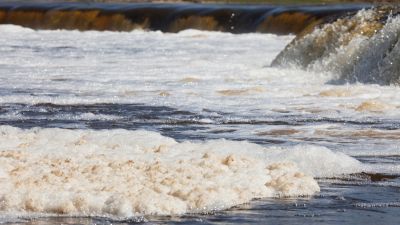
It's even more alarming that PFAS have contaminated our water sources, and that contaminated ground and surface water can expose Humans, to them, through all sorts of pathways, whether by drinking water directly, eating contaminated plants, or even eating animals that ate contaminated [00:01:00] plants or drank contaminated water.
Though some PFAS have been phased out, banned, or limited, others continue to be used in new product development globally. In this episode, we'll chat with experts from France and the U. S. about what PFAS are, the challenges we face in addressing them in our environments, and the risks they pose to humans, animals, environments, and to corporations.
Let's dive into the episode. I'm thrilled today to be joined by Jack Sheldon, a senior remediation specialist with Enteo Group USA. And our two guests from France, Lucie Robin Vigneron, Managing Director of HBC International, and Yolanda Boisson, a Project Manager at Enteopur. Jack has over 40 years of experience in the fields of environmental microbiology and remediation.
He advises on remediation technology selection, performance, and optimization across the U. S. and abroad. Jack is the PFAS, and Site Assessment and Remediation Service Leader for Antea Group, U. S. Lucy is a chemical and sanitary engineer with more than [00:02:00] 25 years of experience in the environmental sector.
Her professional experience covers a wide range of services in the management of polluted sites. with a specialty in health risk assessment studies. Yolanda has a PhD in contaminated sites and soils, and has been working in the research and innovation department of Antea Friends since 2001. She has been working on PFAS since 2019 and has developed a tool for pre identifying potential sources of PFAS in the metropolitan area.
Well, welcome everybody. Thanks so much for making the time. We're really looking forward to speaking with everyone. So I'm going to start with a pretty easy question to get us started. Can you explain in simple terms, what is PFAS or PFOS and where do we find it? I'm going to start asking Lucy to start us off.
Lucie: Not very easy, but what we can say, PFAS are molecules containing more or less, uh, C and long chains of [00:03:00] carbons and fluorine atoms. So this is this strong, uh, CF bound that gives PFAS properties, interesting properties for industry and highly useful. But first we have to know of what we talk about. We have PFAS polymers and monomers.
And polymers are the most useful in industry, we mean in medicine, equipment, electronics, and everything of high importance. And monomer are those that provide so much health and environmental concern because they are short, shorter chains, and they are, they have completely different properties, chemical properties, monomers are used more for, uh, A FFF.
Uh, so those, uh, anti firefighting forms and galvanization, some additives, et cetera. The concern and what we are talking about is environmental concerns is more monomers. We have more than 10, 000 molecules, maybe hundreds, thousands, we don't [00:04:00] know exactly how many we have. Now it's increasing every year, so at the end we don't know.
And for at the moment they are divided in 33 groups. around of molecules very different.
Phil: Thanks Lucy. It sounds like you really know a lot about the technical chemical components of it. Now I was, I studied physics in college. I wasn't a chemist and it's been a long time since I, I, I studied the difference, but what I'm hearing you say is the monomers are a little bit worse than the polymers.
I'm curious about why there are a large number of molecules that are out there. So this group of PFAS and PFOS, It's not just like one chemical compound. There are thousands of different compounds, so it's hard to identify them, hard to regulate them, and hard to classify them, and they last a long time in the environment.
Now, what I've heard is that we find them in, I heard you say, HFF. I actually have used aqueous film forming foam when I was at Uh, fighting fires in the, in the Navy, and I've heard [00:05:00] about them in non stick pans. So there are two questions that come. The first one is, what other products do we see PFAS and PFOS in that are exposing people to them?
And why is it in, in like layman's terms, That monomers are worse than polymers in the chemical construct of this class of chemicals. I see Jack Nod in his head. Where do you want to take this, Jack?
Jack: Yeah, so I'll continue on with the great information that Lucy's provided us, and that is, I look at PFAS as a family.
of compounds or an umbrella, right? We, we debate the definition, right? Because there are so many definitions now for PFAS, depending upon which one you subscribe to, there could be hundreds of thousands of PFAS, or there could be millions. I think one definition takes the number up to seven million. And I look at it as PFAS is found In products, then, provides a beneficial use to those products, which can make them grease resistant, fire [00:06:00] retardant, durable, have interesting slip properties or glide properties.
There's, there's so many different things that the PFAS chemicals can impart. So, that's what makes them so unique and so interesting. So, we hear a lot about the AFFF. Uh, I like to think of things like ski wax. That's something that, uh, we hear a lot about here. Textiles, the clothing that our firefighters wear.
You, you mentioned your, your role as a firefighter previously. And, uh, Again, the number of sources is endless. It could be paints, it could be stains, it could be food packaging. So the list goes on and on. So PFAS is found in many, many different types of products. But we hear the most about AFFF.
Phil: We share it because we, there has been a lot of, There's been a lot in the media, particularly in the U.
S., about HFF affecting military veterans and first responders. And we were told it was safe, and not only was it dangerous in its use, but it's also dangerous in the fact that it's contaminated groundwater and drinking water, so that [00:07:00] families of those people are also, also affected in a pretty horrible way.
And it seems that folks were, were covering up on some of the details about it. But, I never heard about, uh, ski wax and packaging, and that's kind of. Alarming. So Yolanda, we've talked a lot about the PFAS family of compounds. Are there other things that you find that are interesting tidbits that we should know about them?
Jolanda: First of all, I would like to say that according to the properties that Jack told about, they're very resistant. That's why they are so amazing, interesting for industry, but that's also why they are so amazing, big concern for the environment.
Phil: You said they're very resistant. What are they resisting?
Jolanda: Well, they are resistant to oil, water, heat, but they are also resistant to, for example, microorganisms.
So, they are very hard to destroy. And that's what makes them, of course, very interesting for industry because you can put them in very extreme environments [00:08:00] and they will, uh, perform. Persist. That's also why they are a very big concern because we have a lot of problems to get rid of them. And in the environment, they will not disappear by their own.
It's totally man made substances. That's really very important to realize. And of course, what we did not talk about is that they are a threat for health, human health, for ecosystem. Research is still going on. We have some. real toxicological studies on some of the thousands or millions, as Jack said, uh, substances, but there are still a lot, a lot of things that aren't unknown, um, but we can see from the toxicology studies that go on and also on epidemiological studies that, uh, well, they are related to health, um, issues like cancer and the crime disruptors.
They can be also responsible of low birth weight, for [00:09:00] example, there are a lot, a lot of impacts on human health.
Phil: So if we're talking just about the durability of the compound, how does this compare to other compounds out there, like say, I don't know, petroleum based products, or something else that we, that we see that provides a health risk, but maybe is broken down by some natural organism.
Go ahead, Yolanda. Thank you.
Jolanda: We have to make a distinction. Lucy talked about the polyfluor compounds and the perfluor compounds. And the difference is that the polyfluor compounds in their chain of carbon connected to fluor, some carbon might be linked to, for example, hydrogen. And this is their weak point.
And these ones can be transformed into the environment and environmental conditions, or some of them can. But when they break down, for example, by a lot of aeration or by biological processes, then The end [00:10:00] products are perfluor compounds. They are totally all carbon atoms are fluorinated. And these one won't break down in the environment.
Phil: So that's why they call them forever chemicals. So if I'm saying right, the polyfluor items just won't break down. There's nothing that will naturally break down.
Jack: I want to make a really interesting point here about something that is under discussion here in the U. S. All the recent conferences have made a major push to stop using the terminology forever chemicals.
The forever chemicals is not a technical term. It is a media generated term. And because of that, as Yolanda just described and Lucy alluded to early on, Not all these PFAS will persist in the environment. Some of them undergo transformation. There are even some of them that will volatilize. So the prevailing thinking right [00:11:00] now is that forever chemicals is a bit of a misnomer of a term and it creates undue fear and undue concern and we're trying to bring people back down to more practical risk.
So this is a very interesting development because that's technology. That terminology was utilized for several years and now all of a sudden the thinking here is that we need to go away from that because it's, it's not really clear on all PFAS compounds now. So it's something that I think we're going to see a transition away from that terminology because it's not technical based.
Phil: So that's a great, great point. Let's talk about plastics, for example. I know that bioplastics, certain bioplastics, in their purest form can be compostable in a backyard compost. They don't need a biodigester. But some need a biodigester because the chains are more complex. And some, they just won't break down except for, you know, a hundred years or something because of the plastic.
They're being [00:12:00] more complex chain. If I were to compare this to, you know, if you're going to fight a fire with water or with soap, that's a bio based soap. I know that that's going to break down, but if I'm fighting it with AFFF, I don't know how long it's going to take for the chemicals in it to break down.
How do we put a bracket around if we don't know how long they will last? What's the duration that we're really looking at if we're trying not to call them forever chemicals? Have we framed that the right way?
Jolanda: You can't call them forever chemicals for the whole group, but I think some of them will resist forever if you don't interfere, if you don't get them out.
You agreed, Jack, I think. Some of them, some of them will stay. Stay forever.
Jack: Certainly, well, or whatever, whatever that forever means, but certainly for tens of years. I mean, there's, there's some reports that the half life of some of these PFAS compounds is 90 years, for example. So that's a long time, right?
That's forever from our [00:13:00] perspective, right, as the lifespan that we have. So that's where the terminology becomes really interesting. But. Uh, we do know that some of them transform, uh, we've learned so much about the properties of at least a subset of hundreds of these PFAS compounds now.
Lucie: But as long as we have no, no better solution, actually, so as incineration, because we can only destroy them by a very high temperature.
If we had found a way to, to biodegrade or to, to, to, to destroy them in another way, we could use it in remediation. But That's not the case, actually.
Phil: So, we understand that there is a challenge. We understand a little bit about the chemical compounds and the technical challenge. Can we talk a little bit about why it's important for leaders to be aware of the impact of PFAS?
Lucy, can you comment a little bit about why that's important?
Lucie: Why it's important? Because it's already spread in the environment and we know already they are largely [00:14:00] present on mixed and, and for example, there are some This is in France, in the region of Lyon, where we know already, we have already a large contamination and this is already impacting every environment, including, uh, houses and, uh, gardens and animals and people.
And so even people in blue, they have a lot of concentrations of PFAS. So as we know that now that it's spread. So they have to take into it, to take it into account. It will be regulated more and more. It's already the case in France, in Europe. It's coming slowly, maybe too slowly because it's, I mean, the threshold values are evolving so, so quickly that the regulation are not, uh, speed enough sometimes.
Anyway, it's coming regulated. And then the industry, industrials, and everybody we have to take care and to, to, to comply with the regulations. So that's something already important. [00:15:00] Up to now, they cannot, because the environment is already too impacted in some places. So that, that's a real big challenge.
for them and they have to take it into account very quickly now because it's already spread a lot. I mean, it's manufactured since the 40s and we know since the 60s that they are dangerous for the environment and health. And we take them into account now in Europe from 2009 with the Stockholm Convention.
That's the beginning, taking into account and starting to limitate and production and everything and use and only so. It's already spread.
Jolanda: It's also important for business leaders because, well, we see now that they can be held responsible for, for this pollution. It can have very big economical impacts for them.
For example, in 2022, there [00:16:00] was a remediation agreement between the Flemish Environment Ministry and a big industry, and this industry must pay 571 million. Euros in remedial actions and it includes the sanitization of the area around the factory, compensating local residents and farmers, covering medical costs.
So, there can be very big, also very big impacts on the economy. on the economics. I think another impact on economics, we hear more and more about a ban of PFAS. Now, for example, in France, there is a proposition for a law to ban PFAS in clothing and textiles, but then all the textile industry, well, they will probably have to change their process of producing textile or they will have to find substitutes for the PFAS.
So this also has a lot of costs for the industries.
Lucie: And I would say another very important economical topic is the legal [00:17:00] aspect. I mean, uh, now there are some process lawsuits and that will, that will be very expensive also because a lot of people and regions impacted already.
Phil: So we started using the chemicals because of their utility, because of their ease of use, the things that they delivered, but we didn't know about the negative health and environmental impact.
For people, they lead to illnesses and cancers and God knows whatever else. For the environment, it can lead to the death of animals or fish or even making agriculture, making it unable to grow things in certain fields. So there's economic impacts that are, that are pretty deep and that so leaders should really be aware of this because Using these chemicals, continuing to use these chemicals can cause more problems.
Iterating on new variations of these chemicals can cause more problems. And governments and individuals are responding with regulations, are responding with lawsuits, and those are risks that companies maybe [00:18:00] didn't know before or that are fully coming to light.
Jack: Yeah, this discussion is good on the whole environmental aspect of PFAS.
When I work with clients, they, they group their risks into three buckets, right? As a business owner, these are the three risk areas they think about. So environmental, first and foremost, right? Do they understand where they have PFAS in their operations? Most often, they do not. So they need assistance in, you know, understanding that.
Then they want to understand how does that PFAS get into the environment. So that's the other piece of the environmental risk. Then their second risk is, and this is not one is more important than the other, they're all important, the second risk is worker exposure. If I have PFAS in my operations, am I doing enough to protect my workers?
That's another risk, and that's an evolving risk. We didn't hear a lot of discussion on that up [00:19:00] until very recently. And then the third bucket of risk is, what is my messaging out to my stakeholders and the public? How, what do I say about my operations in PFAS? What do I say about my products? What do I say about the raw materials I use?
Yolanda pointed out seeking alternatives. I mean, this is all really important. So the, the risk can really be grouped into these three different areas. And it's what keeps every manufacturer up at night trying to get their arms around what does it mean to their overall business.
Phil: Well, thanks, Jack. That's a great description of the, of the problem.
Can we talk a little bit about how big the problem of awareness is, like, like telling a story of some client experiences that you all have had?
Jolanda: It's important about awareness to realize that a lot of industries really didn't know that they use PFAS in their process because they, they buy, for example, uh, hydraulic oils [00:20:00] that they use, but in hydraulic oils, a lot of times there is PFAS, but because PFAS were not regulated for a long time and now only very few are regulated, even if you look at the safety data sheets.
of these products, products, you won't find PFAS in there. So in France, for example, a government exactly one year ago, the 20th of June, 2023, asked to about 6, 000 big industries, first of all, to make an inventory of all the PFAS that could be present in their process, and then do a measuring campaigns to look at the amount of PFAS in their discharge.
And, well, those industries, some of them asked experts to help them with the inventory and they were just, they couldn't believe all the different sources of PFAS that they could eventually have in their process. And this is really something that the [00:21:00] awareness, a lot of, of course, the producers of polymers, the producers of those.
Monomers, they know, but a lot of other persons just don't know that they use PFAS in their process. We have
Lucie: industry and agriculture, and that is, for example, in Brittany, we don't have a lot of industry that use such substances, but a lot of agriculture. And so we found in the inventory that has been done in all Europe in February 2022, I think, we found A lot in Brittany, and that is because of agriculture and use in pesticides, in a lot of products used in agriculture.
Jack: I thought about a mist suppressant client who makes products for the chrome plating industry, and they were approached by their local wastewater treatment authority who had said, we have noticed an increase in our PFAS concentrations in the wastewater we are receiving, and [00:22:00] we think that You, Ms.
Suppressant Company, might be a contributor to our increased concentrations. So they went back to our client, and our client knew that they were using PFAS as surfactants in their product, and, but they really didn't have an idea of exactly which raw materials it was coming from, what were the concentrations of the PFAS, so it sparked a whole internal investigation and audit of exactly what they were contributing and how it was getting to the wastewater treatment plant.
So that's a real world example of where. The local water authority, Wastewater Treatment Authority, realized that they're seeing elevated concentrations and backtrack to try to find the source of it.
Phil: So it seems like these are, it's difficult to have a really solid awareness of what's going into the products, uh, where the problems are, identify who's gonna, who's going to dig into them, and who's going to pay for them, and that's why this is becoming even more of a [00:23:00] challenge.
Are you seeing any trends that are different by region? Like, how is this different in the U. S. versus Europe versus emerging markets? I see a lot of reactions. So first, I would start with Jack and then, and then Lucy. What sort of things are you seeing, seeing Jack?
Jack: So we have PFAS being regulated at two different levels.
We have the federal level, right, with the EPA here, and the EPA is looked upon, they have a roadmap for PFAS that they generated. Uh, years ago, and they've now done an update on a couple of times. And we also have the state level regulation. So we have 50 states here in the U. S. And they are at all different sorts of levels in their PFAS program.
Some have very little going on. Some are even out ahead of the federal government. So we don't have a lot of consistency. In terms of regulation, and those states that were furthest behind, they have been looking to the EPA for guidance and direction [00:24:00] to kind of help drive their own programs. So they're, here in the U.
S., there's vast differences in regulation. And, you know, we're going to continue to see that until everyone catches up. And the EPA has said this year alone, they want to create nine different actions on PFAS. And they've already. Put four of them out early on in the year. So we know there's a lot of activity at the federal level and now states are trying to catch up accordingly.
Phil: Wow. That's pretty involved. Lucy, what are you, are you seeing things similarly or differently in Europe?
Lucie: So we have Europe, we have, uh, eu, uh, directives, and we have the , uh, the European Chemical Agency, which defined also sub regulations for food. So. EU, we had some directive for drinking water, for surface water, and for seawater.
And then, uh, and the countries are going slowly in those regulations [00:25:00] to transfer it in their law. So that's the case in France. But the only problem is that those regulations concern 20, 28 PFAS. And now we know already that it's really not sufficient. As we measure in the sources and in the polluted medium, we measure other PFAS that are not in this 20, and that are very important.
And so we know already that it's not sufficient. So in Europe, it's becoming stronger in the next years, but it's coming slowly
Jolanda: again. In France? Yes. Yes. It was really, I'm involved with PFAS in 2019, since 2019. And when I asked my colleagues, do you think this will be an issue? They said, no, this won't be an issue.
And then in 2020, So, there was a program on television on this big problem in the south of Lyon. And since then, I, I think in France, it, [00:26:00] it, it goes very quick. I think there are an amazing lot of things that are happening. I think we were a bit at the European scale. Some countries were already more engaged than France was.
For example, Germany, Netherlands, Sweden, they were already more engaged. Something which is a bit difficult at the European scale is that they, there was a drinking water directive that came out. And just Two months before, the European Food Safety Agency came out with a maximum tolerable, tolerable daily intake.
And of course, the water, drinking water directive was ready. I mean, in two months is nothing at the scale of decision making. It's, it's quite inconsistent because if, if I make a very quick calculation, for example, I could only drink if, if my drinking water is at. the threshold value, I could only drink [00:27:00] about half a liter of water a day, and I would already be at maximum tolerable intake.
And we see that in, in Europe, some countries are therefore already getting down. Uh, the drinking water quality standards. So things are really going fast in this way that new information is coming all the time, all the time, all the time. And we try to adapt all the time, all the time.
Lucie: as I said before, uh, we, we, we regulated only 20 pfas and then, and we know now that, uh, we could measure much more.
And, uh, we, we know much more. And for example, from the, the, the, those anti fire fighting forms, we know that the, the separates that we found in water, in ground water. are not in these 20 PFAS and they are the most important that we find. So that's always, I mean, the regulators have always one step too late after [00:28:00] the science and that.
Anyway, it starts to be regulated. It's a good thing. Step and we, we have to go, uh, further on the, and to help. Uh, I, I'm personally thinking that the, uh, threshold values that are, uh, actually regulated in Europe will change very soon because, uh, we know already that, uh, as you say, Yolanda, that with those threshold values, we have already a risk to, to drink water.
Jolanda: So. Yeah. Yeah. And, and we, we put all, all, uh, drinking water is based on 20 molecules and we put them all at the same level. But if you look at their toxicity, there might be a magnitude of thousands and there, there might be a thousand times more or less toxic, but we look at them at the same level. And as Lucy talked about TFA, this is really a very big issue in France now.
We find concentrations higher than the other PFAS. As Lucy said, it's the end chain, but it's also [00:29:00] TFAs, for example, used a lot in medication and it's used a lot in phyto products for plants. It makes the active substance in phytosynthetic products, they can be taken up by the plant much easier. when there's TFA.
So, this is also always weighting the risk and the benefits, because if you get the TFA out, you need to put more active substances of the pesticides, which are also very harmless for the environment. So, it's also, and, and about the TFA, it seems that it's much less toxic than, for example, the PFOA or the, The values that the maximum tolerable intake values that are given by the EFSA?
Well, it, it's, it's about 80,000 times higher than for the PFA, for example.
Lucie: Yes. But for example, short chains like uh, PFBA Yeah. Yeah. Are very toxic. So they are, yeah. [00:30:00] Yeah, yeah. For toxicity evaluating very quickly because for example, the, the FSA in Europe proposed, uh, some, uh, weekly intake in 2008, and now the one in 2020 they proposed is 3000 smaller than in 2008.
So in 12 years. Factor 3000 of difference because, uh, they take into account four of them now and before it was only for PFOA. So that's a very quick evolution in taking into account the toxicity and maybe we are not at the end.
Phil: So there's a lot of activity going on in, in, in the world.
Europe, where people were just trying to understand. Are you seeing things in other parts of the world? Are standards in Europe being translated to Asia and Africa? Are they moving? Are they moving independently? Are they seeing different problems? What do you see from a global perspective?
Jolanda: Asia, Africa, it's not so long.
Some, some things are [00:31:00] going on in Japan. For the rest, Asia and Africa, a little bit in the Middle East. Otherwise, it's not a big issue, the
Lucie: PFAS. Yeah. And the problem is the importation of products because if we import the products from such countries, we have a lot of impurities. So those monomers mixed with polymers, and then they're, they're spread more and more in the environment.
So, so the quality and the Purity of the polymers is a very, very important topic.
Jack: Of course, Australia has had robust PFAS initiatives for a number of years, and now, uh, we're seeing our neighbor to the north, Canada, start to pick up, uh, and develop their PFAS program, and everybody takes from others. PFAS, too, which is what's very interesting about PFAS.
I know countries borrow from countries and try to make their regulations better. And even here in the U. S., the states try to [00:32:00] borrow from other states. And Michigan is considered the gold standard here in the United States, that they got out ahead of the federal government on PFAS. And now everyone always talks in terms of, well, we patterned our program after Michigan.
So that's where it's all evolving now. So no sense reinventing the wheel if it isn't necessary, if there's some really good elements out there that you can build on.
Phil: So Lucy alluded to something that I think was really interesting. It's the difference between manufacturing a product and importing the product.
So if I went back to. You know, Jack, you talked about the different layers of risk, whether it's for the employees or whether it's consumers or whether it's the environment, for example. If I'm importing products with PFAC, it's different than if I'm manufacturing those products, but it also adds to the, to the challenge.
Can you clarify a little bit, I'm just trying to get clear on the, on the risk of products that are imported with it. Because if you said, I heard you say, it's not as big of an issue, for [00:33:00] example, in Asia as it is in Europe. Is it because people aren't aware at the manufacturing level, or there's not as much of an environmental protection issue or regulatory regime there, or is it something else?
Lucie: It's clear that in Asia, we don't have a lot of information of how it is. We know that the regulations are less strict, and then we don't have a lot of information. So, what we know that if we use those products in France And then, so we have some waste more, more polluted and contaminated by PFAS. That is a risk we have in France.
If we don't, if we use our products in our production, and then we release more monomers and poly and perfluorinated in waste. But I cannot answer very well. How is it regulated and how is it managed in
Jolanda: Asia? You know, Phil, on the other hand, I don't know how it is in Asia, but if, if you, if you think that, as I said, in France, it's an issue [00:34:00] only since two years.
It's very young. It's only two years that we talk about PFAS. Before, you never heard talking about PFAS in France. And I think in our colleagues from Brazil, they say it's, it's starting now. It's becoming an issue in Brazil also. But I think before it was not an issue.
So maybe in France, I think things really started to move. When? We found that a place with big pollution, it might, in other countries, it might be like this, that Once they know that there is a problem, it, it will go fast. But as long as you don't, you haven't identified a problem, there is no problem. But I,
Lucie: I would say that in France, we know for, for a long time that in such, in some cooking devices, we should be careful, but we didn't talk about PFAS, but We didn't know it was PFAS, but we, we knew already that we, we would have to be careful.
Yep.
Jack: It's clear here in the US, [00:35:00] and I suspect other places too, that the manufacturers have been the primary focus early on. And now we're seeing a transition over to those that import products, and in fact, in the U. S., we have two regulatory programs right now, two reporting structures that manufacturers have to go through.
One of them is annual TRI reporting, as we call it, or Toxics Release Inventory. for PFAS and that's approaching 200 individual PFAS that the manufacturer has to report on, on an annual basis and there's no minimum quantity to that anymore. If they become aware of it, they have to report it in this report and the Tosca reporting is a 12 year look back that's occurring here in the U.
S. right now where the manufacturer has to go back 12 years and look at records and information they have on what sort of PFAS and that is a monumental [00:36:00] endeavor for them to try to find that information and provide it in a formal report. So that sort of thing sort of is a check right now on industry.
To see what they've been doing, where have they been bringing in PFAS, do they make PFAS? And it's a, it's a very big endeavor right now, it consumes a lot of time for our clients.
Phil: So, This is a multivariable problem, right? In each region and in each sub region of each region, there might be different regulatory challenges, there might be different levels of awareness, there might be different history of governance or regulatory requirements that make it very difficult for one company operating across multiple regions to be compliant all around the world.
This is, that sounds like a really particularly difficult hairy problem. So if you're thinking about tips or advice for people to kind of get started in tackling this problem, how should a multinational think about [00:37:00] starting to get their arms around this problem in a comprehensive way?
Jack: I think it's first and foremost that whatever industry they're in, they're aware of what their industry group is doing in association with PFAS.
So to gain a basic understanding of how PFAS relates to their industry, and then they can go into their individual operations. And they may not have the resources to do this alone. They may need to hire a consultant to assist them in understanding the information and, and creating more awareness. So I think that's, that's a real big starting point.
And then, uh, to try to build on it from that standpoint. Because, On the surface, the whole PFAS issue is daunting to an industry. It's absolutely daunting with all the different aspects, as we've pointed out. So, there's a big discussion going on here in the U. S. right now as to, you know, where do we start with PFAS?
And the answer is, let's start with what we [00:38:00] know. There are many things we know right now that's very tangible, and we can address those things, and stop worrying about all the many things we don't know, because there are many things we don't know. But we will get there. Our research and our capturing of information will get us further along.
Let's take care of things we know right now. And those are ways we can make tangible steps with our industries.
Lucie: First, I would say we start with what we know. I agree. So we, we should first know what happened on the site and what happened on the environment, and then to try to understand from where comes pollution.
So, that's the most difficult today because it's, we have mixing of pollutions spread in the environment and we don't know, we cannot identify from where it comes. We know the producers and we know, for example, there was a big fire. and another one is user. So, and everything is mixed today [00:39:00] and biotransformation of, of the compounds make them, we cannot identify if they come from the production or a FFA, for example.
So, first understand the history of the site and the environment and And do environmental studies and so to understand. And then some products are replaceable. I mean, in your regulations in the future, they will start to ask for replacement of SSA. For example. And so that is those flurines, very stable, very persistent, that some of them can be replaced and some new products can be found.
Yeah, the advice is would be to understand first because, I mean, one, Industry cannot be responsible for everything, and they cannot pay for everything, so that will be a big challenge in the future to identify the responsibles of pollution and who [00:40:00] will pay them for remediation.
Phil: Super. Yolanda, do you have any additional tips that you would add?
Jolanda: Um, yeah, on mitigation, of course, if, if you found it historically, you have polluted your site, you should try to, of course, try to remediate as quick as possible before it spreads out even more. So then we go more to the remediation techniques. And as I said, Lucy, I think you should really invest in finding alternatives for the PFAS.
Yeah. Absolutely.
Jack: So that's, that's really good advice from both Lucy and Yolanda too. And there's two very simple things. In addition to that, one of them is get educated, right? Understand the whole PFAS issue, because if you don't get some education on PFAS, you're not going to know what to do with these next steps.
And then of course you have to think about, you know, That will take you to what your risks really [00:41:00] are. So, education is important. The other piece of advice, and this is as simple as it gets, don't wait. Don't wait. Because right now is the time to act on PFAS, right? As the knowledge continues to grow, you don't want to wait until the regulator is knocking at your door, uh, ready to impose fines or create action on your behalf.
So that's, that's really critical.
Phil: Jack made a really important point. Something I've heard consistently from Inogen consultancy is Then a lot of times corporations will wait for some sort of regulatory clarity before they make a move. But in this situation, it's a really unique situation because of so much activity going in so many different directions.
It seems like there's a benefit not waiting in by making some action. Are you suggesting that there's goodwill with regulators or governments or consumers by acting? Where are you in the, in the don't wait category?
Jack: I think it's [00:42:00] really important to control the narrative, right? And, and build that rapport with the regulator, right?
Don't make the relationship adversarial from the start. Create a partnership with the regulatory environment and you can drive the action then as a business, as opposed to waiting for the regulators to drive the action, which could be much more expensive, could come with a lot of other implications, could, could have brand impacts.
There's so many things that could be negative. If you sit back and wait, because then you've lost all control over the situation.
Phil: Well, great. Well, thank you very much for your time. We really appreciate you sharing all these great insights and look forward to learning more about how we can tackle this really difficult problem for People around the world who really want to solve it.
Thanks so much for sharing with us.
Jolanda: Thank you very much. Yeah. Thank you.
Phil: Hearing [00:43:00] from Lucy, Yolanda, and Jack about PFAS has demonstrated how complex the issue is and how challenging it can be for corporations to take action. This leads me to two key takeaways. First, PFAS are a major issue that companies must urgently address. Doing so is very challenging. While vigilance is required by all, many companies can be unaware to the extent of which they use PFAS because of reporting errors, or lax regulations, or a number of other reasons.
These errors and omissions can then lead to unintentional environmental contamination and regulatory non compliance. As a result, some authorities are now requiring companies to perform comprehensive inventories to better understand and manage their PFAS usage. Second, it's important to be proactive here and not reactive.
Proactive measures, such as conducting inventories and exploring safer alternatives, are crucial to success. Responsible leaders should take control of the narrative and initiate a partnership with regulators. This not only helps in regulatory compliance, but can [00:44:00] also mitigate potential legal and environmental liabilities.
Now, as regular listeners may notice, this is a recurring theme in our show. Taking proactive action is an essential key to success in rethinking EHS and building a safer future for us all. Thank you for joining us on this episode of Rethinking EHS. We'd like to thank our exceptional guests for sharing their expertise on addressing PFAS.
Don't forget to hit that subscribe button wherever you listen to your podcasts so you never miss an episode. For more tools and tips on how to work globally with a local lens, check out the global resources page on the Integrated Alliance website to access webinars, downloads, ebooks, and more. On the topic of PFAS, specifically check out the comprehensive ebook.
Find the link in the show notes or visit www. integentalliance. com forward slash resources. Follow Integent Alliance on LinkedIn for the latest updates. And until next time, let's innovate, inspire, and rethink EHS [00:45:00] together.
















.png?width=400&height=225&name=inogen%20PFAS%20podcast%20blog%20(1).png)