00:00:00:02 - 00:00:17:23
Welcome to Rethinking EHS, where we talk about global thinking and local delivery around environment, health and safety and sustainability. So from grid instability, rising energy demands, decarbonization pressures, infrastructure constraints,
00:00:18:00 - 00:00:21:06
Despite all of these challenges, businesses are really being
00:00:21:11 - 00:00:37:01
to improve efficiency, to remain profitable and look out to the future to determine how they can avoid risk and ensure energy resiliency. So today, that's what we're going to talk about. I am joined by two of my colleagues from the Alliance.
00:00:37:01 - 00:00:46:09
I have David Wyllie , who's the group innovation program director from Tonkin and Taylor in New Zealand. Welcome, David.
00:00:46:11 - 00:00:55:22
And I have Sofiane, who is senior consultant with Baden Consulting out of Switzerland. welcome Sofiane.
00:00:55:24 - 00:01:08:12
So let's start off at a high level. We're going to talk about energy. We're going to talk about businesses. When you think about energy resilience. It's been a constant discussion over the last few years.
00:01:08:12 - 00:01:17:11
But what are the strategic issues for organizations globally? David, let's start with you. Give us some background.
00:01:17:13 - 00:01:24:00
I know it's a lot to start from. Right. That's what we're going to start high and we'll go in.
00:01:24:02 - 00:01:49:21
cost is a real issue and it just continues to go up and in in New Zealand we've seen energy prices go up, you know, double in 20 years and the trajectory is still up. There's obviously the impacts of war that's impacting us in terms of where's the actual raw material going to come from to to create that energy.
00:01:49:21 - 00:02:12:12
Because being down in Asia-Pacific, a huge amount of our energy comes from the sort of Gulf and the climate change, you know, the extreme weather. We're seeing more outages, more issues. What do we do about that in terms of resilience to keep businesses going
00:02:12:12 - 00:02:22:08
and the impact of AI? It's interesting that that's changing our business on one hand, but it's also putting more energy demand.
00:02:22:10 - 00:02:27:20
And I can see that becoming a really interesting area for discussion down the
00:02:27:20 - 00:02:29:01
road.
00:02:29:03 - 00:02:46:15
You are a long way having having been out there a few times in the last couple of years. It's a long way no matter what, whether you're in a ship or a plane. So I can certainly see where that is a critical factor. So, Sofiane, let's let's talk about Europe. You know, energy volatility and security have been major concerns recently.
00:02:46:16 - 00:02:54:19
How has that shifted the conversation in Europe around resiliency and even conservation?
00:02:54:21 - 00:03:36:06
In Europe, the conversation around energy resilience and conservation has changed over the past few years due to growing concerns about energy security and price volatility. However, the situation varies considerably from one country to another because each tree has its own energy mix, resources and strategic priorities. Germany is a good example of these challenges. The country already completely phased out nuclear power, but it still relies on fossil fuels such as coal and natural gas to guarantee a stable electricity supply.
00:03:36:09 - 00:04:11:23
At the same time, Germany has invested heavily in renewable energy. Large wind farms, both onshore and offshore in the North Sea and Baltic Sea, contribute significantly to electricity production, while photovoltaic installations continue to expand across the country. Mountainous regions also offers opportunities for hydroelectric generation and energy storage, helping to support the integration of renewable energy into the grid.
00:04:12:00 - 00:04:30:13
Switzerland represent a novel interesting case like Germany. It has decided to move away from nuclear power, but at a much slower pace. The country previously operated five nuclear reactors and has already permanently shut down one of them.
00:04:30:15 - 00:05:09:14
However, Swiss authorities are taking a cautious and progressive approach to ensure that energy security is not compromised during the transition. Switzerland benefits from its mountainous geography, which offers excellent opportunities for renewable energy development. Also, wind power remains relatively limited and still represents a high potential. Photovoltaic installations are increasing, particularly in alpine regions where solar radiation can be very effective also in the winter.
00:05:09:16 - 00:05:15:01
Most importantly, hydroelectricity plays a central role in the Swiss energy system.
00:05:15:01 - 00:05:29:05
okay, so because the thing that I'm hearing is in I mean, obviously we could go to every country and the regional factors or the country factors are going to have a huge impact on energy resiliency, right?
00:05:29:06 - 00:05:42:21
I mean, that's what I'm hearing is really I think all of us are jealous of New Zealand because you already have green energy, and the rest of us are just pretending like we're going to get there.
00:05:42:23 - 00:05:50:18
We invested a long time ago in green energy, and I think it was because it was the best option for us,
00:05:50:21 - 00:06:05:03
you know, and this was before climate change became the big deal. But we've not done that much in the in the recent times. And it's coming to start. This was starting to catch up with us.
00:06:05:04 - 00:06:20:08
You know we're now looking at obviously putting more into wind. We have a lot of wind. We want to put more in. So we've been very slow at the take up on solar, if I'm honest, and that's starting to change.
00:06:20:10 - 00:06:30:17
And we're starting to see the issues with climate change, where, yes. You think hydroelectric is the the silver bullet, but we're now worried about the dry years.
00:06:30:18 - 00:06:55:02
And there are periods where we have a problem during those dry years and intermittent energy production from solar and wind is an issue for us. And and it's a big question because we don't we have no nuclear. Nuclear is not and it's probably not an option in in New Zealand. It is very anti-nuclear. It would be a massive leap for us.
00:06:55:02 - 00:07:10:17
And so we have a problem. Yes. We're 80% renewables for energy, for grid. But we have a problem in those dry years that we haven't solved yet.
00:07:10:19 - 00:07:34:17
So so basically, we all, although yours looks envious from the outside as as a green grid. Whereas as Sufjan pointing out, every country has its own, you know, plan to look at, you know, moving to a green grid, we definitely don't have it sorted out. And obviously being from the United States. I know that we haven't got it sorted out and we're not moving very fast.
00:07:34:17 - 00:08:09:20
So there's. So if we think about this from a business standpoint, right. So you know, we spend a lot of time helping companies think about, you know, resiliency. And they're looking at costs. They're looking at reliability I heard that sustainability. You know if I'm going to grow. Am I able to grow. We've got data center conversations. So if you think about all of the challenges around energy and as it relates to the private sector, what are some of the most common technical or operational gaps that you're seeing with organizations as they think about energy resiliency?
00:08:09:22 - 00:08:27:11
Resiliency. Right. So they're looking at whether it's in Switzerland or Germany or New Zealand or the United States, and they're saying, look, you know, I need energy to make my stuff or to do whatever it is that I do. What is it that is is really one of those gaps that many of those companies are facing.
00:08:27:13 - 00:09:14:00
what's really interesting because of New Zealand has some other interesting pieces. You know, we have a huge agricultural industry. Our primary exports are sort of milk and, and timber and, and other things. And so I'm really supportive of people taking control of their destiny with energy and localizing their generation and actually encouraging, you know, small, medium scale solar and wind in the right place and actually being consuming it yourselves, which actually gives a far better return on investment, lets you have control of, of your destiny and take some of the load off the grid.
00:09:14:01 - 00:09:31:07
And hopefully, if we're smart about it and the technology is getting better, we can actually say, okay, this, this, this, these additional pieces we put in where businesses are taking control of their destiny actually helps. The grid is not a hindrance,
00:09:31:13 - 00:09:56:04
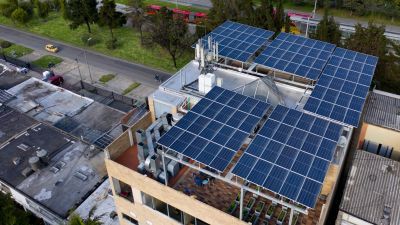
So when you think about independent generation, right. Which is such a great concept, you know, you see the car parks with the solar panels on top or here in the United States we have Walmarts that are gigantic boxes. But how's the regulatory climate to encourage that? Are you? I don't know what it's like in New Zealand. We can talk about some other countries, but that is a factor.
00:09:56:04 - 00:10:02:00
Right. On whether that's something that's really realistic for the private sector.
00:10:02:02 - 00:10:34:16
For is part of it. But also as the businesses get bigger, ownership of the land, ownership of the buildings becomes more interesting because, you know, our offices as an organization, they're all leased. So there's a landowner there. Does he or she want renewables? How long are we going to be at that site? It's much easier in the agricultural space because the farms are generally owned by the people working there.
00:10:34:18 - 00:10:58:04
So for industry, particularly the bigger industries, it becomes more complicated. But we've also been looking at other ways to be smart and sharing power, you know, peer to peer trading of power and allowing organizations to then look at saying, okay, we have numerous buildings spread around the place or sites maybe where we're consuming isn't where we can generate.
00:10:58:05 - 00:11:02:00
Maybe we can actually.
00:11:02:02 - 00:11:12:05
Generate in one place and consume elsewhere and still get a cost effective return so that that wasn't something available 5 or 6 years ago.
00:11:12:11 - 00:11:22:21
Okay. So let's let's let's take a step back from the innovative stuff and say, okay, yes, we can add mini grids and so on, but let's talk about conservation as a part of that resiliency.
00:11:22:21 - 00:11:34:23
And so if you know, if you think about conservation, how does that fit into that energy resilience plan for, say, a company.
00:11:35:00 - 00:11:47:00
Europe. The conservation around resilience and conservation has changed significantly over the past few years due to growing concerns about energy security and price volatility.
00:11:47:02 - 00:11:58:04
However, the situation varies considerably from one country to another because each country has its own energy mix, resources, and strategic priorities.
00:11:58:04 - 00:12:14:23
I don't think we've talked a lot about what companies themselves are really doing to look at energy efficiency. I mean, of course, because reducing use of energy is going to be beneficial. What do you see companies doing to minimize their energy consumption as part of the strategy?
00:12:14:23 - 00:12:16:00
Of
00:12:16:02 - 00:12:44:17
Yeah, that's a great point. So when we talk about energy resilience for multinational organization, the biggest challenge is that they are absolutely no one size fits all solutions. You are dealing with a fragmented world. Companies are dependent on local infrastructure. So you can have the best global strategy. But on the ground you are the mercy of local availability.
00:12:44:18 - 00:13:18:03
For example, if there is no district heating network available, it is more difficult to reuse the heat generated by data centers. Electrical grid stability is also becoming more of a challenge, with higher percentage of alternative energy production due to its seasonal and weather dependency. So then the regulatory landscape is a minefield. Even within the European Union, where you might expect some uniformity.
00:13:18:04 - 00:13:55:00
Politics remain deeply national. One country might even is nuclear energy, while its neighbor focuses entirely on wind or solar, each with different grant programs for companies and consumers. Or to some multinationals, have to navigate a complex mix of local infrastructure, infrastructure constraints, shifting national politics, and varying regulations and grant programs, all while trying to maintain a cohesive global operation.
00:13:55:04 - 00:14:14:19
when you think about a company, are they looking at like building optimization. You know, thinking even about the manufacturing processes. What are you seeing companies trying to do from a technology standpoint to minimize the use versus actually, you know, looking at the outside influence on the company?
00:14:14:19 - 00:14:24:05
but just thinking about what are companies doing, you know, because obviously using less is better when you think about resiliency.
00:14:24:07 - 00:14:41:19
interesting things and actually some government led pieces here as well. And obviously the ability to now monitor with IoT devices and everything else has the world has changed. And it's now much easier to try and understand what what plant is using, what, you know,
00:14:41:21 - 00:14:48:10
the ability to now control that, the ability to now optimize that and actually the control in real time.
00:14:48:11 - 00:15:20:07
So I can see that the management of or the demand side management is going to become a, a key part of, of it giving us resiliency in New Zealand. And I can see it being even down to a level where you've got your big industries are part of this and there's a real benefit for them. But even down to to consumer products as well, you know, to to fridges and air conditioning units, anything else being controlled in real time.
00:15:20:07 - 00:15:42:17
But the first phase is actually the understanding of what's using the power. And how do I optimize my processes to save, save myself some money as well as give the give me some resilience to to that point where actually we can work everything in real time to actually benefit all.
00:15:42:19 - 00:16:03:21
Well, I don't know about both of you, but I have a thermostat for my heat, right? And I can see anytime, anywhere on my phone what the temperature is, when it goes on and when it goes off. And I can tell it, oh, I'm not home. So, you know, put it down low so you can even see in our, you know, in our, in our daily lives.
00:16:03:23 - 00:16:23:06
We're, you know, we're thinking about how do I use less and some is cost right. The cost will drive that. And I think even for obviously for companies cost will consider definitely be a consideration from a consumption standpoint. But just the fact that we have data available to tell us, like you're saying, where we're using and how it's being used.
00:16:23:12 - 00:16:32:21
So I don't know if you had anything else to add to the idea of that. You know, the optimization, I guess, of use for, for companies.
00:16:32:23 - 00:17:12:13
So technology is evolving quickly and your example is great. So first, on the storage front, the shift in battery chemistry is fascinating. While nickel manganese cobalt batteries have done a lot of EV lifting, the buzz right now is around chemistries like lithium ion phosphate sodium ion on solid state batteries. So moving away from liquid electrolytes to solid ones change the game because it solves the biggest dash for large facilities, safety and fire hazards.
00:17:12:15 - 00:17:25:07
Alongside that. Molten salt energy storage is proving to be a massive win for heavy industries that need to store usage. Months of thermal energy for long periods
00:17:25:09 - 00:17:46:24
on the generation. On efficiency side, we are seeing Bryant ways to optimize existing assets. Take floating solar panels, for instance, by placing solar panels on reservoirs or industrial response. We are not just saving valuable land.
00:17:47:02 - 00:18:22:21
The water actually cools the panels, making them significantly more efficient. Or then you have waste heat recovery, which essentially turns an environmental byproduct into a secondary power source, making sure no energy goes waste. So finally, none of this works without a brain to run it. Smart meters and intelligent grid management systems are transforming passive energy users into active, resilient networks.
00:18:22:23 - 00:18:31:10
They allow companies to monitor consumption in real time, predict grid stress, and shift loads automatically.
00:18:31:14 - 00:18:50:12
Okay. So it's complicated is what we're saying. We we talked about some different regulatory frameworks. Every company I heard one size doesn't fit all. So if you think about multinational organizations and even communities, it's pretty complex because that energy infrastructure is going to be different. Regulations are going to be different.
00:18:50:14 - 00:18:56:20
I think what I'm curious about is, okay, so that's the demand because of the business.
00:18:56:21 - 00:19:27:00
What about demands from a decarbonization standpoint? So, you know, we've got different goals globally. And it's really almost on a country by country basis. But how are balancing decarbonization goals with their operational requirements. Right. You know, and as I sit here from the United States, obviously we're not the best example of setting decarbonization goals. But I do know in the private industry we are you know, we are moving forward with those goals for sure.
00:19:27:02 - 00:19:43:07
But it varies. So I'm curious. I mean, David, you're kind of shaking your head. Yes. I mean there is a business requirement like, okay, we all need to look at it from a business side, but what about a decarbonization? Is that driving it or is it more the business needs that are driving it?
00:19:43:09 - 00:19:50:09
think the two can work together here, and this is why it's a really interesting and I think,
00:19:50:11 - 00:20:14:19
a few years ago, if you wanted to, to go down the green route, it was it wasn't the cost effective solution. You were doing it because you wanted to do the right thing, but now you can achieve it. But it's also going to be the the best long term solution ends going to save money and do the right thing.
00:20:14:21 - 00:20:45:17
There's a little bit of a mindset shift still required, though, because I don't think everyone fully, fully sees that yet. Then actually you can do the right thing and save yourself money. And so yes, and I think government in New Zealand has been slow. And it's interesting that in in Australia it was slow for a long time in terms of, you know, Australia has now got more, solar on households per capita than anywhere else in the world.
00:20:45:18 - 00:21:16:19
It's up there is ridiculous. But it started out with the government being not supportive, but it got going then. The government has become very supportive and it just exploded. And I can see that happening over here. And maybe it doesn't even need the government to be behind it, because the costs have got down to a point where individuals and businesses are saying, actually, this makes sense, we'll just do it.
00:21:17:00 - 00:21:43:05
It becomes more challenging for the larger organizations, as we discussed area earlier, because it's bad if you're going to do your own thing and do things differently. Can you do it because you don't own your properties and everything else? But I see us going green for the right reasons. Plus, it's not a cost to us anymore. It's just a mindset change that we need to have.
00:21:43:07 - 00:21:54:21
And when you are working, say, with a company on energy strategy or resilience planning. You know what. What are you talking about with those companies? What are the areas that you're focusing on?
00:21:54:23 - 00:22:26:04
My interest, I, I, I tend to work with community and local governments and, and those kind of organizations, organizations that have a lot of spread out facilities, have big energy needs and want to want to actually take control of of their future destiny and are looking at the cost of energy just increasing. So I'm trying to help them say, okay, we can take advantage of all of these facilities.
00:22:26:04 - 00:22:57:21
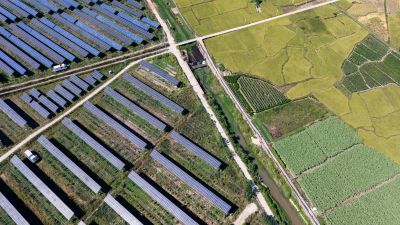
You've got to be able to share that energy. Interesting. We've been working with a council that's got a closed landfill and saying, okay, great place to well, let's go and build some a solar farm on top of this and, and have that and share that energy. So I'm helping them think about those facilities in a different way. And rather than dealing with that mindset, saying, oh, this is going to cost me a lot of money thinking this is actually going to save you a lot of money.
00:22:57:24 - 00:23:04:23
Plus it's going to be green energy, plus it's going to protect you from future energy inflation.
00:23:05:00 - 00:23:26:00
You've got that feature protecting as well. And so I mean Europe obviously the decarbonization goals are much more set and aggressive. What kind of what do you see as areas of discussion when you're working with private companies around setting those goals, those decarbonization goals?
00:23:26:02 - 00:23:41:10
So how do you take harmonize without sacrificing reliability or breaking the bank? So the reality is that sustainability cannot come at the expense survival. Every business has to operate profitably.
00:23:41:16 - 00:23:55:02
So if a green strategy is returns the bottom line, it simply won't license one last. So a major piece of the puzzle is operational continuity. Heaving the streets and large facilities.
00:23:55:05 - 00:24:26:04
Come. Just pause when the sun goes down or the wind stop blowing. They need to keep their machinery running nonstop. So to achieve this, while cutting carbon, we have to look closely at advanced storage solutions. But we storage. The obvious answer. But what was also play an important role in storing energy and the grid? Potential energy storage solutions were heavy.
00:24:26:04 - 00:24:34:12
Blocks are lifted into the. The hair are only found in niche applications today.
00:24:34:12 - 00:24:55:06
So we're going to move on. So let's, let's as we're kind of closing up here, let's talk about innovation and emerging technologies. Always exciting. You know I joke about my my little thermostat. But it is amazing what we can get now that can be connected and can actually be smarter than us and in the background doing good work for us.
00:24:55:06 - 00:25:05:15
So what I'm curious is what's emerging or existing technologies and innovations are you excited about in the area of energy?
00:25:05:17 - 00:25:09:16
David can be our expert in this.
00:25:09:18 - 00:25:14:13
He looks excited. He looks excited.
00:25:14:15 - 00:25:43:19
going on, interesting things going on I and a couple of is the battery technology. As Sophia mentioned earlier, there's some real interesting things happening in that space. You've got some real great things in terms of this sort of energy density, cost and ability to recharge. But there's also some interesting things in real low cost, almost batteries that can be made locally.
00:25:43:21 - 00:25:50:09
That is coming to the fore. Okay. It's not going to be driving your car, but a static storage, it's going to work.
00:25:50:09 - 00:26:10:00
It was interesting in, in New Zealand we have a fairly weak grid and they've just put a, a fast, well, fast this charger down, south from here. But to do that, they've basically made a battery buffer using second hand Nissan Leaf batteries, you know.
00:26:10:01 - 00:26:38:11
So so it's a big shed full I think 26 Nissan Leaf batteries or something silly, which gives you the buffet be able to do, which is a fantastic sort of reuse. Plus, the ability to rapidly, rapidly charge cars. But with the IoT stuff which we spoke about before. So actually understanding what how things are working, the ability to control plant and machinery, the AI and predictive analytics you can understand, particularly when we're talking about renewables.
00:26:38:11 - 00:27:04:03
Well, what how much are we going to generate tomorrow? How much are we going to generate the next day. And having ourselves set up. So they were optimizing, what we're pulling from the grid, what we're consuming on site, what what we, we're generating and knowing what we're going to generate tomorrow and this ability to share that energy around as well, whether that's in a microgrid or the virtual power plant, which I, which I really like.
00:27:04:03 - 00:27:06:12
So you can actually say we can get
00:27:06:15 - 00:27:45:12
value out of this without having to necessarily own the assets, but be able to trade energy in a peer to peer sort of way, which is becoming really interesting, particularly for organizing some of these bigger organizations and some of these social pieces as well. We're doing a great bit of work for a community down in the, well, south of the North Island, which is allowing us to build out 5000 systems on properties to serve 15,000 properties, give them some resilience, but pull the energy costs down from about $0.37 to $0.25.
00:27:45:12 - 00:27:52:09
So there's things that weren't possible a few years ago that we can, now do.
00:27:52:11 - 00:28:19:05
The technology is definitely contributing to that resiliency. And I'm hearing a potential to reduce costs because of the reliance on higher cost energy options. So that's that's positive, right? I mean I can see that. And obviously I think companies are probably the best at seeing that and adopting it because it's what allows them to stay competitive and move forward, you know, and that that that more resilient future.
00:28:19:05 - 00:28:38:19
So good. I'm glad you're excited about it because I'm excited about it and I the solar panels on my house have not quite gotten to Roy that I can see in the time frame that I plan to live here. Right. So that's the, you know, but that's okay. I think it's it's still a really important one. So.
00:28:38:21 - 00:29:15:10
Another good example is heat pumps which are becoming increasingly popular. What's interesting is that they are extremely efficient in many cases, for one unit of electricity consumed, they can generate around four units of heat. That's a huge advantage compared to traditional heating systems. And there there isn't just one type of heat pump. Depending on the location on the application, you can use air source, one source or water source heat pumps.
00:29:15:12 - 00:29:26:09
Each one takes advantage of energy of energy that's already available in the environment, which helps reduce overall energy consumption.
00:29:26:11 - 00:29:48:16
Yeah, that's a great example. And that seems so obvious, right. That we it seems like I mean, we've had geothermal, you know, in the United States for a long time, but it's still not the primary that people would choose to implement, because there's a little bit more of an upfront cost just from experience in the US. But I think now as energy costs have increased, right, the upfront cost is becoming it's a quicker return on investment.
00:29:48:17 - 00:29:57:09
So we see some of those technologies gaining more popularity. All right. This has been yeah. Go ahead David. So.
00:29:57:11 - 00:30:17:07
is a really important piece. It's also interesting, having lived in the US for many years and, and obviously lived in the UK and New Zealand, the obviously you have
00:30:17:09 - 00:30:24:16
Right.
00:30:24:18 - 00:30:29:01
I don't know.
00:30:29:03 - 00:30:54:15
Absolutely. We we do right now in my house.
00:30:54:17 - 00:31:07:17
so great conversation. Obviously a lot of things to consider. It is a complex I mean we could have representative from every alliance member here and you know, try to cover 70 or 80 countries.
00:31:07:17 - 00:31:29:01
And really each country would have its own story around energy resilience. But when you think about sort of from a global scale or even when you think about multinational companies, what do you think there's give me one trend that you think we should be paying close attention to, and one practical step that we should be engaging in as we think about energy resilience.
00:31:29:06 - 00:31:39:15
So is there any kind of trend that you think we should pay attention to? And a simple step to take into consideration?
00:31:39:17 - 00:31:54:09
I think I think they should they should find opportunities to make the energy source more economically and ecologically, a cheaper solution for better and vibrant mental.
00:31:54:11 - 00:32:02:21
Okay. All right. David, as you're closing, what do you have? One trend, one practical step. Couple. Couple words of advice as we close out.
00:32:02:23 - 00:32:29:10
I think the ability to understand where you're using your energy has become much easier now, IoT and the ability to monitor the things that we couldn't do before and the control, you know, so suddenly you can reduce your your energy consumption and just understand where you're using energy. That's a great starting point. The cost of renewables is dropping much faster than most people realize.
00:32:29:10 - 00:33:03:12
And actually, as said earlier, the cost of batteries storage is dropping at a pace that is, that I don't think our clients realize either. They're still thinking of what it was five years ago, rather than what it is today and what it's going to be in the future. And if you're smart, you can end up reducing your your energy costs, but also building up your resilience, going green, but also protecting yourself from future energy costs as well.
00:33:03:14 - 00:33:05:16
So. So that's what I would be
00:33:05:22 - 00:33:14:09
thinking. It's probably cheaper than you thought and thing, and the technologies moved on quicker than you realized.
00:33:14:11 - 00:33:35:19
Okay, great. Good. Great closing words of advice. So I want to say thank you to both of you. Sofia. David, I really appreciate you joining us today, sharing your invaluable insights on season three of Rethinking Chess Global Thinking, Local Delivery. And I look forward to having you on a podcast again in the future. So thanks so much.
00:33:35:21 - 00:34:09:02
So as the Image Alliance celebrates its 25th anniversary this year, I feel like this series really reflects what makes our network unique. You know, it's global collaboration and cooperation, really, truly local expertise and a shared commitment to accelerating a resilient planet for all. So thank you all for joining, and we hope you'll join us on our next episode.
00:34:09:04 - 00:34:09:13