00:00:02:02 - 00:00:24:11
Hello and welcome to season three of Rethinking Global Goals Local Delivery, brought to you by Indian Alliance. In this bonus episode, we're exploring how safety leaders in data centers and managing new technologies, evolving risks and increasingly complex operational environments. I'm Charlotte Bethany, practice Director at Dante Group UK and a member of the Indian Alliance leadership team. Today
00:00:24:15 - 00:00:29:08
I'm joined by Massimo Kenyatta, consultant and health and safety manager at HPC Italy.
00:00:29:12 - 00:00:34:17
Massimo, it's great to see you.
00:00:34:19 - 00:00:48:14
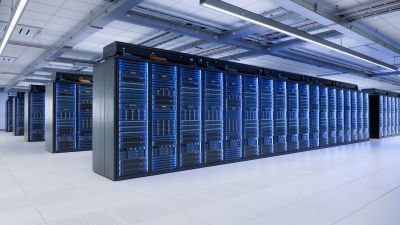
So, Massimo, data centers have become one of the world's most critical pieces of infrastructure, but they're often invisible to many people. When you look at the sector today, what's changing fastest for many years? Perspective.
00:00:48:16 - 00:01:29:03
the most fastest thing to change are devices and technologies. The, the devices inside that center are changing rapidly and their performance, their technologies is changing rapidly. So we are talking batteries, we are talking cooling system things that impact the the daily operation on these devices. So one day you get that whole full of service, and the other day you can get data whole, full of devices that are computing for artificial intelligence.
00:01:29:04 - 00:01:45:02
And those things are different, require different cooling system and maybe require different type of amount of energy. So the data center itself is changing very, very rapidly. And the operation needs to adjust to this
00:01:45:04 - 00:02:02:13
It sounds to me like the increasing complexity of the operations and the potential different operations in in one data center, let alone multiple, is creating one of the biggest challenges from an Ace perspective.
00:02:02:15 - 00:02:22:01
There is a lot of technologies that can help us. These are places very, very technological. It's obvious. But also the handling and the managing is very, very complex, but also has a lot of resources in technologies is that the human side need to adjust very, very rapidly.
00:02:22:01 - 00:02:27:08
And we are not so good as technologies to adapt to this change.
00:02:27:10 - 00:02:49:12
So it sounds like it's constantly changing. And I guess as professionals need to be agile and able to adapt to those those changes. I think one thing that we've discussed, and an example that you said is around a client choosing a fire suppression system based primarily on life safety considerations. Could you maybe tell us a little bit more about that situation?
00:02:49:14 - 00:03:04:24
because maybe we can tell everyone this. So the best and efficient fire suppression system for a place like a data center, where I have a lot of electronic assets and device that are very, very precious.
00:03:05:01 - 00:03:31:06
But the device itself, but most importantly, the data inside the device is the most precious thing. So the efficient fire suppression system will be something that will not taint or soil the devices and will act rapidly. And the best system in this case are the system that push out oxygen and just put a gas that is not flammable inside the data center.
00:03:31:07 - 00:04:05:09
But this leads to a huge risk of asphyxiation for people who can work inside the data center. So there is this balance, and I, I work in an environment where the choices were made on this, on this subject, by prioritizing health and safety for people working on in there. So at the end, the client chooses a compound that is not that has not this property of asphyxiation.
00:04:05:10 - 00:04:22:22
It's just a compound that evaporates really, really quickly. So if you set up the system very well, you will not have these risks, but obviously is not optimal for for the fire suppression. And that is the big challenge, the biggest challenge and the biggest risk,
00:04:22:24 - 00:04:42:10
Interesting. And I think another area you've worked on is the growing use of lithium ion battery systems, which you've obviously briefly mentioned. So these technologies can bring huge operational benefits, but equally they introduce new risks. So what are organizations having to think about that perhaps they weren't considering a few years ago.
00:04:42:12 - 00:04:48:22
I think the challenge is that everyone was already maybe in this sector. The
00:04:48:24 - 00:05:21:05
tech sector, everyone knows about lithium batteries, but now the batteries are saturating every devices that there is. So whichever devices you take has a little bit of a lithium battery inside it. So we can talk the devices that operate inside the data center, but also all the tools that people are using to do maintenance and to do operation on these devices contains a lithium battery, and every lithium battery pose a little bit of a fire risk.
00:05:21:07 - 00:06:04:13
Lithium batteries have a very, very peculiar behavior because they can get damaged and if they can get damaged, they will take fire. And you need to have procedure in place to handle this right straight away.
00:06:04:15 - 00:06:26:24
can also say that we can monitor batteries. So let's say that in the data center I visit recently, they were telling me the obviously battery has a temperature sensor and also a battery management system that monitor all these batteries and and see and unplug it if there are any, any problem.
00:06:26:24 - 00:06:37:00
But we are talking batteries inside the devices and we also need to think every other batteries, even the the pads outside of the data center.
00:06:37:02 - 00:06:50:01
It sounds like the risks and the environments may be evolving, but a lot of the control measures that you might look to are fairly standard in terms of from a health and safety professionals perspective.
00:06:50:03 - 00:07:04:24
We we are assisting to like I saw the other day a procedure for handling lithium batteries. It was a really, really standard procedure with and a huge box where to put the battery itself.
00:07:05:02 - 00:07:20:19
So it's very, very classic we could say. But I also so maybe webcam that video cameras that are finding handling movement like for ergonomics.
00:07:20:19 - 00:07:24:17
And they are.
00:07:24:19 - 00:07:55:00
They are taking up patterns to do a risk evaluation. So this is very very advanced. This is great. And they can also I think understand if you're using maybe a how can I say this dismantling procedure for a device. Everything is already procedural. So the video camera itself can see if the operator is doing the correct procedure while is dismantling this device.
00:07:55:00 - 00:07:57:04
So
00:07:57:06 - 00:08:09:03
So using new technologies to aid health and safety professionals as well. Yeah. Interesting.
00:08:09:05 - 00:08:30:10
Yeah. We can probably all learn all learn from a lot of the work that's going on there. I think when it comes to data centers, one of the challenges isn't necessarily about the technology at all, but it can be about governance. Can you explain the situation where responsibility was shared between a landlord, a tenant and a major end user?
00:08:30:12 - 00:08:38:05
Yeah. This is very very complex environment. We are talking about organizational complexity
00:08:38:07 - 00:08:59:09
that it is a complexity. And most of the time the, the the landlord is an entity and the client the client is another entity and maybe is subcontracting even the operation or maybe part of the operation. Most of the time maintenance is very specialized and is outsourced.
00:08:59:11 - 00:09:03:18
And.
00:09:03:20 - 00:09:47:11
The user of the space most of the time are strongly influencing the policies of the landlord. So there is this complexity in this complexity in understanding who's who is owning the risk, who is owning the responsibility of thinking up measure to mitigate these risks. And also another side to it is that data centers, this huge place with very, very few people and most of the time is also very complicated to find the person, the right person to talk to because you don't have no one there, and everyone is responsible for a little piece of technology because these are very, very complicated technologies.
00:09:47:11 - 00:10:11:22
So to map this, to understand who to talk to, who is responsible to implementing a health and safety measure, it's very complicated. Even more, if you are working in an environment that is very, very highly bureaucratic because most of the time you need to address also this, this maybe we could not call health and safety, but you need to do this as well.
00:10:11:22 - 00:10:15:24
So that adds a challenge on the challenge.
00:10:16:01 - 00:10:33:01
When responsibility is spread across, as you said, multiple organizations potentially. And who ultimately owns and safety on a data center or as a data center.
00:10:33:03 - 00:11:08:12
we would say that would be the person owning the data center. But I think that most of the time is the client. Or we could even say that most of the time is the the most powerful, the organization that has the most powerful leverage. And usually what I could see is that the the primarily user is the one who is who is leveraging more, who is asking more from all the other people.
00:11:08:12 - 00:11:40:13
And we are not the user. We are not talking the people who owns the
00:11:40:15 - 00:11:55:11
Absolutely. And I think what I'm hearing is there's going to be many people that are involved in safety in the data center, and that collaboration between the different groups is really going to be key to ensure the success.
00:11:55:13 - 00:12:23:03
yeah, I think this is true. And the little challenge is that most of the time these these places are even unmanned. Or maybe there are a few guards, but they I mean, they are not prepared on maybe they are prepared on emergency procedure, but they're not prepared on health and safety for the whole place. So finding the right people to talk is also that challenge.
00:12:23:05 - 00:12:33:01
As data centers continue to grow and technologies continue to evolve. What are the risks or opportunities that you think leaders should be paying attention to over the next 5 to 10 years?
00:12:33:04 - 00:13:02:01
So I think the the most important point is to stay updated and stay all the time connected with the organization to understand what is happening. Sometimes even people inside the organization are a little bit confused about what is happening, because it's happening so fast that even them are surprised. The communication needs to be, the channel of communication needs to stay open.
00:13:02:01 - 00:13:19:03
And I think the best way to to to manage this is to keep a discussion open and discuss all the choices with all the safety professional, but also with the environment professional.
00:13:19:05 - 00:13:35:06
What excites you most about the future of the industry?
00:13:35:07 - 00:14:03:22
there is behind this there is a lot of complexity. There are there are organizational complexity. But also like environmental resources complexity energy, water. So I, I love when people are thinking very thoroughly the the problem to to find the best solution. And I think that the center maybe the reason is the criticality of what they are doing.
00:14:03:22 - 00:14:28:24
So there is a lot of professionalism, a lot of competence and that is working on this.
00:14:29:01 - 00:14:44:03
That's great, and I think there's so much change in this area, but it sounds like people are up for the challenge and adapting and thinking of of new solutions moving forward. Well, Massimo, thank you so much for joining us and sharing your insights today
00:14:44:08 - 00:14:55:19
as we celebrate 25 years of the Indian Alliance. This series reflects what makes our network unique global collaboration, local expertise, and a shared commitment to accelerating a resilient planet for all.
00:14:55:21 - 00:15:20:17
If you enjoyed today's conversation. Be sure to follow the series and share it with colleagues across your organization and network. You can find us on LinkedIn, YouTube, and wherever you get your podcasts. Until next time, thank you for listening and for being part of the global community, working to turn knowledge into action.