Phil: [00:00:00] In Taranaki, Aotearoa, New Zealand, the Ngāti Tama Iwi, an indigenous Māori tribe, faced a pivotal decision in 2016. The New Zealand Transport Agency approached them with a request to reroute the Te Ara Oteata, or the Mount Messenger Bypass, through land over which the Iwi held mana whenua, sacred authority and responsibility.
This land had been returned to the Iwi after wars with the British colonists in the 1860s. and had deep cultural and historical significance. Never before had the government sought to reacquire land so recently returned under the Treaty of Waitangi. However, the bypass promised increased road safety, better access to healthcare and education, and economic growth for the region.
Natitama's involvement is crucial to ensure the project honors their values and heritage. Together with Taylor, an environmental consulting agency that should be familiar with those who have listened to past episodes, is involved with the project to help ensure that sustainability, engineering [00:01:00] expertise, and full EV participation are woven together at each stage of the project.
The result? A six kilometer highway that not only connects communities to vital services, but also serves as a model for development rooted in environmental justice. The agreement included land exchanges, cultural impact mitigation, and a robust environmental restoration program that aligns with Natitama's conservation efforts.
This project also brought significant economic benefits, creating jobs in pest management, seed collection, and tunnel design for the Iwi. A team of Natitama Kai Te Aki, cultural guardians, are employed by the alliance to monitor the project's work. This is supported by the Natitama's cultural advisory group, Te Ropu Te Aki, that oversees cultural monitoring to ensure environmental changes align with cultural values and that safe cultural practices for all workers on site are followed.
This project stands as a living example of how we can rethink infrastructure development to build [00:02:00] in harmony with local and indigenous communities. In this episode, we'll dive into the huge topic of social and environmental justice with experts from New Zealand, Italy, and the U. S. Today on the podcast, I'm thrilled to be joined by Erika Olsen, Sustainability Leader at Talkin Taylor in New Zealand, Scott Recker, Environmental Remediation Practice Leader at Enteo Group USA, and Valentina Vieri, a Sustainability Specialist for HBC Italy.
Erika leads Talkin and Taylor's sustainability program, integrating sustainability into Talkin and Taylor's approach to client work. Her passion is helping organizations understand the impacts they have, directly or indirectly, on their communities and natural environment, and working collaboratively towards a brighter future.
Her doctoral research was on sustainable business models. Scott has more than 35 years of experience solving environmental business problems. His expertise lies specifically in a sound scientific foundation coupled with building fit for purpose solutions [00:03:00] to help clients navigate regulatory, community, technical, and stakeholder perspective during site closures or divestitures.
Valentina has a multidisciplinary background. She specialized in environmental management and control and circular economy and has also studied sustainability science and policy. She is an expert in ESRS and GRI reporting standards, ESG and SDG analysis, and stakeholder engagement. She's been working at HPC since 2019 as part of the permitting and sustainability section.
Well, hello, Erica, Scott and Valentina. Thanks so much for making the time to talk with us today. We're really excited to have this conversation and learn a little bit about your perspective on this topic. So let's just jump right in. I'll start with you, Valentina, and ask you this question. When we say environmental or social justice, what does that mean to you broadly?
What does it mean to you in your region? And why is this topic so important?
Valentina: Thank you, [00:04:00] Phil. It's a pleasure to be here and speak about this such important topic. We usually use this such term environmental justice, social justice, I think, among expertise when we are thinking about project and where we want to go with such project.
It's a concept that has been developed in the last year and I think it's quite linked to climate change and what we've seen today. And, um, Phil. What we relate to environmental justice is like something when I speak from my perspective, so that I relate to clients. So in developing a new project, you just don't look just for the implementation of a plan or a solution, but you look broadly on where you are and what you're doing also from an environmental perspective.
So what kind of impact do I have? How am I using my resources? What are my impact on biodiversity? And so on, on the ecosystem. And also from a social [00:05:00] perspective. So where I'm sitting, what are the vulnerable groups? How is the society that is developing around? How is my project affecting the community where I'm seated?
And these are just simple questions that you're posing yourself to understand. How is, if you are, if you're having an impact on somebody that are negative and if you can transform it in a more positive way. And I think in a simple way, this is what environmental justice and social justice mean. It's not just about extrapolation resource or using a land, but it's also providing value of what you're doing to the environment and to the people as well.
Phil: So when you're thinking about this from the perspective of a project. In the community that you're engaging, what sort of rights do you consider that you're protecting? How do you frame what you're looking at in terms of the high level description of impact?
Valentina: It depends on the [00:06:00] project per se. What we usually do is, of course, context analysis.
Every place is different from the other, so you need to understand where you are located and what's going on. That's the first step. And then you have to understand how your project depends. If you are building a road or an electric cableway or windmills, it depends. Uh, everything has different kind of impacts and we are, as an environmental consultancy company, we are studying that and we provide our clients with information of what the impacts can be with studies and specific studies.
This also now relates to the social part, so I am disrupting a road where people need to, that people need for going to work, stuff like that. So it really depends on what you're doing, what are the impacts of your project, and then you relate it to the community that [00:07:00] lives near there.
Phil: So if I'm hearing you right, it's more than just getting the project done from building the road.
It's how you build the road, it's how you engage with the environment, it's how you engage with the community, it's how that it's constructed, it's how things are done before, during, and after construction of the road. It's a more comprehensive picture of the whole scenario. Is that fair?
Valentina: Exactly, you have to keep in to account different points.
It's not just about the role per se, but all that's around it.
Phil: So, Scott, you're in a different part of the world. How do you think about answering this question? What is environmental and social justice to you and why is it so important?
Scott: So the term environmental justice has been in use in the U. S. for probably at least 40 years.
And it's really been indoctrinated into legislation and regulation in the last three or four years. So it has a very specific definition in the U. S. and what that really means is Equal treatment of community, regardless [00:08:00] of your race, color, national origin, your income, where you live, all of those things need to be treated equally.
If, if we go to different parts of the world, and I work with Viantagen associates all over the planet, it means different things in different places. But the one thing that Valentina mentioned that's extremely important is you have to take That local community and that local consideration and work that into your project, because those, those people that you're working around to get an infrastructure project done or to clean up some groundwater, whatever that may be.
That directly impacts their lives, sometimes every day. So, you have to take those issues into consideration. And what that really means is it's a quality of life thing for the folks in the U. S. or in those other communities that we work in. We take that very seriously and our clients take that very [00:09:00] seriously.
Phil: Well, the management of outcomes is critically important, but it also seems like the clarity of definition of what The words actually mean is an important hurdle that you have to tackle. How do you manage the challenge of there being different definitions for the same thing, for the same project, in different parts of the world at the same time?
Scott: The one thing that I really do, and that we do, is we rely on our local team to help us understand. What those definitions are and what those words of that language needs to be to effectively communicate with that community, so they truly understand, first, what we're trying to accomplish, and secondly, what we're trying to message to them or let them know, uh, the benefits of the projects that we are working on for them.
So, I, I rely on my Inogen associates. and other parts of the world because they understand the local culture, the local language, the [00:10:00] nuances of that. That's critically important for us and there is not a day goes by when I don't ask a question, how does this affect culture in that community? I did that this morning.
Phil: Well, Scott, before I go to Erica, I just want to ask, that makes a whole lot of sense, like, in the value of engaging with your colleagues. How do I, how do I translate that up to the senior levels of somewhat, some organization, some multi national organization, so that they understand the, the significance of the challenge or the nuances that you're going to uncover?
Scott: Phil, that is a great question. And again, one that we grapple with almost every day, because we're helping our clients message things up to their leadership, their executive teams, their boards of directors to understand first, what the potential risks are associated with the community. And secondly, how can they better understand what Impact their, the view of the community on them, their brand, their engagement with the community, how being operating [00:11:00] in that community is beneficial to that community, those leaders want to understand that, so helping to message that, and literally putting together a list of benefits, if you do X, you will result in benefit Y, you will That's something we work with almost every day.
Phil: Sounds like a fun challenge to go to work and tackle all the time. So this makes a perfect time to transition over to Erica. I have a question. You're, you're operating in the part of the world where you have the reputation of actually having tackled challenges like this as part of regular business for some period of time.
Can you share your point of view on how you define environmental or social justice and what that means in your part of the world?
Erica: Sure. I think that term environmental and social justice is not one that we use very commonly in Australia and New Zealand where I've, where I've worked. We talk more about social license to operate.
So it's a, it's a similar concept, perhaps a bit reversed. It's more about. What the company needs to do for the organization needs to [00:12:00] do for the community to be happy that they're there and, and to be making sure that they're responding to those community needs. So for us, it's, it does come back as Scott mentioned about that reputation of the, the organization so that they can keep doing what they need to do.
Um, while the community has. has their needs. I guess from our perspective, or from my perspective, the, um, there's a, uh, using the word justice has perhaps a backwards lens. There's a piece of, there are some things that have happened in the past that need to be fixed. So that might be where we see that term justice a bit more.
And for us going forward on projects like Valentina and Scott, we're talking about how do we make sure that when we're doing things now, we're not setting ourselves up. in the future for things. So it's, it's not just about what's going to happen and an immediate impact, but also over the longer term that we need to be making sure that we're taking into account and addressing now so that we are creating a future where those communities can thrive.
Phil: Well, let's continue to pull that thread right now. Who do you think is most impacted by environmental social issues and social issues in your part [00:13:00] of the world?
Erica: I think at some extent everyone will be influenced by them, but the ones that perhaps get those most direct impact, the vulnerable communities, the ones that don't have perhaps the financial resources to, to come together and say, no, we're not happy about this or to engage with organizations about how they would want things to be done.
These perhaps are an element of rural communities. There's also the urban community. They're in places where some organizations might want to be coming in and doing things in the rural communities, but that's, there's a small number of people to be able to come together and, and have those conversations.
Certainly here we're seeing much more of the recognition of the indigenous New Zealand and Māori people and those cultural values. And that's really their, their wellbeing, personal and family wellbeing is really closely connected to environmental wellbeing. So there's some historical. Uh, redress that's happening to make sure that, that those past injustices are being worked through, but also making sure that we're taking into account things [00:14:00] that are happening now and that we, we're focusing on how the environment can be, um, enhanced and well, uh, because that has a direct connection back into the wellbeing of those people.
And because their, their wellbeing is connected in their culture, so they're tightly connected to land, anything that happens on land, which is where lots of things happen, then has that direct impact. So they're feeling that through that cultural lens really strongly.
Phil: That makes a lot of sense and sounds a little bit similar to what Scott was saying about the most impacted folks.
Scott, when you think about similarities and differences to what Erica just says, what's, what sort of things, what sort of things come to mind, if you have any particular stories you'd like to share, it'd be really interesting.
Scott: There are certainly some similarities in terms of indigenous, uh, that Erica mentioned that are, uh, prevalent in the U.
S. Uh, the other thing that's prevalent in the U. S. is a lot of the heavy manufacturing, a lot of the oil refining. Things like that grew up at the same time. Some of these low income disadvantaged [00:15:00] communities grew up around them. And he was simply providing a very short commute, walking a few hundred feet to their place of work.
So the communities built up right around these, historically speaking, polluters or generating potential contamination to air, water, things like that. So. Those pockets around manufacturing, heavy manufacturing, and those disadvantaged communities are all over the place in the U. S. But we also see the same thing around the world.
Those, those very large disadvantaged communities built around that manufacturing infrastructure. One example that I have, I'm working on a project in South America. I'm working on Where we actually had a manufacturing plant that was built in the fifties and it was all owned by itself out in the middle of the country.
And over time, the community built up around that. So right now the [00:16:00] population right around that facility is very densely populated and the average income of those folks is probably near zero. So it's a very disadvantaged community as far as income goes. And we have to take special care to communicate properly to that community, some of those community leaders.
And we need to keep an eye on what's going on in that facility in terms of permitting and in terms of some of the legacy issues that have happened in the past and managing and cleaning those up. So. It's, there's always a challenge. There's certainly global similarities.
Phil: Valentina, would you add anything to that?
Do you see the similar things or what sort of things do you see that might be different in your region?
Valentina: Well, in Europe, I would say we don't speak a lot of indigenous people. We speak more about the local communities. that's maybe affected by a plant or other development plans. And our [00:17:00] vulnerable groups are usually elderly people, people that don't have access to, you know, uh, they have learning, but there are new digital learning recipe.
So there are people that not actually can understand fully what a project means, what this could entail for them. And therefore, when we look at the vulnerable people, I totally agree they are the most impacted by environmental and social justice issues, because they don't have the means, as Erika said before, to respond and adapt to these changes.
Then you need to take special care of this, and what we see working with our clients is that sometimes the World Bank or international funds ask to respect and take care of this part. So integrating and ensuring that vulnerable groups are part of the project and can give their feedback. So there [00:18:00] are, let's say, international regulations that ensure this participation of the vulnerable people.
And on the other hand, we see sometimes clients that want to understand if they're affecting vulnerable people. So it's quite interesting as well.
Phil: So it's interesting that you say some, that you all say some of the same things, right? The same people seem to be, the same sets of people seem to be vulnerable.
They are remote. They have a limited voice. They have limited access or limited financial capability. And historically, or for some period of time, people were not measuring the impact on them. But we're seeing the conversation evolve and grow. So I guess there's two questions in that. One is, How is it evolving and growing?
And the other is, why is it evolving and growing?
Scott: So the, the why is, I think there's two perspectives there. I think the onset of social media, the last 15 or 20 years has made a [00:19:00] huge impact in terms of the overall awareness. Just these communities themselves become unaware of. the injustices, if we want to use that word, or the potential impacts on their community.
The other piece is that organizations, companies that operate in these areas, they understand very, very clearly, and they recognize Very, very clearly that if these communities are going to accept them to continue to operate successfully, they need to be engaged. They need to be accepting of what these companies are doing to protect them.
And ultimately, these companies want to sell their products or their services. to these communities, and that relationship has to be strong. So, regardless of regulation, I think that organizations are embracing the concept of environmental and social justice more than anything, and I truly believe the social media element has a strong impact [00:20:00] on how things have evolved over time.
The, the how we're measuring this comes back to there's much higher capabilities on the planet to be able to measure the impacts of water, to be able to measure the impacts of waste, air, dust, transportation, all of those things that impact the quality of life from an environmental perspective in those communities.
Phil: That makes a ton of sense, right? Technology has such a broad reach to so many people and even though there are some downsides to the technology you just described, there are lots of upsides for the people who couldn't have known what their challenges were before. Now, Erica, I know that in your work, you're focused on seeing trends at the corporate level that might be playing out in industry.
Can you talk about some of the trends you've noticed there?
Erica: Yeah, certainly. And I think it builds on what Scott's saying in terms of that community expectation is growing. So we're seeing that from a corporate perspective, when, for example, when I report to our board risk committee [00:21:00] and they say, what's happening, that we can say, we, clients are asking us more questions about what we're doing with this because their customers are asking them more.
So it's coming through the value chain from, from the grassroots, if you like to say. Actually, we're not happy about this and we have these expectations and that pressure is coming uh, through the different organizations and that then we need to respond to because the very strong driver is when your client is asking you something, then you want to be able to respond to it.
So, so we're certainly seeing that come through as a very strong driver. Uh, the other driver that we've touched on briefly is regulation and that's not just local. So, um, in New Zealand, we have some regulations that mean that we're doing well in, in thinking about some of these impacts, particularly in things like infrastructure and, uh, in terms of environmental, social, cultural, and, and economic impacts.
That's something that we're required to do. But also when we think about our exporters, there was a report I read recently that 80 Exporters are impacted in some [00:22:00] way by disclosure requirements from other jurisdictions. So even if we were to not have those requirements, then there are other ones that we're seeing come through.
So the EU one in particular, obviously that's a really topical one that's really strong that that is coming through onto New Zealand businesses. Other ones that we're seeing are things like modern slavery. So that's popping up in different places and that has impacted Us as an organization and our clients, because even though New Zealand does not have that legislation, Australia does.
We have some operations in Australia and our clients are asking for that information. And we're, we're seeing that, that our, our peers and our clients and partners also are being similarly impacted by, as that regulation comes up, that gets pushed down. Uh, so that just creates an environment that's bringing these issues.
up to the table for discussion that then we need to respond to them, which is a great place to start the conversation.
Phil: It's so interesting that you mentioned regulation because, you know, a lot of times when we talk about that, we think we're thinking about Europe, [00:23:00] right? So I was going to go to Valentina and say, you know, we often talk about regulation in Europe, but there's a whole lot more, there are a whole lot more entities that are engaged in the discussion than just the regulators.
In your experience, Valentina, who else have you seen that's engaged? The consumer, small businesses, communities, who else is driving the, the, the evolution of the conversation?
Valentina: From my perspective, the endpoint from pressure of different stakeholders. So in Europe, we have such development also because we had such uproars, as Scott mentioned, that happened also in America, but in the last, I would say 40 years, 50 years, There has been a huge development in terms of scientific papers regarding climate change, what has been happening in that regard.
And I think that climate change can bring the union between environmental and social justice to the view and the global effect [00:24:00] of what our project can bring on the ground globally. So, that is the goal. um, this new, um, awareness that the societies has, has put pressure on the companies that, uh, need to respond in the end point to their consumers as well.
So on one hand, we had, of course, we had, of course, the, let's say, public opinion that leads, Push a bit, the image of the companies are important for them, as Eric and Scott say. What we also have, I think, and that's related, of course, with regulation, is that, that for finance, from a financial perspective, financial organization are asking companies to be more sustainable and therefore provide information by environmental and social performance as well.
And there's a big push, of course, of the company, and Lastly, also the fact that in the end, regulation and financial institutions are asking for this because [00:25:00] companies are more strong if they have more environmental awareness, if they have more social awareness, because they're licensed to operate, it's easier if they're taking into account this aspect.
They know the communities, they know the environment, they know where to go to develop projects. This is really important.
Erica: Yeah, I just wanted to add on to, I guess, this context of drivers as the people in the organization. So certainly in our organization, and I know in the clients that we work with, people want to work for an organization that is working towards a better world.
And so there's, there's a few parts of that. There's your keeping your people happy and giving them meaningful work and also being able to attract that. That top talent to be able to do this. So what I see, which I think gives, gives hope is that once we start to have these, we have these purpose statements and organizations that it does start to then drive momentum that there's a sense that the organization itself is there.
Or is trying [00:26:00] to create that better world and what are the ways to do that? So I, I think that's perhaps coming from maybe in the past we didn't have that. And then we started to have these statements in the sense of that, but I really feel like that's getting traction, that, that meaningful work piece. So that's a really strong driver for organizations.
Phil: I love how you came back to saying, you know, talking about building a better world. It's a theme that's come up several times in previous podcasts as related to environmental health and safety. And I'm curious. How you see both of those things tied to, to themes like the energy transition or sustainability or ESG.
So I'm just curious, I want to cycle back a little bit and see if you have some examples or, or areas to share about those. I know Valentina, you did a lot of work on the just transition with energy transition. Can you talk a little bit about that? How does that help us build a better world? How does it help us connect the dots between where people want to go, or companies know that they need to go, and actually executing on that?
Valentina: Yeah, I have a project that we as [00:27:00] HPC Italy developed with Paseco, that's a partner in Greece, InnoGen partner in Greece, and has been a really interesting project for us because we could see all the development from the early stage. So I'll try to give you a bit of a background so you understand what we are speaking about.
We started this process for a company that was, they want to develop this project regarding the renewable energy and it's more project we got to photovoltaic panels. But what they didn't want to do was to see how they could bring value to the area, not just set in there the plant and then go home and see, you know, what the, the revenues are in terms of, uh, uh, energies.
Uh, but they wanted to bring value to the community. So they asked us to do these studies to understand what was going on generally, and how they could help. Well, the area was area affected by decarbonization. So they had a coal [00:28:00] mine. They need to shut down the whole coal in a few years. And then the whole region needs to restructure their economy, restructure and understand how they want to develop it from there.
And what we did was to listen to the communities, to the people, how they, what they wanted, what was going on, what were their needs, and they were But most important issues. And then that I think was the more interesting part because we could relate from what you see on the book, what you see on the reference paper, then what you have in reality and what are the people doing and what they need to do.
And from then we look at to the vulnerable groups. We speak with a reference person that could give us some insights. And we start proposing projects that could actually bring value to the community. Because the main point when we speak [00:29:00] about a just, a fair transition is to change from the coal, the all fossil fuel economy and plans to something new.
But it's not just about starting with renewable energy plans. It's also about how you want to do that and how you want to redistribute the positive impact that a company can have. And so in the end, just to give a good story at the end, we propose also with Paseco several projects and the best one I think is It was the one that's beneath the power plant that start to cultivate some herbs and then a group of women that had difficulty could sell them out.
So there was an empowerment process and that I think is something, it's small, but it's something and it's something that company should start to make it more like a plan, a project [00:30:00] that is not just about developing. I think the infrastructure is also about. Integrating the infrastructure with the community.
Phil: Sure. I mean, another way that I would say that is that the impact isn't just the outputs of the specific project from the business perspective, but there's other impact perspectives on the community, on the health of the community, on the health of the local environment, on the ecosystem, on the cultural, on the maintenance of cultural history, so that people are thriving because of the new development, not just seeing some of the financial benefits.
I want to shift in this question, ask this question, I think to Scott, but let me see if others have to jump on it. Some would say, if we're going to do that, we need to be able to measure the results. We can measure the power out, or we can measure that there is a wider, smoother road. But how do we measure the impacts?
How do we measure the benefits? Can you share any sort of frameworks or tools that you're using in your work, or that you might recommend to others to help to tell [00:31:00] people the benefits of it, of what they're doing?
Scott: So, uh, going back to first what Valentina was explaining. Doing the energy conversion, what we're seeing a lot in the U.
S. is these projects or these properties that are no longer being used as a coal fired power plant, for instance, are being converted to beneficial reuse. So there will still be power generation on those facilities in terms of solar or wind. or even natural gas conversion. But then there's other portions of the property that are redeveloped for housing, for retail, for other things, because these are waterfront properties and they actually are a huge economic benefit for the community.
So when you talk about how do we measure the benefits, I think there's a measurable benefit in terms of the amount of renewable energy created from those projects. And secondly, there's the measurable economic benefit to the [00:32:00] community. Those are fairly macro scale measurements. We talk about some of the projects that we work on that we need to fix something that's not right in that community, clean up some soil, or fix a water problem, or whatever that is.
That's very measurable. So there's, there are new technology tools that allow us to do that quickly. How clean did we get that? How quickly? And then we're able to convert that or flip that information very quickly to the community. So they understand how much fuel did we remove from the ground or how much better their water quality is and they can see that.
Those direct measurements they can see and technology allows us to provide that very easily to them versus 20 years ago.
Phil: Sounds great. It sounds like very specific, project specific benefits, and I love that topic of conversion to beneficial reuse because I think that there are a lot of examples of that out there [00:33:00] that, you know, that you and Valentina just described.
If you go out to like a macro scale, how would you describe how these things fit into something like the UN Sustainable Goals or limiting the breaking of the planetary boundaries? Do you guys have any tools or practices that you use to share to people how they're contributing to a positive benefit on a macro scale?
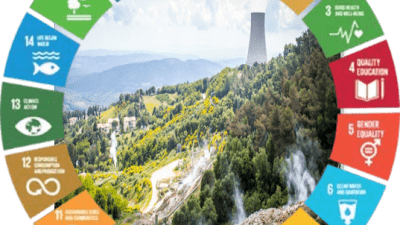
Scott: So we are using a couple of different tools when we're implementing projects. One is we look at the UN Sustainability Goal elements, all of the elements, and we measure Our impact of the individual project against those individual elements. And essentially we're creating a matrix that we communicate within our client organizations, because the CEO is asking the question, what's the benefit of our investment here?
And we're able to directly connect that to those 17 elements. So that has worked out really well for us. Some of the other measurements are the [00:34:00] things that we've already talked about, uh, direct. Information that we collect from projects that allow us to show those benefits to the community in very tangible and very quantitative ways, so we can better work the brand for our clients and better position them.
To expand themselves in those communities and build trust in those communities.
Phil: Erica,
Scott: Valentina,
Phil: is there anything that you would add to that?
Erica: I guess the SDGs absolutely have been something that's galvanized action and has given us a common language to point to all these different aspects of sustainability and And we talk about the 17 goals.
There's a whole lot of detail underneath, which isn't necessarily accessible from an organizational level. So it's great that we are still able to connect at the 17 goal level, even if there aren't, like there might be particular indicators and if you can point to how you're contributing to those, then that's great.
But otherwise the general conversation that. [00:35:00] At those overall goal levels, it's really, it's really helpful to have that common language and be able to share how we're all contributing to those outcomes. Perhaps the other tool that I think's really useful is a theory of change, which is mapping out how the activity and stakeholders that are being impacted by something, the things that are happening on the ground.
What that then means for in terms of immediate outcomes or outputs, sorry, the immediate outputs might be that you've employed a certain number of people that weren't employed before. So those are the things that are countable that we traditionally can measure quite easily. We've reduced greenhouse gas emissions, we've done all of those, those things.
But then what does that really mean? What are those short term outcomes to the longer term impact at that macro scale? So the, the going from the output to the outcomes, if I take that employment example, is that someone has built skills and potentially experience. And so then they've got financial security and that provides role [00:36:00] models for a community and provides financial security at the more community level.
And that means that that community, so at an impact level, perhaps is more resilient. So there's. That theory of change can be a really useful tool to help take people through how an action down here can really contribute to those macro outcomes that we're all trying to work towards.
Phil: Well, I love that phrase, output to outcomes.
And I think it's really encapsulates what we're trying to tackle. Valentina, were you going to add something?
Valentina: Yeah, just briefly that sometimes SDGs seem just 17 points, but as Erika mentioned, and I'm sure Scott know more than enough, it's really technical and they go down into details and sometimes it's difficult to link them between the project and the actual goal.
So, for instance, us, we don't have a specific tool that we use. For that, but what we do is to adapt and see how using [00:37:00] specific KPI, uh, the project relates to the SDGs. And then, so we can say, for instance, contributing a certain level to, but it's really difficult from a small project, probably to say, okay, we are contributing a lot on this.
We have to be fair, I think, as well, uh, because people notice when you overshoot it. So, it's important to be fair. Projects can contribute a bit on, on the SDGs, and I, I think it's good that everybody is doing their part. And what is important about the SDGs is that they give an, Broad overview of this, the different topics that are important to take into account.
So it's a good exercise to level your impact, your performance of a project with respect to the SDGs and seeing what are your main point and what you can effectively give a contribution to. [00:38:00]
Scott: One thing that I wanted to add there is you can scale that information. So. There's some tools that have been built in the United States around environmental justice screening and resiliency, but we've been able to, working with our partners, we've been able to translate those tools to a global level, so when we look at a particular project, we will screen the environmental justice Elements of that project and it informs our decision making on how we're going to approach that work and how we're going to communicate with that community and how we're going to communicate with our clients.
So you can take a very micro scale, single project, but then connect that to the larger macro scale considerations, either globally or nationally.
Phil: Now, that's a really great point, Scott. It got me thinking about the position that the different listener of the podcast might actually be in right now, and some people are probably pretty experienced in dealing with these [00:39:00] problems, and some people might be relatively new to them, but knowing or expecting that they're going to be a growing challenge for them to To understand, to communicate, to fund, to navigate in order to be successful, in order to be a market leader, in order to come home at night and feel good about personally telling their kids what they did at the end of the day.
If you're going to think about how a company should speak to social and environmental justice in this, in their work, what sort of tips would you give them around how to say that to their boss, to their clients or partners, to their families? What sort of messages do you find, what sort of tips would you give someone?
for navigating this challenge wherever they might be in their journey.
Erica: My doctoral research was about worldviews, if you like, and that different people are at different, people are coming into things with different worldviews and we have different lenses when we're at home and when we're at work and, and that triggers our responses to things.
So something that's really useful to keep in [00:40:00] mind when we're thinking about how we will talk to someone about some of these challenging issues is where they're at. and the language that's useful for them. So if, if someone's in a really commercial sense, then the business case for sustainability is a useful lens to be using.
So those, those levers of the reputation and employee retention and those sorts of things, that kind of language can help people understand where you're trying to go. And then you can broaden it out and talk about the meaningful work and the wellbeing and things like that. And absolutely that's, that's where you want the conversation to go.
But thinking about Where people are at to start with and starting the conversation and in their language and with things that they can easily identify with and before moving on to some of the more complicated things.
Phil: I love that because I find that simplicity is often the easiest way to communicate some of these issues.
Words like sustainability and regeneration and sustainable development goals, these are, they're kind of tough concepts even to describe when you're an [00:41:00] expert, but if you can break it down into simple terms, I find that really helpful.
Erica: That other piece that I think is really important, um, particularly, Um, perhaps particularly increasingly important as a, as a positive lens, um, because if we're going into conversations, we, there's lots of negative stuff at the moment and it's very hard to, to get your head around that.
It can also put people in a, um, defensive mindset that doesn't open them up to what the opportunities might be. So I'm personally really excited to work in sustainability because all of these things, these challenges we have, we have to address and we're trying to address. But while we're addressing those challenges, we also have this amazing opportunity to create a better world at the same time.
So we're not just fixing wrongs. We're, we're looking at what are all of the other things we can do as well. So I think having that positive and opportunity and open lens is important and, and really valuable.
Phil: Couldn't have said it better myself, Scott, Valentina, Erica's making it a tough act to follow in closing out the statements, but do you have any tips that you'd like to share or want to [00:42:00] build on what she said?
Scott: I do. And Erica, that, that is certainly true going in with the positivity to lower defenses in the conversations you're having. I know as we approach clients and companies and organizations. And we initiate the conversations with them, we, we listen. We, we speak 20 percent of the time and listen 80 percent of the time.
Because we seek to understand the lens they're looking through and their point of view. Once we have a decent idea of what that is and how their leadership views issues around sustainability connected to their business. It allows us to craft solutions for them that are best fit for where they are and the lens they're looking through and the communities they're working with.
So it's, it becomes an engagement and a collaboration that has changed significantly over the last 10 or 15 years. It used to be a bit more [00:43:00] adversarial and now the collaboration between The business community, the community that we're talking about today, and some of the non profit or non governmental organizations is very different, it's very collaborative, and we look for the beneficial elements coming out of those partnerships.
So it's, it's been very refreshing, and you do come to work every day and feel like you can make a difference. And that, that really drives, uh, folks and it really drives people coming out of university to be able to have fulfilling and meaningful work every day.
Valentina: I will just add something because it's such an interesting conversation and I think Harry and Scott's point are really what you can see because.
It's young generation is important to have a minimal, meaningful, meaningful place where to work. It's, and sustainability is such a broad topic that you need to understand who you're speaking to. And that's, I think, a form on [00:44:00] sustainability because I wanted to do sustainability. And every time I speak with my colleagues, that.
Are more engineer and have this financial team. So everybody has their perspective, as Scott say. So what's important is to see and translate what you do in terms that are comprehensible. But sometimes in the technical meeting of sustainability, you start thinking about regulation, technical part, but this is just for the guys who work on sustainability, the others need to have everything more digest.
more simple, because sometimes you just don't understand. People don't understand what you mean by sustainability, what you mean by environmental justice, and why it's important. So I think that's our, the basic point. When the leadership see the benefits, then it's It's small, I think. It's really more, more small to the conversation.
Phil: Okay. So we tackled that on the professional [00:45:00] side. I'm going to give you a parting shot. In one or two sentences, how would you explain this work to a young person or a family member? Who wants to go first?
Scott: I can go first. That message has changed for me over time. The message used to be, I help my clients fix the things that they have broken.
I didn't use those exact words, but that's essentially what I was saying. Now it's about every day we do things that help improve our planet, improve the way we live and improve the way that we engage with each other. And it's become a very different message for me in the last 10 years. And it's very encouraging.
It's very fun to be able to message things. I like that, and the clients that we've worked with have also evolved, uh, a lot, and that's very fun. If you, if you come to work every day and you're having conversations with your clients, which we do every day, and they have that [00:46:00] same shared vision and that same shared perspective, that makes things very rewarding for everyone involved.
So it, it has evolved a lot, uh, but the message is very positive, much more than it has been, say, 15 years ago. Thanks so much, Scott.
Erica: I think for me, I would say it's about, uh, taking a step back from what you're working on and collaborating with others to understand the bigger picture of where things fit and what actions then you can take and the things that you're working on to go towards that better world to fix the things that are wrong and create a positive future.
Phil: Super. Thanks, Erika. It's really awesome. Valentina, bringing us home again.
Valentina: I'll try. I don't know. Uh, still trying to communicate with my family about what I do, no, I'm joking. Sustainability is, I think, a global vision of different topic, of different perspective. And what we try to do is to integrate [00:47:00] this perspective together, this different point of view.
Thank you. And try to find a common solution that can bring values, not just a company, a person, but for the environment, the people and the planet. So for everybody, this is what we try to do.
Phil: Well, I thank you very much for the work that you do and for taking the time out of your busy schedules to come spend with us to talk about this.
I appreciate you. I'm sure your family's friends and colleagues do too. And we need more of this work in the world. Thanks so much for joining us. And. Thanks everyone for joining this episode of Rethinking EHS. We hope to see you next time.
Thanks again to our guests for coming on the show to discuss the important work that they do. Here are some of my key takeaways from the conversation. One, the narrative around social and environmental justice is shifting from simply fixing past harms to proactively creating long term positive outcomes that help build [00:48:00] a better, more resilient future for communities.
Companies are increasingly aware that their long term success is Depends on their ability to maintain a positive relationship with the communities in which they operate. Focusing on long term impact builds positive reputation and trust. Two, as has been emphasized in past episodes, understanding the local context is critical when thinking about social and environmental justice.
It's essential to really listen and gather information from local teams to understand cultural, Social and environmental nuances in different regions. Three, new tools and technologies allow organizations to better measure the environmental and social impact of their operations. This has made it easier to demonstrate positive impact with data and insights that align corporate projects with UN Sustainable Development Goals.
And, it can help organizations communicate their contributions to global sustainability efforts. Thank you for joining us in this episode of Rethinking EHS. We'd like to thank our exceptional guests for sharing their expertise. Please don't forget to [00:49:00] hit that subscribe button wherever you listen to podcasts so you never miss an episode.
For more tools and tips on how to work globally with a local lens, check out the global resources page on the Indigent Alliance website. To access webinars, downloads, eBooks, and more, find the link in the show notes or visit www. innogentalliance. com forward slash resources. Follow InnoGent Alliance on LinkedIn for the latest updates.
And until next time, let's innovate, inspire, and rethink EHS together.