[00:00:00] Gabriele: Nature often gives us the solution. We have only try to understand nature.
[00:00:06] Jason: Mother nature is really good about cleaning itself up, but we can actually enhance it and speed up that process
[00:00:12] Phil: well. Hello everyone. Today we're diving into sustainable remediation technologies, methods that not only clean up contaminated sites, but also support climate resilience, circular economy principles, and community wellbeing.
Why is it important to rethink traditional remediation methods? And what opportunities does sustainable approaches create for the future? We're here to find out.
[00:00:35] Voice Over: This is rethinking EHS where global goals meet local expertise to accelerate a resilient planet for all. We highlight practical solutions and bold strategies that drive change brought to you by Inogen Alliance.
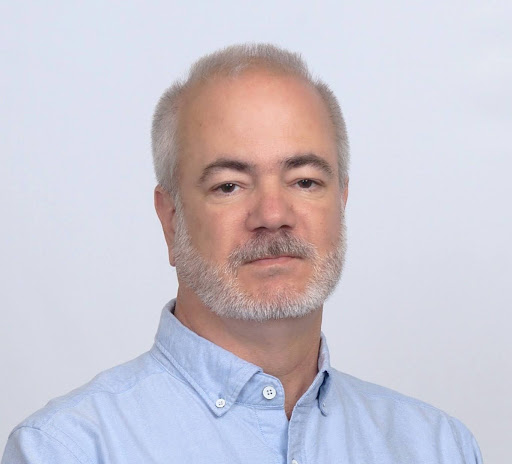
[00:00:51] Phil: I'm Phil Dillard, host of this episode, and I'm here with my co-host, Beatrice Bizarro Water Stewardship Technology lead at HPC Italy and the [00:01:00] Inogen Alliance Global Water Working Group Leader. Great to have you with us, Beatrice.
[00:01:05] Beatrice: Thank you, Phil. I'm very happy to be here again and excited to be co-hosting this second episode together.
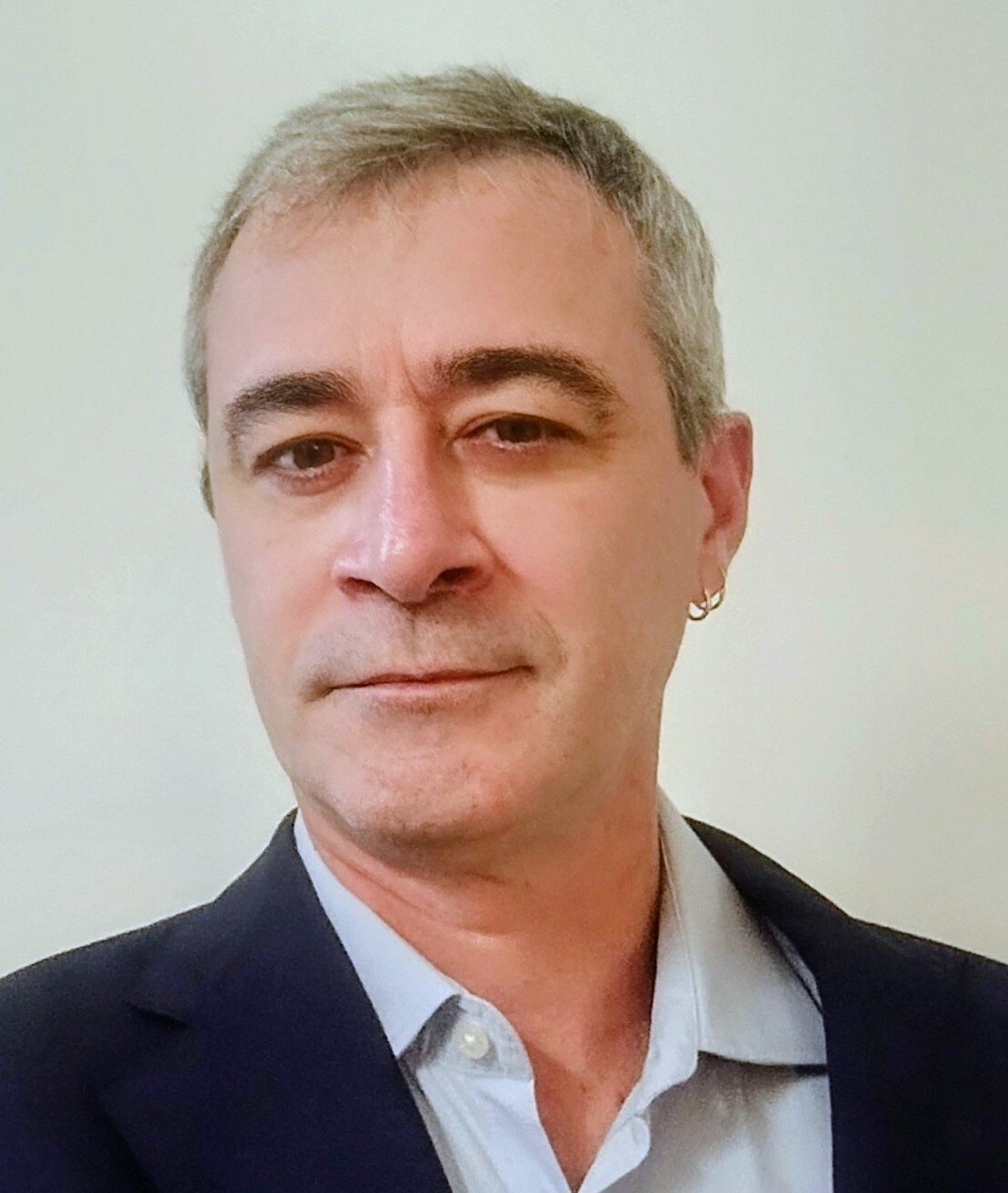
So on today's episode, we have the immense pleasure to be joined by two Inogen Alliance colleagues sitting quite literally on opposite sides of the globe. We have Jason Lagowski senior consultant at Intergroup USA with over 30 years of experience in environmental consulting and recognized expertise in PFAS management and remediation.
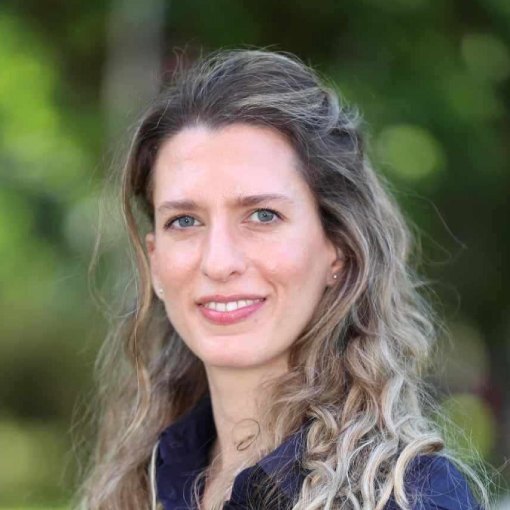
We also have Gabriele Cerutti, a geologist and technology lead for soil and ground water, HPC, Italy, with over 15 years of experience in environmental remediation, specialized in innovative bioremediation and peter remediation solutions. Welcome Jason, and welcome, Gabriele,
[00:01:52] Gabriele: it's, it is a pleasure to be here.
Thank you to inviting me. Thank you.
[00:01:56] Beatrice: To kick off this episode, I would like to begin our [00:02:00] conversation with a question for the both of you, Gabriele and Jason. You've each spent many years working in the field of remediation with your extensive experience, you have witnessed how approaches and technologies are evolving, how they have evolved over time from more traditional, more invasive methods to the adoption of nature-based, lower impact, and more sustainable remediation technologies.
My question is, why is it so important to prioritize sustainable remediation practices and what is at stake if we continue with only traditional remediation approaches? So,
[00:02:38] Gabriele: so water pollution is increasing by speed dramas and, uh, that causes damages to the, and safety to the entire community. So over the years, uh, um, as greater attention and sensitivity to the environment have grown and many technologies, uh, being developed and refined.[00:03:00]
However many of these technologies are aimed to at, at quick intervention that mainly shift the problem or maybe, uh, fail to fully, fully consider the recovery of environmental metrics. I see that, uh, the goal. Sustainable remediation technology is precisely to solve the, the contamination problem By seeking to reduce consumption and enhancing the environmental matrics involved to the entire variation process itself.
Uh, using a sustainable approach means ensuring that. Every aspect, uh, every step of the project achieves sustainable objectives. These bio remediation technologies are not without the challenges and they cannot always be applied, and especially, uh, almost never in the same way. Therefore, it is all necessary to invest time and, uh, resources during the phase of a site [00:04:00] characterization and conduct field tests.
To best identify application details, for example, uh, which client is user, whether to use or not, adance, uh, and what mony to perform. And so the first sustainable solution in particular by remediation that involve me, uh. The first person can learn, can be the solution, but it must be carefully evaluated.
[00:04:27] Beatrice: What about you, Jason? What? What do you feel is the reason why we as a community should prioritize sustainable remediation practices?
[00:04:35] Jason: Yeah, I mean, we live on this planet and personally, I'm a parent and a grandparent, and I hope that we're smart enough to find ways to improve the environment for our children, our grandkids, and I guess in future generations.
Doing it in a more sustainable way or manner just makes sense to me personally. Uh, and it's really about more sustainable outcomes, improving the quality of life for current and future generations. Fully agree with all the comments [00:05:00] that Gabriele made, but for me it's kinda short and sweet. It's really, I just wanna leave this place a better place than we found it, and more sustainable remedial approaches.
Just make sense. Than, as Gabriel mentioned, moving a problem one place to another.
[00:05:15] Phil: Thanks for the great kickoff. So many questions come to mind given the level of death of what you've got. I mean, the first really is about how do you actually define sustainable remediation? Like what is the problem that's that in the old way of doing things versus the better way that you're proposing and how are things different in the regions?
I would expect that things are very different. In North America versus Europe and the, and the rest of the world. Can you comment on the, on both the definition and the differences that you see? I'll start with Jason and then go back to Gabriele.
[00:05:49] Jason: Yeah, so I mean, when people think of more traditional or remedial approaches, the things that come to mind are things like pump and treat, where you're extracting groundwater, treating it, and then [00:06:00] discharging at someplace.
Or I use the A term that's very common, dig and dump, where we're excavating contaminated material. Trading it and or just taking it to a landfill. Very energy intensive approaches. So the more sustainable approaches really look at reducing our car. It's not just about reducing our carbon footprint, but it's looking at more passive, and I'll use the term that was mentioned, early natural approaches to how we mediate things.
So it's looking at more. In situ methods, you know, using new green chemistry methods where we can find something to degrade the contaminant in place rather than, you know, extracting it or fixating it may be in place, but it's thinking about the whole lifecycle cost in really coming up with effective waste management strategy strategies.
Were ideally. You have a more sustainable approach to waste management or in a perfect world, zero waste outcomes. You know, that's kind of the holy grail at the end of the equation. And then [00:07:00] when you factor in all the energy consumption that goes into not. Just the, the actual remedial approach, but it's getting vehicles to and from sites.
It's all the major excavation equipment, the energy that goes into producing or the greenhouse gases that go into producing energy used to run treatment equipment, et cetera. So I mean, it really needed to take a more holistic approach, think about how we can do things more environmentally friendly and sustainable in the long term.
[00:07:29] Phil: And Jason, just to extend that, when you're talking about the region. It sounds like you have to talk about the energy, the logistics, the, the regulatory and such. What are some of the concerns that you see in the regions which you operate that make it additionally that get a significant amount of attention or add some specific or regional challenges?
[00:07:49] Jason: I think there's still some reluctance around, I guess achieving the outcome. Typically, more sustainable approaches. There's a time equation. It's if you [00:08:00] can just extract it, move it somewhere else. The problem obviously is, is dealt with fairly quickly. More passive or institute approaches may take longer.
I guess there is a myth, and maybe we'll touch on this later, that more sustainable or green remedial approaches cost more money. That's not necessarily true in a lot of cases. They probably don't when you take the more holistic approach to things, but it's education in terms that the approaches do work and, and can have positive outcomes.
It's getting clients to to deal potentially with the time equation. And really just a shift of mindset to being more environmentally friendly overall, rather than just achieving a specific remedial outcome.
[00:08:43] Phil: That makes a lot of sense. Gabriela, can you add to it add to either the definition or any of the regional areas of concern?
It seems like the time issue is particularly interesting because some people might wanna have it immediately, the problem solved or [00:09:00] perception of the problem solved versus over time in the same place, which might be a better way to go, but you need more patience. Can you comment on that a little bit? So
[00:09:08] Gabriele: we think that the sustainable ation is precisely linked to, um.
The principle, namely, like reduction or elimination of carbon dioxide emission, the conservation of soils, uh, the recovery and explanation of biomass produced often is not easy because, uh, as you told, uh, uh, many public administration or uh, stakeholders need to solve the problem. Just in time we saw some changes speaking about our experience in, uh, in Europe, especially in Italy.
Traditional approaches to remediation persist, especially in, uh, remediation industrial areas. For example, for agricultural areas in public green sites, sustainable remediation is beginning to be forward. We can see some progress in, um. [00:10:00] In codify environmental and technical, uh, quality criteria for cultivated, uh, land obtained from the recovery of salt waste using biological remediation technologies.
[00:10:12] Phil: What is it that's driving the trend there? Gabrieli? Is it the efficacy of this solution, the perceived, uh, environmental impact from consumers, or is it something that's driven by regulatory or is it something else?
[00:10:26] Gabriele: I think there are more, more factors that contributes to this, uh, type of, uh, changing. Uh, first of all, we, we have to be sincere.
The cost the buyer mediation open. It is, um, yes, low cost. And the traditional methods, there are many doubts about time of, uh, remediation. Of course, in some areas it is not important. It's more important to, uh. Find a solution to reuse the soil, if you will, remediate [00:11:00] with the bioremediation after, uh, the remediation.
We, we are ready to, to use the soil without any, uh, transformation. If you consider, uh, for example, uh, digging dump, you have to, if you are in an agricultural area, uh, we have to bring another soil and, uh, we need time, may, maybe years to, um, to find the good soil for agricultural activities. If we use, uh, bioremediation, this might.
Cases, five remediation after we finish the so is
[00:11:36] Phil: ready to to use. Great. Thanks very much. Jason, would you add or change anything for your region of the world? I
[00:11:43] Jason: think regulatorily where it'll. Strange time at the moment here at the US with, I guess, delays in rollbacks in some of the initiatives that were driving more sustainable remediation without getting into politics.
At the moment, things are more business [00:12:00] friendly, which isn't necessarily more environmentally friendly. So I'd like to see more emphasis on protecting the environment over potentially. You know, business, bottom line, that's probably the biggest one.
[00:12:13] Phil: If it's cheaper to use natural methods versus traditional methods, is that something that comes in the short term or something that comes in the long term that gives this perception that it's actually not business friendly to use a, a better or a newer approach?
[00:12:28] Jason: It's still cheap, potentially cheaper. The issue is what's the driver to make a client do something in the first place. Yeah. And there's, I guess in the US and it might, and it's probably different in, well, I know it's different in the eu, there's a federal component to it in the US and, and there's a state component.
So where the federal government may be rolling back regulations, the state governments are continuing, but the driver needs to be there for. You know, a client to actually do something. So for [00:13:00] instance, if the criteria goes from 10 to a hundred, maybe you don't need to have to remediate anything at all, whether you do it sustainably or not.
You know, the question is, are you still being protective of human health in the environment or are you maximizing, I guess, profits over benefit to the environment?
[00:13:23] Beatrice: Jason, you were mentioning the change of mindset, right? That this evolution, like all changes, like all evolution often requires. Why do you think there's such, you know, a slowness in, in, in changing the mind and, and the way that things have been done in the past, especially for stakeholders such as organizations, institutions?
What do you think is the main hurdle? Is, you know, leading to this change of mindset, kind of slowing things down under certain aspects?
[00:13:56] Jason: Yeah, I mean, that's a great question. I'm not sure I have a [00:14:00] definitive answer. I mean, part of it's culture, part of it is what's the easiest path forward? And, and this is gonna speak a little bit to some of the regional differences in in drivers.
The US for instance, has a lot of open space. We have a lot of landfills, a lot of landfill space. So a lot of times it's easier just to dig it up to one place and move it to another. Where in places like Australia or the EU landfill space is at a premium. So there's a driver there to make clients look to find alternative ways of managing potentially impacted material, whether that's treating it on site and or using it or not extracting it at all.
And a lot of that is just the cultural drivers in terms of density of population, landfill space, for instance, whether you're using groundwater as a resource or not as well, so. I think, I think it's a bit of all of the above. Part of it is just education in terms of what really are the benefits and more sustainable approaches, [00:15:00] and getting people to look past, I guess, the short term gains and take a more holistic or circular approach to how they manage the problem.
[00:15:11] Beatrice: Jason and I imagine also sometimes a lack of awareness, right? You were, you were saying that many of the new strategies are in, in situ. So you know, to think that before used to dig everything up and just bring it somewhere else, now everything remains right there and it's truly nature acting on the contamination itself.
So it's quite incredible. But that's, that's how it works. And many people might find it, you know, so absurd. But you know, nature really. It does resolve and, and, and solve many of the problems that unfortunately we often create.
[00:15:43] Jason: There's ways of enhancing what nature does. For instance, you can extract groundwater, use solar passively to heat it and then re-inject it, which speeds up the biodegradation, particularly petroleum hydrocarbons and some coordinated, coordinated [00:16:00] solvents as well.
And there's other amendments you can add to groundwater or soil that will speed up that natural degradation process. So Mother Nature is really good about cleaning itself up, but we can actually enhance it. And speed up that process.
[00:16:14] Beatrice: Gabriele, do. Do you have anything to add to that?
[00:16:17] Gabriele: Yes. Well, what, what we are seeing, uh, for example in Italy is that clients are, are moving a, a sustainable approach.
See, see solution that, that are not only economically sustainable, but also environmentally sustainable. Also for a positive impact on the image. Also in the consciousness of. The climate changing is, uh, coming on our minds. Clients, stakeholders are coming through, change this mind, but, uh, often we have problem to, to change, uh, legislation.
That is a big problem easily. We have [00:17:00] a very restrictive, uh, ation about this.
[00:17:03] Jason: Yeah, that's a great point in terms of looking at a regulatory environment that embraces sustainable and reuse of, of things that would traditionally be classified as a waste and which forces you into a path which may not be sustainable and, and giving the flexibility of achieving a better outcome rather than just taking it to landfills, for instance.
[00:17:26] Beatrice: So, yes, I, I presume that sometimes, you know, policy makers and authorities, they, of course, at least in Italy, they try to be strict to enable things to be done the right way. But sometimes this can create some limits. And so if. The hope is with, with time, with greater awareness, with greater understanding, especially from certain stakeholders, this will allow, you know, greater circularity, even greater circularity, and also facilitate when, when there's good and when there is this kind of potential.
[00:17:58] Gabriele: Yes, [00:18:00] probably is what you said. The greater sustainability, because everything seems to be good, very nice by remediation. But what we say of, please consider any aspect of this any step. So to make the complete ity, we have to consider any step. Also the final step that is written biomass use. Okay, we finished the, the remediation every, everybody are happy.
But then what will we do for biomass? It's not pleased. So consider are also these, these aspects to, to make the complete circularity
[00:18:43] Beatrice: right, to close, to close that circle. Absolutely. I have a question to the both of you. Curiosity. If an organization, you know, comes to you, Jason, or to you Gabriele, and, and says, you know, what is the cost of, of an action that [00:19:00] could result from, from not doing and from not following this evolution, from traditional remediation methods to most sustainable methods, what would you, what would you respond to this organization?
[00:19:12] Jason: The thing that initially just came to mind is, I guess we have a concept in the US called cradle to grave. So if you dig something up one place and move it to to another, your liability doesn't necessarily stop. Once it's left to your site, do you may have ongoing liability for that material where if you treat it in place, you know that liability remains where it is.
And once you have those endpoints achieved, then liability's extinguished. But if it's sitting in a landfill somewhere, then it's go mingled and you may have liability long term that you wouldn't other necessarily otherwise have. So that's the one that just kind of jumped to my mind initially with that, with that question.
But I mean, there's lots of benefits to being more sustainable. It's just getting that awareness, as you mentioned, and, [00:20:00] and education to the various stakeholders.
[00:20:03] Beatrice: What about you, Gabriele? Any, any thoughts? What would you respond to this hypothetical organization?
[00:20:08] Gabriele: The cost of oil action if you rely on traditional methods is, um, to consider, uh, on contribution of carbon release and also not to consider, um, the soil conservation or the biomass use.
So we should. Try to get, uh, far as much as possible from any kind of cover consumed from intervention because, uh, that's, is, uh, the feature I always remember a, a phrase, uh, during my, my job. Uh, someone I don't know, told me that, uh, everyone can, can find the, the most comp, uh, complicated solution. The best way is to find the, the, the easier solution.
Not everybody can find the, um, ease solution because maybe there is, is not so easy. [00:21:00] But, uh, we have, uh, a good opportunity to, to find the best solution, use it, um, by remediation or, or sustainable, uh, remediation. We have the solution right on. Uh. On our eyes, we have just to, to try to try and, uh, educate the stakeholders in public administration.
[00:21:27] Beatrice: I love that, Gabriela. I think we should all always strive to look for the simplest solution and not over complicate things and, and use what we have and really try and simplify and make things as linear as possible, especially for the future. Because the easier it is, sometimes the more linear it is, the easier it is to keep up.
[00:21:47] Gabriele: Because the nature may always open. Give us the solution. We have only. Try to understand
[00:21:55] Phil: nature. I think that's a great segue to talking about the future. I mean, if I take [00:22:00] a step back and look at the situation of the present, what? What am I hearing? Consumers are more aware about environmental challenges.
They're more aware about things like PFAS. They want them to get them out of the products and services, the products that they use. They want to get them out of the soils. They're concerned about healthier, healthier foods and such. But they don't know what to do. Companies are in a situation because if the regulatory changes, then they have a, uh, a mixed incentive, a, a changing of the incentive metrics for them from the short term to the longer term, and trying to figure out the best and simplest approach and regulators.
Regardless of where they are in, in their variation across around the world, regulators are, are also trying to do the best thing that they can, but may not off, may not have like, the best information to make a, a, an expansive policy that includes circular practices, right? They could be designing for, uh, waste or recycling, but not for circularity because they're, they just don't [00:23:00] know.
So if you're thinking about the future. How do you describe, or what do you think are the main issues to drive a better future? Is it discovery of more nature-based solutions and making it easier to implement them? Is it influencing policy people? Is it getting, uh, consumers to demand more? Or, or, or is it actually just bold leadership from, from corporations?
Where do you think it starts and where do you think the the best opportunities are to build a better future right now?
[00:23:29] Jason: All the above. It's gonna take leadership, it's gonna take favorable regulatory policies, clients that are willing to invest in it. It's gonna continue to take improved innovation and different approaches.
Thinking things like different amendments for soil or groundwater, um, that are being. Developed at our universities, both here at abroad, being bold and courageous in terms of how you can apply those and, and thinking outside the box in terms of something that may solve a problem for a different issue that can be applied to this, [00:24:00] that potentially has a great outcome.
[00:24:02] Phil: Is that where cross border collaboration comes into play? Jason,
[00:24:05] Jason: I see a lot of, um, innovation happening between our universities. Um, I'm aware of different studies and developments that are happening that. For instance, uh, the universities in Australia are, are helping universities here in the us They're collaborating on PFAS research and potential PFAS related solutions.
So, and I think a lot of the different technologies that are coming online. I guess as we speak during this podcast really are cross border collaborations. You know, it really is a global marketplace. Uh, we deal with clients that have facilities around the world. It's truly a global issue.
[00:24:43] Gabriele: Yeah, I, I completely agree.
Uh, collaboration, I think, uh, is one of the, the point we also trying to, to make a sort of, um, rope. Between the stakeholder, public administration and university to, [00:25:00] to find a solution for, um, for the problems that, that they talked about before. The first part is, uh, an investment, not only economically investment, but the time.
How to discuss with, uh, other, we are the, um, stakeholders and public administration university. And so first step is, uh, investment and collaboration, everybody.
[00:25:25] Jason: Yeah. Unfortunately in the US the moment with us, EPA Office of Research and Development has effectively been shut down. So at the federal level here, there's not a lot of investment being made.
So a lot of that is coming out of the, I guess I'll call it the quasi-public and private institutions like the universities and, and clients and consultants that are working together to come up with better solutions.
[00:25:50] Phil: Well, it sounds like a, a, a challenging landscape where those who who desire to move forward will, will do so, but it'll be a little more difficult than it may have been [00:26:00] in recent years
[00:26:01] Beatrice: to both Jason and Gabriela, are there any promising or any emerging remediation technologies we should be watching out for?
[00:26:10] Gabriele: Always, uh, come up with, to my experience in vital remediation, it is coming one of the, the best solution from some, uh, of the site. That's what, what we are seeing in the, in the last, uh, years. Uh, so vital remediation could be one. Not, not only, but one of the bio munition solution, especially for agricultural area.
It's not without problems, but both, uh, public administration and stakeholders. We will find a, a way to develop this, uh, technology. So I think, uh, consider what I, I see it'll be, uh, one of the technology.
[00:26:55] Jason: Of
[00:26:55] Gabriele: the future.
[00:26:56] Beatrice: What about you, Jason?
[00:26:57] Jason: I'll add on that from a [00:27:00] bioremediation perspective, there's advancements in different bacteria strains and fungi that will target specific COC.
So that research is continuing and and will continue. One of the things that I'm currently seeing from an innovation perspective, and I guess from a. More of a waste management strategy is the linking of different technologies, and I'll pick on PFAS. Typically, PFAS is absorbed onto carbon or ion exchange resin effectively and creates a waste.
What's happening currently is people are looking at separation technologies and concentration technologies where you can concentrate it up. Then they can apply a destruction technology and actually destroy the PFAS on site. And this is predominantly for liquid waste streams, but you effectively have a zero waste outcome that way, rather than shipping large quantities of of carbon.
Or heating up, use granular gap, granular activated carbon or iron or regenerating ion exchange erosion [00:28:00] would have their own waste streams. There are zero waste outcomes out there, and it's really at the moment being achieved through the linkage of different technologies that you wouldn't necessarily think of.
So it's being innovative, thinking outside of the box and coming. With different solutions, but everyone's trying to come up with a silver bullet for things, whether it's microplastics or DFOs or whatever the next emerging contaminant is gonna be. The market will drive that behavior simply 'cause there is, there's potentially profits to be made there coming up with that better mousetrap, and I think that's going continue to drive innovation.
[00:28:32] Phil: Thanks very much. It creates a little, at least, uh, a decent amount of optimism about what we could find out of universities, innovative research and practitioners in the field like you. Thanks so much for sharing your wisdom with us. It's really been great to, to learn from you today and to understand your perspective on the world.
Thank you. Thank you. A q for our audio only listeners. Jason and Gabriele have left us, but I'm still here with Beatrice and we're here just [00:29:00] kind of checking in on what we heard and what we, what we thought about the episode. So, Beatrice Reflections what stood out for you in that conversation.
[00:29:08] Beatrice: It's quite fascinating to observe how so many areas of expertise, which, which, which is my area of expertise, biodiversity, climate change, adaptation, remediation.
They are all increasingly converging towards nature-based solutions. And personally, I, I do find it rather heartening to see that many global organizations are, you know, proactively and innovatively adopting sustainable technologies. What about you, Phil? What stood out to you the most?
[00:29:38] Phil: Well, I'm interested in increasingly curious about the nature-based solutions.
I remember when I first learned about biomimicry and the study of such things, and I was kind of curious because it sounded a little soft and a little bit out there. But the more you think about it, certain certain systems in nature have evolved over [00:30:00] millennia. To solve very specific problems that humans haven't focused a lot of their challenges on, they haven't focused a lot of their attentions on.
So if we can actually learn from those systems, if we can learn from the things that nature has found over a. Millions of iterations, well then we can actually take that, the, those lessons and apply them to challenges that have been created, whether intentionally or or unintentionally. I think that's really interesting thing to see how it happens.
And I'm curious now about more curious about the future, right? If regulatory is changing. But awareness is increasing and there are different pressures. Pressures, how do we bring them to the fore so that there's action in a increasingly uncertain economic and political future. Do you have any, any thoughts on that?
[00:30:51] Beatrice: I, I totally agree with you and I think, you know, just to kind of top everything up, I think that the most important thing at the moment is to [00:31:00] not. Go backwards to not look backwards. I think, you know, after hearing all these discussions, we, we are moving forward. There are still hurdles, there are obstacles, the road is still long.
However, sustainable remediation practices, they have clearly proven to be effective. Can be applied to a vasty of contexts. We, we have heard just a few, but you know, they, they have proven to create not only environmental benefits, but also social and economic benefits.
[00:31:27] Phil: How does your community get the message out to people?
I see things about getting PFAS out of your, out of your cooking. Or getting PFOS out of your toilet paper or getting PFOS out of your foods or microplastics out of foods. Now I see a lot of this, but it might be where I live, or it might be very pervasive regardless, right? The community needs to get this message out there.
What is the mix of education and communication that we can get out to people to showcase the benefits and the opportunities here? [00:32:00]
[00:32:00] Beatrice: Keep it simple, Phil, what, what Gabriela was saying. We can be the best technicians in the world, but if we cannot communicate and keep things simple for the community, you know, I think we've kind of failed because people need to understand and if they understand.
The message, if they understand a process, if they understand the impacts, then we have really, one,
[00:32:21] Phil: I agree with you. I think the community needs you, Beatrice, to be the Neil deGrasse Tyson of the space. Because I remember him talking about the significance of the ozone layer one time. And somebody, a comedian said, just make it simple for me.
And he said in his Neil Degrass voice, if you consider the earth as an apple. Right, and the skin of the apple is about the thickness of the ozone layer. And if you penetrate that skin, we have real problems on the planet. It was a super simple communication to convey a very complex message and something that everybody can understand.
And if we could do that about the significance of. [00:33:00] The importance of healthy soils to everything that we do, or the importance of clean, clean water or elimination of toxins for human health and how simple it is to con, conceptually do it, and that the solutions are within reach. I think I agree with you.
Then we would've, the community itself would be winning.
[00:33:17] Beatrice: That example gave me good ones. So see literally how effective it is. Something so simple as an apple it, you know, portrays a hidden message, which is accessible to anyone.
[00:33:28] Phil: Hopefully our conversation makes this a nice, digestible message for people to wrap their heads around.
A tricky challenge.
[00:33:35] Beatrice: Absolutely. To all our listeners out there, make sure to tune in next week. We will be releasing a bonus episode on this topic where I will deep dive with Gabriela on fighter remediation technologies and their applicability.
[00:33:48] For more information on today's topic, head to indigen alliance.com/resources to stay informed about future episodes.
Subscribe wherever you get your podcast. Or sign [00:34:00] up for notifications@inogenalliance.com slash podcast. If you found this episode helpful and want to support our work, please rate and review.











.png?width=400&height=225&name=Copy%20of%20inogen%20PFAS%20webinar_web%20page%20(2).png)