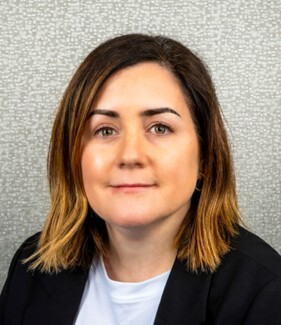
Charlotte Buffoni (00:03.084)
Welcome to Rethinking EHS Global Goals Local Delivery. As workplaces rapidly evolve, the definition of environment, health and safety is expanding beyond physical hazard control to include the psychological and behavioral aspects of modern work. Organizations worldwide are facing growing challenges in understanding psychosocial risks, managing workplace stress,
and cultivating safety cultures that address human behaviour and mental health with the same rigour as occupational health. In this episode, we'll explore how organisations are approaching psychosocial EHS, mental wellbeing and behaviour-based safety across different regions and regulatory environments. We'll discuss how human factors influence safety performance, where cultural shifts are shaping healthier workplaces and what practical steps organisations can take today to build a truly holistic safety culture.
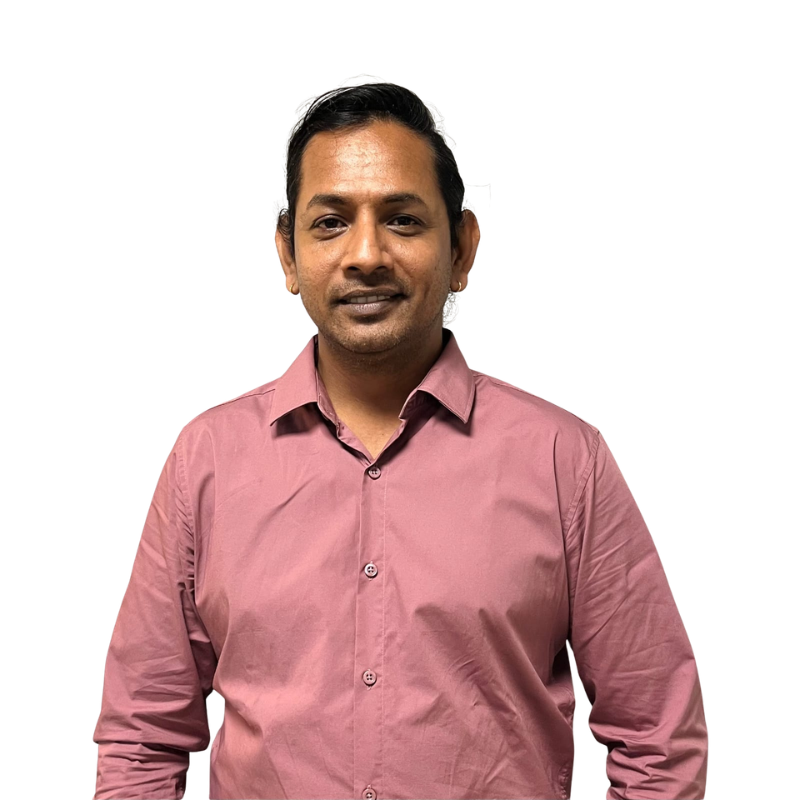
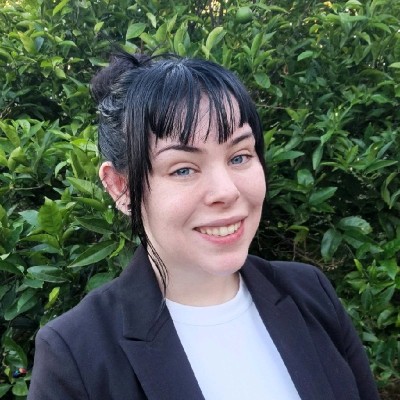
As always, we're bringing together perspectives from across the Indonesian alliance, combining global collaboration with local expertise. Today I'm joined by Deepak from Chola MS Risk in India and Georgia McGuigan. Did I say that wrong? McGuigan, sorry.
Giorgia (01:11.031)
Let me quickly.
Charlotte Buffoni (01:16.312)
Today I'm joined by Deepak from Chola MS Risk in India and Georgia McGoo... Can't say it.
Charlotte Buffoni (01:29.194)
Can you just say it again, Georgia, and I'll just...
Dheepak (01:32.565)
Yeah.
Giorgia (01:32.737)
It's Mink Gwig N.
Charlotte Buffoni (01:34.464)
Yeah. McGuigan. Fine. Today I'm joined by Deepak from Chola MS Risk in India and Georgia McGuigan from Peter J Ramsey and Associates in Australia. Thank you both for joining me today.
Dheepak (01:38.411)
Making candy.
Dheepak (01:49.643)
Thank you, Charlie.
Giorgia (01:50.905)
Thanks for having us.
Charlotte Buffoni (01:51.298)
So, yeah, it's nice to see you guys. So in terms of kicking this off, I think it's good to set a global context. So probably, Georgia, I'll go to you first and then Deepak, it'd be great to get your input. But I wanted to understand why are psychosocial hazards and workplace mental health becoming such a major focus for EHS professionals globally?
Giorgia (02:15.566)
I think psychosocial safety is becoming really prevalent as we kind of shift as a society from optimization of productivity, business workflow, and now we're kind of seeing okay, well what is the the leading indicator?
success is it a happy workforce and we're kind of delving deeper into all the other factors to kind of boost productivity boost boost profit boost all these kind of things and what we're kind of seeing is when we neglect psychosocial risk factors we kind of we get higher turnover we get all these other factors that seriously influence productivity and output so we're seeing nearly a 28 billion dollar impact on the economy and
Australia alone based on whether or not we're managing risks in general and a lot of those risks, twelve percent of those are becoming psychosocial risks, ev this year alone. So we're we're really focused on as Australia in particular, making sure that we're the legislation is kind of reflecting this as well, that we're reflecting that pivot in direction and bolstering up the business from the bottom up.
kind of seeing now as and S professionals is that it's not actually a bottom up approach that's appropriate, it's actually a top down approach. and the regulators are enforcing that, us as consultants are enforcing that and and yeah that that's kind of what we're seeing and what what the trends are saying.
Charlotte Buffoni (03:51.597)
Awesome. And Deepak, what are you seeing from your perspective?
Dheepak (03:56.821)
Yeah, I I think in Indian context the value of life is increasing and I'm I'll resonate with what Jarja was saying. safety is definitely a business case now and not just for the regulators, but also for organizations which started valuing life as well as like what do they give in turn for people. And I I think like so far the decades to come, safety was only seen as a physical hazard problem. I I think that's the end of everything is what I would say. Like if I had to
Fit this into a Swiss cheese model. The thought a lot of thinking that actually first happens inside a person, then they actually choose a choice of in form of a safe behavior or an unsafe behavior. I think the psychosocial aspect comes here much in terms of influencing those decisions, something like say a fatigue or a protection pressure, or even if it is for an individual to have fear, a conducive environment which is not supporting the person to make a better choice.
Right. I think it will result eventually in an incident, right? again causing a lot of damages, not just for the individual, but for a whole lot of people around and for the organization in turn. I think this makes it a much more hazardous in nature. I would go with the principle what when we define risk, risk is equal to you know the the consequence multiplied by the probability of the frequency. I think this is where now we have to bring in the people approach to it and then look at the person also involved. Maybe in in collectively we can put as culture.
Right. I think that's my perspective when it comes to psychosocial hazard and in EHS why this issue is gonna be major.
Charlotte Buffoni (05:32.107)
Thank you. Georgia, what shifts are leadership teams and EHS managers seeing today regarding mental health and psychosocial safety compared to 10, 20 years ago?
Giorgia (05:43.758)
So ten, twenty years ago there really wasn't anything in place at all. So the shift is that it's now here. so basically what we're seeing it changes every year, but the the kind of crux of it is it's going, okay, what do we need to be compliant? And now it's going, it's not working. How do we make it more thorough? How do we get tangible results? How do we see it working?
Dheepak (05:48.434)
Yeah.
Giorgia (06:11.436)
Because especially in Australia it's intentionally non-prescriptive. So we don't say you must have this, this and this. We have to consult our workforce. We have to reflect on the changes. We have to assess the risk and then action the risk. We have to assess its feasibility, etc. etc. So other than obviously it being introduced now and actually being part of the business's day-to-day operations, ultimately I've no
in the past five years it's gone from a bit of a stigmatization to a okay no we need to actually take this really seriously and then
re as in recent years it's because it's become enforceable under the new regulations and laws, we're saying, Okay, well, what do we need to do to make sure we're not getting penalized and what do we need to do to demonstrate that we've maintained it so we're not getting penalised. So there's a bit more of a incentive now to have those conversations, to assess your workflow. and yeah, that that's kind of the the trend over time.
Charlotte Buffoni (07:14.827)
It's interesting because I think I've certainly heard a lot about the route Australia is taking in terms of the legislation and moving down that route. I guess I'd be interested to understand if there's any specific examples where you have seen a recent positive impact of progress in this space.
Giorgia (07:31.074)
Yeah, so back in the mining industry, safety culture's number one. So what I've seen is we've they moved away from a EAP, you know, an employee assistance programme, encouraging the workers to go do the due diligence, go see a psychologist do all this stuff to look after yourself at work. And now they they were saying kind of like, Okay, but what a wit can we do as a business to make sure you're not burnt out?
of business to make sure you're healthy. And they started introducing health checks every six months, all these kinds of things that encourages the employee to think about their health and well being, encouraging more meetings. And I'm seeing that as well now in in consulting in the tech industries and all of that kind of thing. 'Cause you have six hundred staff kind of
facilities and then you have to wonder okay well how do we manage six hundred people's health and well being we can't just give them a prescription we can't just give enable them to access things we have to be deeper and I think that's what the Australian legislation is encouraging as well because they're really pushing for that consultation. It needs to be s someone is comfortable to talk to you about what's going on and if you don't f if they don't feel comfortable to bring up something then you failed as a business because you have no
idea what's going on then. and I think Australian regulators are understanding that risk and are really pushing to make sure that that kind of attitude is is is switched to total 180.
Charlotte Buffoni (08:57.669)
interesting and you mentioned the mining industry there, you mentioned tech companies and how are you seeing organisations in your region balancing those immediate reactive interventions? You mentioned EAP support with those longer term psychosocial risk management preventative measures.
Giorgia (09:17.056)
It's really slow, but what I'm seeing is involving people like us, consultants to be like, okay, help us, how can we affect our workforce holistically? we're getting a lot of ISO audits being requested, so having a look at that really broad stakeholder multi-dimensional kind of influence on a workplace. so at this stage, because the the legislation's new and a lot of businesses are very unaware about.
actually required. We're just seeing a lot of knowledge acquisition. What do we do? What help help help? so I think it's it'll be easier to answer that question in the next couple of years when they're gonna take our advice, action it and then over time see that kind of change be reflected.
Charlotte Buffoni (10:04.077)
Hopefully we'll have an opportunity to revisit this in the future and see all the progress and the change being made. So with Human Factors increasingly recognised as core to overall safety outcomes, we're looking at where the biggest organisational stress points lie, what behaviour-based safety can teach us and how data and culture are coming together to protect workers' mental and physical health.
Giorgia (10:12.09)
So
Charlotte Buffoni (10:26.859)
Deepak, I know you've seen examples of where traditional behaviour-based safety programmes have not always consistently delivered sustained behavioural change across many Indian organisations. In contrast, behavioural science-based safety approach has demonstrated measurable improvements. Could you tell us a little bit more about this?
Dheepak (10:46.889)
All right. So this is gonna be something interesting because we are gonna challenge the traditional way how the world was looking at behavior. I think it was more of the traditional approach I would call this the behavioral based safety, so which was actually treating symptoms is what I feel. Because now what we have to do or like what we are doing under behavioral sciences based safety, which we call BSPS, we try to understand deeper because it's not just the I know, like say the behavior which has just been triggered by antecedent.
But it is also to look at the belief system, the habit, the thoughts and emotion, and especially leadership and also the culture, the the the place where people actually practice. So it's not just observe, identify the unsafe act and go and correct the worker because scalability is an issue and it is going to be very, very contextual. So that is where we slightly moved into a different approach, and that is where we borrowed behavioral sciences practice and we tried combining that with safety. And and that's the advantage of behavioral sciences. So which actually gives an opportunity for us to observe.
Understand it a little more deeper, diagnose what is the right problem is, and then try and intervene. So now this makes a lot of difference because the workforce actually gets to our having a feeling that we are now being empathized. I I think this is more of an empathy-driven culture, and also not just that, the scalability is an advantage because this is where we created a small methodology called the Sun methodology, spot the problem, understand why it's happening.
And nudge them. So the nudge theory is what we brought in. So that is a Nobel Prize winning concept from nudge theory and behavioral economics. So from the umbrella of behavioral sciences, and then we tried bringing in that particular part of it. And when I say understand, we actually look at whether it's a capability problem, opportunity problem, or a motivation problem. Because even if I know what I am doing, even if I know the consequences, am I really motivated? Because most of the time, I know, even when there is a motivation, even when there is a knowledge.
But opportunity is not given, right? Imagine a supervisor comes over to the workman and says, like, I it's only a two-minute job. Why do you need to have a work permit? I'm talking the EHS language for some time, right? So if for just two minutes, do I have to process something like a I know a system which is going to take you for 30 minutes, right? I I think that is where I know like see the real importance of looking at what was not working in the traditional approach, looking at how do we make people really go beyond
Dheepak (13:11.047)
Unsafe behavior, trying to understand a little more deeper. The conversation should not be like, Why are you not wearing a particular I mean, even if I could take a example of a PPE, right? Instead of asking why are you not wearing it, instead of that, do we look at is it really uncomfortable? Is that PPE interfering in everybody's work? Or is it I know everybody around me is also like wearing it, not not wearing it, right? And also look at really is there going to be a consequence? Because I've seen in floats like say where an organization says anyone who enters.
Have to wear a PPE, full full PPE, right? So do I walk on the walkway and then look at something's gonna come over and fall on my head? These are questions what people ask, right? So that is where we thought if we bring in this particular Sun framework, spot the problem and understand a little more deeper and make the right interventions, right? And that's something we which has helped us quite well in in in this industry, manufacturing industry, especially in cement.
We were able to look at 51% of unsafe behaviors coming down drastically to 17%, not just only by understanding, a bit of leadership involved because when they started understanding, okay, this is the problem, and this is why my workforce is not actually you know converting my intention to actions. And and I think that played a major turning point in bringing down those unsafe behaviors because now the entire workforce believes that now there is one top man who's trying to understand why I am doing this.
Right. I think that is that is made a safe choice, a better choice and also an easiest one. Because now as a workforce, I need not go and ask like, can I do this? Can I do this? Or like I go sit in a fear factor where what if I question this and somebody will kind of put my job at stake, right? So these are things which we think what is say given a mileage for us compared to the traditional approach and trying out behavioral science-based safety. And in Indian context, a lot of organizations started loving it.
Reason is this puts an end to this knowledge and doing gap.
Charlotte Buffoni (15:08.609)
Interesting. I think my key takeaway from what you're saying there, Deepak, is it's putting people at the centre of this and really considering that. I think you gave a few examples there, but are there any other common operational triggers or systemic failures emerging that contribute, that you're saying contribute to work-related stress, burnout or unsafe behaviours on the line?
Dheepak (15:14.817)
Yes.
Dheepak (15:31.207)
Yeah, I mean I c I can I can pick up some things. Like say when we talk about systems, like say there are procedures where people have s have spoken saying these are not practical because what is written on the SOP is not what I'm following. Right? Similarly when when they talk about something which has got changed, a weak MOC, right? Something has already got changed, but it's not been communicated to people. Or even like say I see a unsafe condition and if I come over and report, right? If I've been questioned, if I've been confronted, saying like I mean, what how much technically are you aware?
Right? This so this this situation is not conducive for people to speak up, right? Similarly, I I would not say only from a system perspective, individuals who come into work, their attitude towards actions, their own actions, sometimes negligence, sometimes there is a normalized behavior which we say normalization of deviations and and on the other side leadership also plays a major role. If I put pressure, if I only talk production, production everywhere.
So the people will always prioritize. Okay. One question that my superior is going to come over and ask me is about production numbers. So I would not look at unsafe acts or conditions getting reported one. And on contrary, even when as a as a country we are known for having good supply of manpower, we still have manpower challenge. The right people and long arts like bringing in fatigue and and these are whole things. So I I would say in in there is no independent problem.
I would say it's a combination of system weaknesses, behavioral risk, and then I know leadership misalignments. That that's something which amplifies the whole thing. And and that's where the workforce constraints coming over is very, very obvious. And the ultimate choice for them is to pick up something which is unsafe and they think that's a rational, logical choice for them, given the situation within which they have to operate.
Charlotte Buffoni (17:20.594)
And Georgia, I'd ask the same question to you in terms of if you're seeing anything different or fairly consistent with what Deepak's explained.
Giorgia (17:31.352)
Yeah, absolutely. I think that we're definitely seeing a huge shift to people focused approaches. and I think that from the top down the highest folks the
Dheepak (18:34.39)
Yeah.
Dheepak (20:06.614)
Mm-hmm.
Dheepak (20:24.479)
Yeah.
Charlotte Buffoni (20:32.209)
I think you've both definitely touched on how important it is for that sort of leadership to role model this and I think you know how it's really creating that people centric space and that safe space for people to feel heard and you know feel understood as well whilst they're at work. Georgia perhaps I'll come to you first but I'd be interested to hear in your opinion what are some of the biggest myths about workplace mental health?
Dheepak (21:49.758)
Yeah.
Dheepak (22:38.225)
Mm-hmm.
Charlotte Buffoni (23:27.627)
Deepak, what about you?
Dheepak (23:29.971)
Okay, I'm gonna give you three. Yeah. And at least in Indian context, when you say mental health, it becomes a HR topic. So I think when we bring into manufacturing setups or even any any industry per se, right? If if fatigue is going to be somebody's challenge and that's going to influence someone's decision on the work workplace or in shop law, and I think it's not only a HR's problem. It it's gonna be an organizational-wide problem. That's one. Second problem.
Charlotte Buffoni (23:32.726)
Okay.
Dheepak (23:59.669)
When we talk about mental health, the first intervention that's going to be thrown out by HR team or anyone for that matter is going to be counseling, right? Or I'm I'm very, very what is it, sad to say this from a HR fraternity as well earlier. EAP is going to be one stop solution that's going to address everyone's problems, the employee assistance program, right? And earlier this this this
A particular initiative is being treated. If somebody's going to approach a counselor under EAP, they've been like looked upon differently. he has got a mental problem, right? That's how the statements were used. So this is, I think, the second myth is not only counseling, it is much beyond. We have to look at the systems, the culture that we have driven. If my production schedule is going to put somebody at fatigue, so it is not about the person individual's problem, it's the systems problem, right? Similarly, the workload, supervisors' behavior, sometimes recognition. If I continuously
you know reward speed or the target people achieve they would obviously go back and look at that because they look at okay this is something which you're gonna get so I think that is something we have to look from a systemic perspective building psychological safety question organizational developments that's one the third myth is you know as we always talk about culture and people every individual we go back and say this is an individual need and we need resilient in you so it is you have to manage so if you have a problem mental problem
You have to have that courage, you have to fight it out. I think we are singling down that individual and say it's your problem. Right? I I think that is something which we have to break in a workplace. And I know, like say, just by asking them to be resilient, just by giving them a counseling program, just making this as a HR topic, I think we will not be able to achieve what we are trying to do. Yeah, I think these are three biggest myths I would say at workplace.
Charlotte Buffoni (25:50.766)
Thank you.
For multinational organisations, addressing mental health and behavioural safety becomes even more complex because cultural perceptions of mental health and local legislation and workplace norms will vary considerably between regions. guess Deepak, I'll maybe come to you first because I think you've touched on this a little bit already, but are there any successful approaches or mental health frameworks being adopted in one region that you potentially see that other parts of the world could also adopt?
Dheepak (26:21.425)
I have a different take in this because this this problem I think we would not globalize it. rather looking at principles that can be globalized. Like say if I treat someone fairly in one particular part of the country, the context may change, environment may change, like say between India and Australia, things may change. But if we look at the principle, guiding principle, I would going to treat someone fairly and and and with respect. I think that has to be a global principle everywhere.
And if if I'm going to prioritize mental health in one part of the country and and the other country elsewhere, I think the principle has to be common. I mean, working with multinational organizations in the pharma or somewhere in synthetic chemicals, what we actually looked upon as there is something which really matters or bothers people is the understanding between different cultures because multicultural aspects, multicultural influences definitely gonna be there.
Right. And I would not say one suit that's gonna fit everyone, making it strategically what is relevant and making it very appropriate to the culture and consistently creating systems that can complement each other because it's not just one under EHS alone, right? I think a lot of policies that go around with HR, goes around with the production teams and also with EHS, like all put together, in addition to it.
people like us who are from the behavioral sciences of the psychology background, I think that also will help understanding people more. I I think earlier clients were talking about what they want differently, and now increasingly they are looking at culture leadership transformations, more from insights on behaviors and also understanding a bit more on human factors. I'm I'm taking completely away from a framework which is talking more psychology per se, but I'm bringing in a little more relevancy to it because.
The minute we start understanding talking about human factors, looking at predictive of like what can go wrong later, I think that's going to be something which we should commonly look at as a principle across the country or or the world by which I'm saying.
Charlotte Buffoni (28:24.551)
Georgia, guess in Australia obviously we've mentioned that legislation has been introduced, is there anything, what's your perspective on that sort of global approach or utilizing what's being done in one country and adapting it elsewhere?
Dheepak (29:31.637)
Mm-hmm.
Charlotte Buffoni (30:47.177)
It sounds like there's a lot that different countries and regions can learn from each other, but absolutely Deepak, I completely agree with your point that there's always got to be that local approach as well, based on the local culture and that local impact. I guess Georgia, I'd like to ask you around some of the multinational clients that I know that you work with.
What are they asking for when it comes to integrating psychosocial risks into their existing EHS management system?
Charlotte Buffoni (32:45.451)
Yeah? You're here.
Dheepak (32:46.474)
Weekend joy.
Charlotte Buffoni (33:00.844)
You
Charlotte Buffoni (34:43.437)
And Deepak, can see you nodding there. are you seeing similar types of things with your Indian clients?
Dheepak (34:53.947)
Yeah, and I think gone are the days where they were talking about audits, training, compliance and incident reduction. I think now clients are a little matured. Say they talk about culture assessment and how do we transform our leadership and and somewhere on insights, like say they also try to under want to understand when can my next accident can happen, which which part of my work floor or shop floor it can actually come over. So they are like trying to be a little more predictive thanks to AI and MS.
And now a lot of prediction is coming over. And also now the recency is all about they are trying to bring in a frontline leadership. recently we we tried implementing something called as safe behavior as a habit using a habit ladder, bringing in for supervisors and also trying to work around with them on some of the behavioral interventions will using nudges. So how do we make safety and automatic choice? So I I mean
We just tried replicating something what Nitya Yog, which is a nudge unit for India, same thing which we tried attempting in in Few Clients and and for Chola, I'm the one who is heading the nudge unit for Chola, especially focusing on safety. So they're trying to bring in how do we bridge this gap, knowing and doing. I think that's the first statement which triggered us to create this behavioral science based safety offering. Also, something which is new, which is beyond the engineering rationality from irrationality of what people think.
I think now a lot of psychologists are getting on board in our team and that is also something which is based on the a need from the client saying, Why do my workforce behave this way when we have all the systems in place? I think that is the underlying question for which they are trying to find answers. And and and recently I had one of my clients saying this safety is no more only a boardroom conversation. How do we make that a workplace or a ground floor reality?
And that's something which is now every organization's every leaders are mature enough to ask for. So we started coaching them. So we started how does a leader in an organization how they are going to become a safe leader. So there's a program around that. So goes by the typical coaching as coaching on one on one, but we bring in a competency of how does a safe leader will engage in conversation with workforce below, how do they carry themselves at workplace? I I know nicely Georgia said.
Dheepak (37:16.267)
The way how a leader behaves, right? I always say like when we were children, we just reflect how our parents were, right? So does the same thing which applies at our workplace also. How does a leader behave? How does a leader walk around? Same way is what the workforce is going to just imitate, just reflect on the same thing, right? So the change, the ask is kinda changing and we are seeing a lot of change over a period of last five, six years, post COVID, I should one way when the country is you know
Definitely cursing COVID, but contrary to it from a safety, health and hygiene perspective, COVID has reset a lot of things that what client is asking for. We are also gearing for that.
Charlotte Buffoni (38:06.359)
gonna say should I head to the closing round? Yeah absolutely.
Thanks Deepak. I think it's really interesting to hear the different perspectives from you both and obviously the similarities in some ways in what you're both seeing. But obviously it just goes to show those sort of different nuances that we're going to see in this topic across the globe. I wanted to finish with a few final thoughts from you both.
So Deepak, I'll come to you first. It'd be great to hear one trend in psychosocial safety, mental health or behaviour based safety that organisations should be watching closely and one practical step that those organisations can then take today to foster a safer, healthier workplace culture.
Dheepak (38:57.952)
I just missed the question.
Charlotte Buffoni (39:02.219)
Yep, I'll do it again. So Deepak, I'll come to you first just for some quick final thoughts. Are you able to share one trend in psychosocial safety, mental health or behaviour based safety that organisations should be watching closely and perhaps share any practical steps that organisations could take today?
Dheepak (39:24.979)
maybe I will start off with that one single lesson that we have learned. I think employees just don't go by what a CEO is gonna talk. And and most of the time we have heard CEOs saying safety is value for us, right? But it is beyond that. I think it goes by how does every coworker works with me? And how does we I'm sorry I lost on this answer. I'm sorry.
Sorry, Charlotte, I'm sorry Amatia.
Charlotte Buffoni (39:55.777)
That's okay, start again.
Charlotte Buffoni (40:04.525)
Yeah, it's a bit much isn't it? That's fine, I'll start again. We'll finish off with some quick final thoughts and Deepak I'll come to you first. Would you be able to share one trend that you're seeing in psychosocial safety, mental health or behaviour-based safety that organisations should be watching closely?
Dheepak (40:04.703)
Yeah, I think it's too
Ha ha ha.
Dheepak (40:28.373)
Alright. I think now we are moving from this trend of incident investigation and looking at corrective action. I think that is that was so far the thought process. And from there we are moving towards behavior put together as a culture, understanding human factors, looking at leading indicators like what is that change, and getting on to prediction and prevention. I think that is something which I don't know every organization should be looking at. This should be the trend later.
Charlotte Buffoni (40:56.365)
And Georgia, perhaps I'll ask you a slightly different question. Would you like to share one practical step that you see organisations could take today to foster a safer, healthier workplace culture?
Charlotte Buffoni (42:16.877)
of it.
Charlotte Buffoni (43:37.485)
But use with caution, it sounds like. Great. So thank you to Deepak and Georgia for sharing your expertise and practical insights on today's episode of Rethinking EHS Global Goals Local Delivery. As we celebrate 25 years of the Inogen Alliance, this series reflects what makes our network unique, global collaboration and local expertise and a shared commitment to accelerating a resilient planet and a safer workplace for all.
If you found today's conversation valuable, be sure to follow the series and share it with your colleagues across your organisation and professional network. You can also connect with us on our website, follow us on LinkedIn and subscribe on YouTube or wherever you get your podcasts. Until next time, thank you for listening and for being part of the global EHS community, working to turn knowledge into action.
Dheepak (44:31.767)
Snow again.
Chloe (44:32.154)
Very nice. I was re I I was supposed to be taking notes.
Charlotte Buffoni (44:33.326)











-1.jpg?width=730&height=410&name=25th%20anniversary%201920x1080%20(33)-1.jpg)